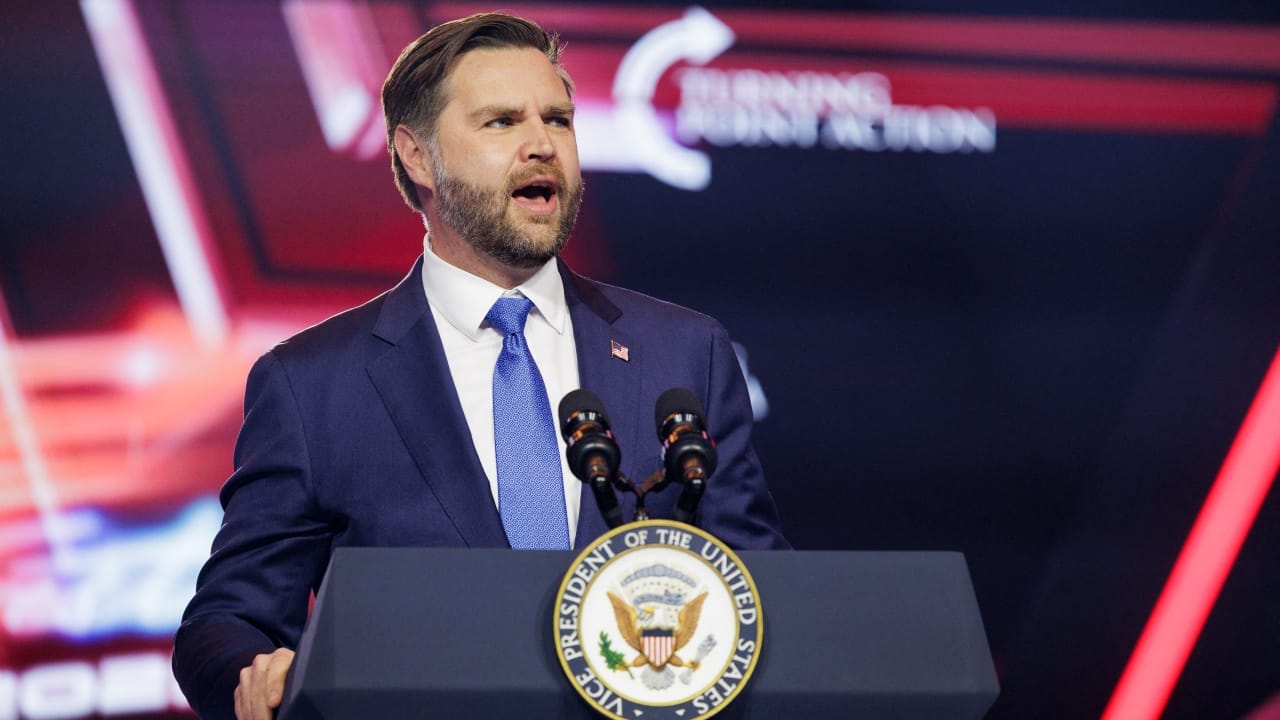


US Vice President JD Vance has reacted sharply to reports that the United Arab Emirates has curtailed state funding for Emirati students seeking to study at British universities, calling it an “absolutely insane headline.�
Vance was responding on Friday to reports circulating online that the UAE had moved to restrict scholarships over concerns that students could be exposed to Islamist radicalisation on UK campuses. Writing on X, he said some of Washington’s closest Muslim allies in the Gulf believe Islamist indoctrination in parts of the West has become too dangerous to ignore.
Story continues below Advertisement
Behind the headline, however, is a quiet policy shift by Abu Dhabi. CNN-News18 has learnt that the UAE has removed British universities from its approved list of overseas institutions eligible for government scholarships. Officials familiar with the matter said the decision reflects growing concern over the ideological climate on some UK campuses, rather than a diplomatic dispute with London.
According to sources, the move is aimed at shielding future diplomats, security officials, and elite students from exposure to what the UAE views as Islamist narratives during their formative academic years. Emirati policymakers have flagged what they describe as a “mindset shift� among some students returning from the UK, pointing to campus activism and student groups as potential channels for Islamist ideology.
British universities have defended such spaces as part of academic freedom and free expression. Abu Dhabi, however, takes a far stricter view. Emirati authorities see certain Islamist movements as direct threats to state stability and believe early exposure to such ideas could have long-term implications for governance and security back home.
Story continues below Advertisement
The Financial Times reported that the UAE Ministry of Higher Education published a revised list of foreign universities eligible for state scholarships in June 2025. While institutions in countries such as the United States, Australia, France, and Israel featured on the list, British universities were notably absent.
UK officials were reportedly informed that the exclusion was deliberate. Three people familiar with the discussions told the newspaper that the decision was driven by concerns in Abu Dhabi about the perceived risk of Islamist radicalisation on British campuses. One person quoted said Emirati authorities did not want students “to be radicalised on campus.�
Officials cited by The Times said the policy does not amount to a blanket ban on studying in Britain. Emirati students can still enrol in UK universities if their families fund their education privately, and those already studying there will continue to receive government support. However, new students will face sharply reduced or no state funding.
Story continues below Advertisement
The concerns centre largely on groups linked to the Muslim Brotherhood. Founded in Egypt in 1928, the Brotherhood is a transnational Sunni Islamist organisation that seeks to influence society and politics through religious principles. It is banned by several West Asian governments, including the UAE, which has designated it a terrorist organisation.
Britain, by contrast, has not proscribed the group. A 2015 review found no evidence linking the Muslim Brotherhood to terrorist activity in or against the UK, a position London says remains under review.
For Abu Dhabi, the scholarship decision reflects a broader effort to control ideological exposure and protect state interests. Vance’s blunt reaction has brought public attention to a move that had so far been handled quietly, highlighting growing differences between Gulf allies and parts of the West over how to deal with Islamist influence in academic and public spaces.
Discover the latest Business News, Sensex, and Nifty updates. Obtain Personal Finance insights, tax queries, and expert opinions on Moneycontrol or download the Moneycontrol App to stay updated!