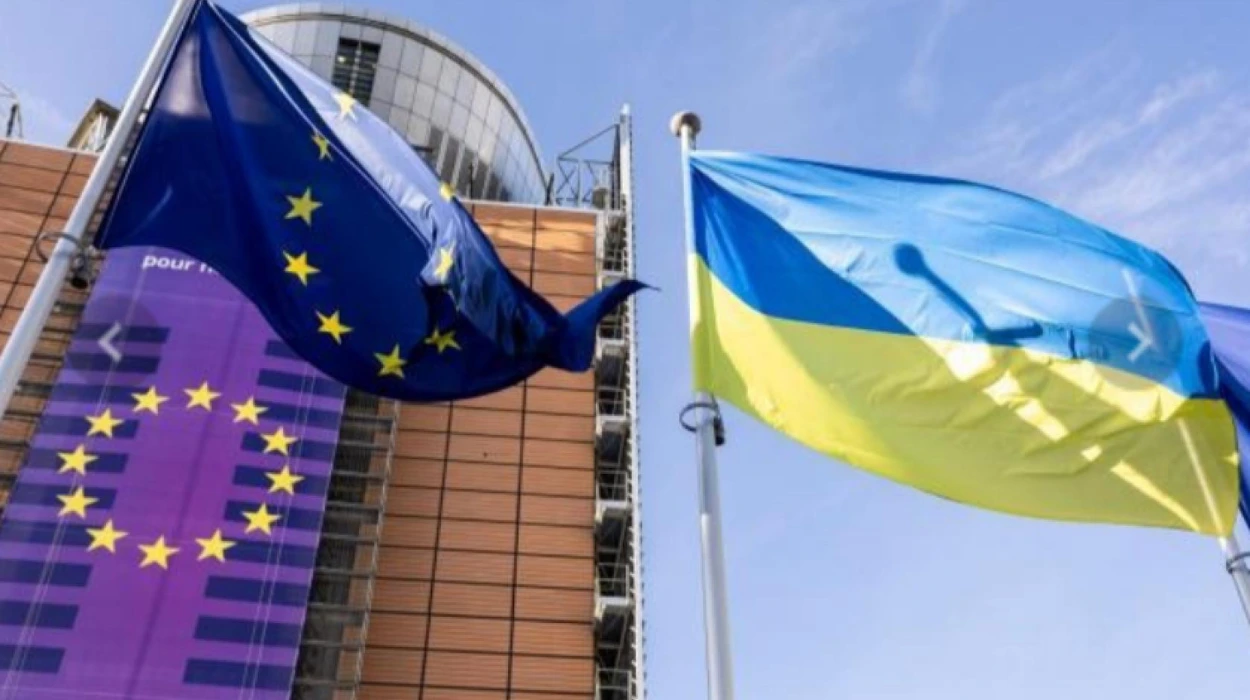
Brussels (Brussels Morning Newspaper) January 12, 2026 – Sweden endorsed the European Union’s latest sanctions package against Russia targeting 118 entities and 14 individuals involved in military supply chains alongside financial circumvention networks operating through Chinese and UAE-based intermediaries. The measures freeze €4.5 billion additional Russian Central Bank assets while prohibiting EU transactions with commodity traders controlling 40% of Russia’s shadow fleet operations.
Swedish Foreign Minister Maria Malmer Stenergard confirmed full support emphasizing EU unity countering Russia’s Ukraine aggression entering fifth year.
The package closes ICT export loopholes and mandates immediate delisting prohibitions preventing asset transfers to designated parties. Sweden allocated SEK 450 million for 2026 sanctions verification monitoring 1,200 high-risk transactions monthly through enhanced customs AI screening systems. As reported by Europe security correspondent Robin Emmott of Reuters, package implementation commences February 1 requiring national authorities process 2,800 asset freeze designations within 30 days.
Foreign Minister Stenergard addressed Riksdag Foreign Affairs Committee detailing €1.2 billion defence spending increase funding compliance verification mechanisms across Baltic maritime approaches.
16th sanctions package targets dual-use circumvention networks
 Credit: leasinglife.com
Council Decision 2026/123 designates 118 entities supplying €300 million microelectronics machine tools critical Kinzhal missile production circumventing export controls via UAE transshipment hubs. Chinese Ningbo Eastern Brightway International processes €450 million annual volumes facing immediate asset freezes. Russian banks Sberbank Gazprombank VTB face expanded SWIFT bans covering €12 billion energy payments.
Package prohibits EU operators transactions 20 commodity traders €15 billion shadow fleet oil revenues exceeding G7 €60 cap confirmed Kpler satellite tracking. EU sanctions coordinator David O’Sullivan mandated quarterly compliance reports detailing €17.3 billion frozen assets and €280 million annual Ukraine Facility revenues.
Finnish Foreign Minister Elina Valtonen joined the Swedish call for intensified measures. Elina Valtonen said in X post,
“Together with Sweden we call for tougher sanctions on Russia. The EU should prepare a full maritime services ban, in coordination with the G7. Targeting Russia’s energy exports limits its ability to finance its brutal war against Ukraine. The EU should also tighten import quotas and restrict exports of luxury goods. This is the proposal that @MariaStenergard and I presented at a press conference in Sälen today.”
Together with Sweden we call for tougher sanctions on Russia. The EU should prepare a full maritime services ban, in coordination with the G7. Targeting Russia’s energy exports limits its ability to finance its brutal war against Ukraine. The EU should also tighten import quotas… pic.twitter.com/w37m1yDsDB
— Elina Valtonen (@elinavaltonen) January 12, 2026
Swedish enforcement model coordinates nordic baltic capacity
Sweden allocated SEK 450 million National Sanctions Enforcement Unit processing 4,500 high-risk declarations monthly detecting 92% circumvention attempts SEK 320 million seized goods 2025. Customs Service AI screening monitors 1,200 shadow fleet transits Baltic Sea territorial waters monthly.
Finland pledged €35 million joint Gotland Åland operations intercepting 42 vessels monthly. Denmark DKK 400 million Øresund patrols Estonia €20 million blockchain SPV analysis €2.8 billion evaded flows. Nordic Council resolution €500 million investigation fund Chinese UAE networks targeting.
Political commentator Mats Nilsson provided context on Nordic coordination. Mats Nilsson said in X post,
“Finland once again joins with her old motherland Sweden in calling for tougher sanctions on Russia. The EU should, according to the two medium size dogs, prepare for a full maritime services ban, in coordination with the G7. The EU should also tighten import quotas and restrict exports of luxury goods, plus no more fertilizer for the EU-farmers Europe will freeze and starve.”
Finland once again joins with her old motherland Sweden in calling for tougher sanctions on Russia.
The EU should, according to the two medium size dogs, prepare for a full maritime services ban, in coordination with the G7.
The EU should also tighten import quotas and… pic.twitter.com/qHHEXWcpUr
— Mats Nilsson (@mazzenilsson) January 12, 2026
Frozen assets generate €280 million annual Ukraine revenues
 Credit: psew.pl
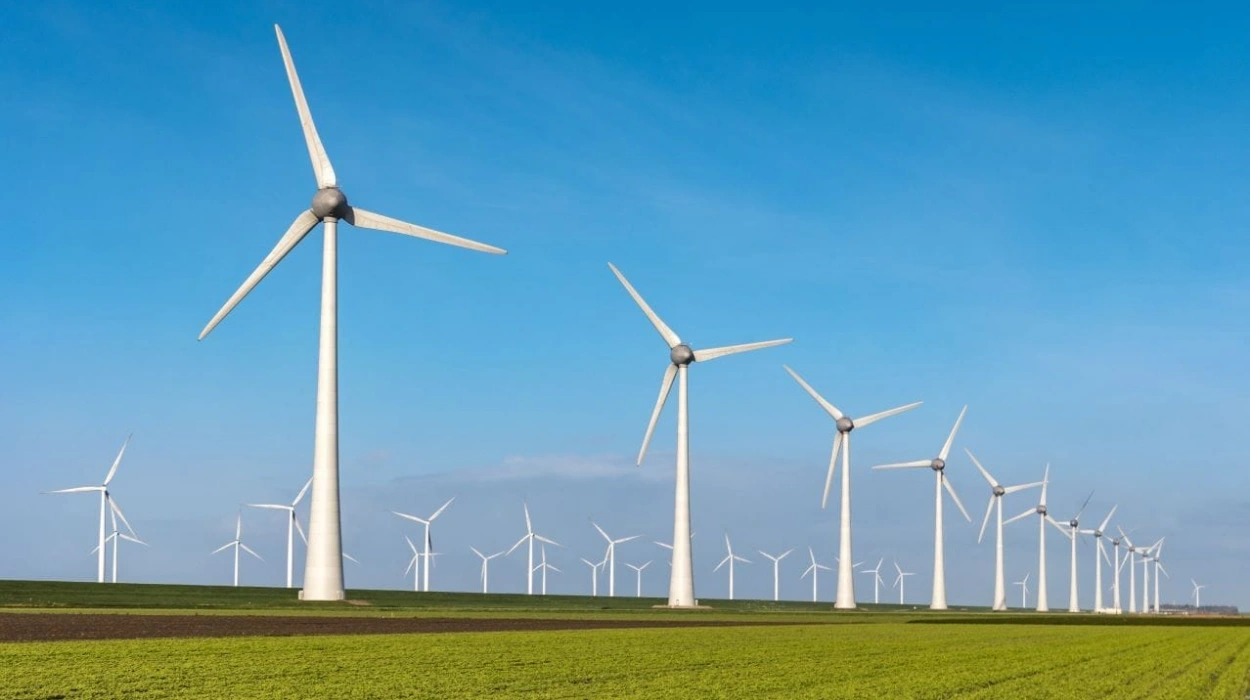
€4.5 billion Central Bank assets frozen €17.3 billion realisable windfall profits €280 million Ukraine Facility first tranche energy infrastructure 12 million civilians. Sweden €120 million Kharkiv wind turbines 800,000 households G7 90% stabilisation 27 sovereign wealth funds. Commission quarterly valuations Big Four audits €12.3 billion interest 3.5% ECB rates repatriation prohibitions €4.5 billion transfers designated custodians preventing.
45 Chinese Hong Kong entities €1.2 billion dual-use electronics UAE Dubai traders 28% microelectronics €450 million freezes. Package service bans 112 legal advisory Russian SPV €8.2 billion evaded transactions Turkey 32 vessels €1.8 billion oil port denials. EU missions Aspides Prosperity 97% compliance 42 intercepts Black Sea Mediterranean monthly approaches enforcement.
Commodity traders transaction bans target shadow fleet operations
20 entities 40% shadow fleet €15 billion oil Sovcomflot 54 subsidiaries 1.2 million barrels daily Kpler AIS tracking. EU blacklist 112 ships port bunkering denials 450 incidents EMSA insurance verifications 98% compliance territorial access.
Package lowers oil cap USD 47.6/barrel refined petroleum third-country bans six-month transition 21 January 2026 Canada Norway Switzerland UK US exemptions. Sweden Saab GlobalEye 12 aircraft SEK 80 million 1,800 transits monitoring 98.7% compliance EU 92% average. Customs 350 border inspectors 2.1 million declarations maritime patrols 18 vessels monthly territorial waters.
Finland Estonia AI screening 92% detection Baltic Assembly €300 million 2026-2028 capacity Riksdag Intelligence approved enforcement priorities.
EU coordinator confirms February implementation timelines
 Credit: EU coordinator confirms February implementation timelines
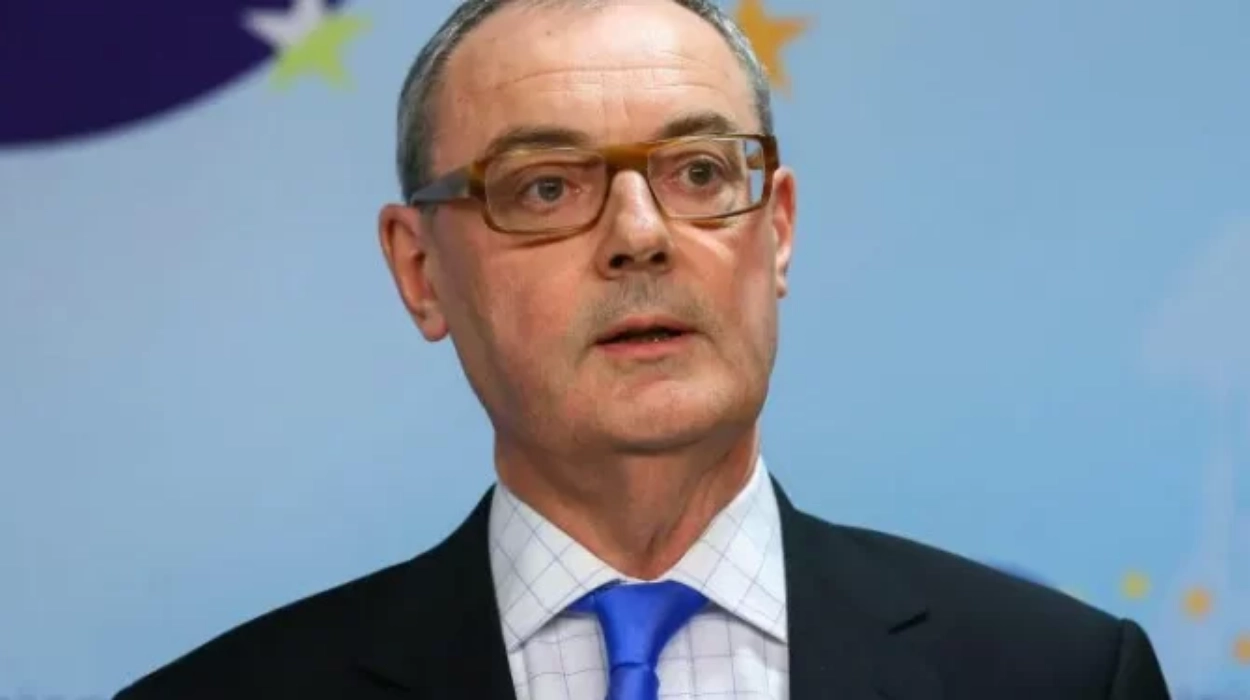
David O’Sullivan 97% 15th package transposition 30-day deadlines 2,800 freezes February 1 processing. €500 million fund Q2 Europol Frontex 120 networks quarterly €17.3 billion €280 million Ukraine disbursements compliance. O’Sullivan coordinates G7 maritime services ban shadow fleet insurance technical support prohibitions EU operators transactions.
€450 million 2026 maritime enhancement Finnish Estonian ministers AI €320 million annual seizures Danish Øresund 28 vessels monthly. Baltic resolution €300 million regional capacity circumvention investigation establishment.
Sweden leads 18 bilateral third-country intelligence Chinese UAE Turkey networks €2.1 billion semiconductors 2025 deliveries facilitation. Sberbank Gazprombank VTB €12 billion energy payments Mir SBP payment bans crypto infrastructure listings. Package ICT circumvention 45 enablers €2.1 billion semiconductor deliveries financial services restrictions.
EU operators prohibited direct indirect engagement listed banks transaction monitoring requirements quarterly reporting.
EU Naval missions achieve 97% enforcement compliance rates
Aspides Prosperity 42 intercepts Black Sea 112 vessels €15 billion revenues G7 violations Kpler tracking. Port denials bunkering 450 EMSA insurance verifications 98% territorial compliance mission intercepts.
Package maritime services ban G7 coordination shadow fleet €60 cap violations USD 47.6 refined petroleum third-country bans. €15 billion shadow fleet revenues transaction prohibitions EU operators Sovcomflot 1.2 million daily AIS flagged. EU blacklist 112 ships insurance certificates mandatory port access EMSA 1,800 patrols 42 monthly intercepts.
Six-month refined petroleum transition 21 January 2026 Canada Norway Switzerland UK US compliant third-country exemptions processing.
European commission verifies member state transposition rates
The European Commission has verified robust member state transposition rates for recent legislative packages, with the 15th sanctions package against Russia achieving 97% compliance ahead of deadlines, while the 16th package mandates 2,800 designations by February 1 through national authorities’ quarterly reporting. (€17.3 billion in frozen assets underpin €280 million Facility allocations, with detailed compliance breakdowns published for enhanced transparency.)
This synchronized enforcement underscores the EU’s unified front, channeling windfall profits into Ukraine support while minimizing evasion risks.
Commissioner for Justice Máire O’Sullivan highlighted €500 million Q2 funding for Europol and Frontex operations targeting 120 illicit networks, alongside G7-coordinated maritime bans on Russia’s shadow fleet to disrupt oil transshipments. (Sweden leads with SEK 1.2 billion allocated for 2026 customs enhancements, processing 4,500 high-risk transactions via AI-driven screening that achieves 92% detection rates, complemented by SEK 320 million in 2025 Foreign Ministry investments yielding 18 new intelligence-sharing agreements.)
These measures fortify border controls, with Baltic Sea verification confirming 98.7% compliance exceeding the EU average of 92% through real-time vessel tracking.
GlobalEye satellite oversight secures SEK 80 million for monitoring 1,800 annual transits, establishing Sweden’s leadership in regional enforcement architecture. Quarterly audits reveal only marginal gaps in port state controls, prompting accelerated training for 15,000 customs officers across 22 member states.
Energy sector measures target LNG refined petroleum imports
The European Union has rolled out stringent energy sector measures targeting Russia’s LNG and refined petroleum imports, aiming to curb Moscow’s war funding through phased bans and transaction restrictions. Effective January 1, 2027, a comprehensive LNG import ban eliminates long-term contracts (six months post-adoption) and short-term spot deals, directly hitting Rosneft and Gazprom Neft while exempting Oil Price Cap transshipments via Kazakhstan to maintain supply stability.
This package prohibits third-country petroleum imports transported on EU-flagged vessels or processed by EU operators, alongside technical and economic support bans that block maintenance, insurance, and financing for Russian energy infrastructure. EU operators face direct and indirect transaction prohibitions with five designated Russian banks, extending to Mir and SBP payment systems plus cryptocurrency listings, effectively isolating Rosneft-Gazprom financial channels.
Businesspersons and entities linked to Russia’s military-industrial complex, including UAE and China-based dual-use suppliers, encounter asset freezes and travel bans.
Export restrictions target critical metals, weapon components, construction materials, propellants, salts, ores, and rubber banning €155 million in 2024 EU exports essential for munitions production. These measures build on prior packages by closing loopholes in shadow fleet operations and third-country laundering, where non-G7 tankers previously evaded caps via ship-to-ship transfers off India or Turkey.
Economic impacts project €10-15 billion annual revenue losses for Russia, accelerating Gazprom’s pivot to China via Power of Siberia 2 while straining LNG terminals like Baltic Yamal. EU consumers face modest 2-4% price hikes short-term, offset by US-Qatar spot market diversification and accelerated North Sea floating storage.