Published on
January 13, 2026
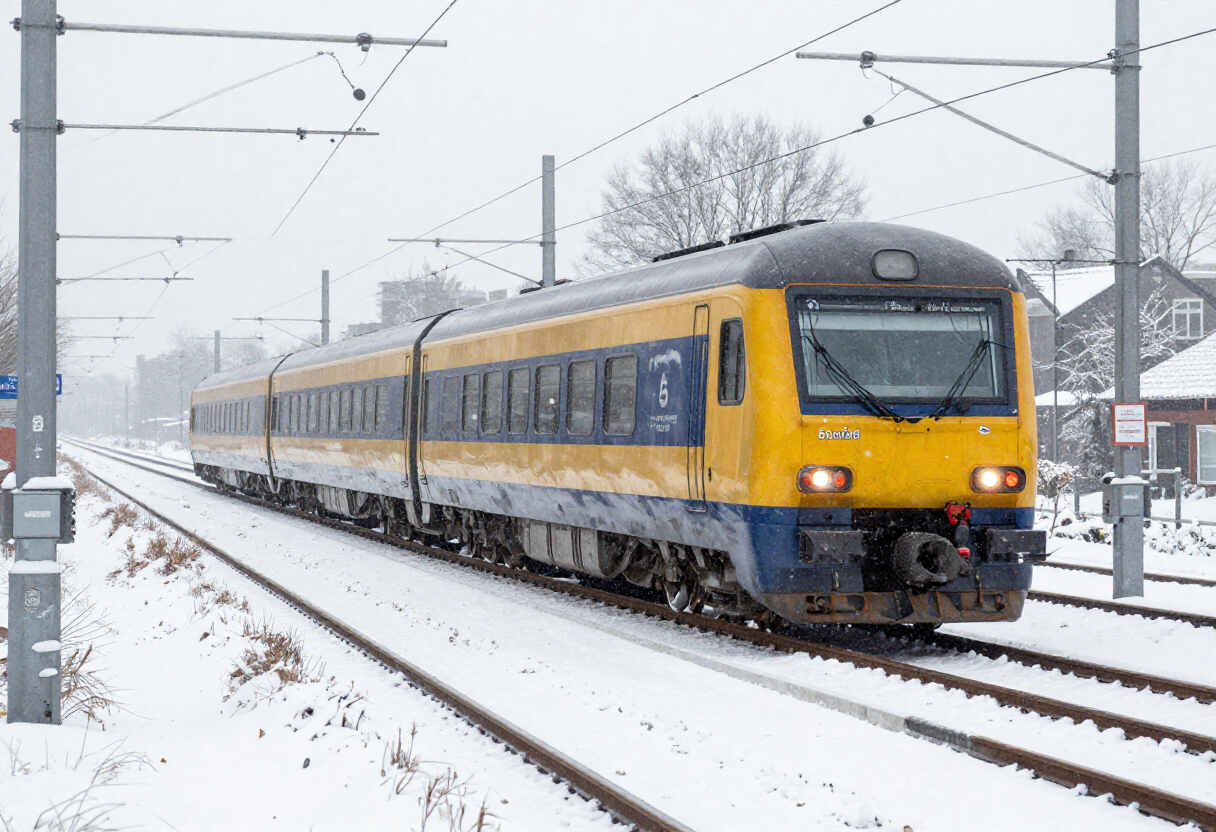
Netherlands and Northern Germany rail services are beginning to recover after severe snowstorms disrupted operations, but challenges remain. While many routes are gradually resuming, some services are still operating below full capacity, and a few remain suspended. The recovery process is being hindered by ongoing issues such as snowdrifts, frozen tracks, and infrastructure inspections, meaning that passengers can expect limited timetables and occasional delays. Rail operators continue to work through the aftermath, with full restoration expected to take time.
Rail services in the Netherlands and northern Germany, once severely impacted by recent snowstorms, are slowly returning to normal, although operators continue to warn that disruptions remain ongoing. While progress has been made, operators caution that full recovery will take time, and services are still operating under fragile conditions.
In the Netherlands, train operations resumed early on Monday with an adjusted winter timetable. This revised schedule reflects a more typical setup, similar to what would have been in place without the extreme weather, though several limitations still exist. Certain peak-hour services are not yet running, and there are ongoing disruptions on specific routes. For example, local services between Arnhem and Doetinchem are running less frequently, and rolling stock shortages are affecting Sprinter services near Amersfoort. Furthermore, signal failures have led to delays and fewer trains between Amersfoort Centraal and Ede-Wageningen. International connections are also impacted, with no trains running between Maastricht and Liège on Monday due to equipment issues.
In addition to regular service planning, the infrastructure manager is working through the post-winter recovery. During the cold snap, half of the country’s centrally operated switches were temporarily removed from service to ensure greater reliability. These assets need thorough inspection across more than 7,000 kilometers of track before being returned to operation. This task is proving to be extensive and time-consuming.
The thaw, while welcome, also presents new risks. ProRail has issued warnings about potential flooding along tracks, condensation in electrical systems, and salt contamination at level crossings, which could cause further disruptions. Additionally, rust has developed on switches and tracks that had been idle for several days, further slowing the return to normal services.
In northern Germany, Deutsche Bahn (DB) has seen improvement in its long-distance network, with all major routes now open. However, the services are still running at only two-thirds of their usual capacity. Key routes such as Hamburg-Berlin, Hamburg-Hanover-Southern Germany, and Hamburg-North Rhine-Westphalia-Frankfurt have been cleared, but they are operating on a reduced timetable, meaning cancellations and short-turns remain a possibility.
Despite the improvements, some routes are still closed. Long-distance services to Westerland on Sylt and Rostock/Binz continue to be suspended due to snowdrifts and frozen tracks. At the regional level, parts of Schleswig-Holstein and Lower Saxony are still facing closures and reduced service frequencies. Hamburg’s S-Bahn services have largely resumed but are still not operating at full capacity on all lines.
Private operators such as Metronom have restarted services on routes including Hamburg-Uelzen and Hamburg-Bremen, though certain parts of the network in southern Lower Saxony still require inspection. Cross-border services to Denmark and the Netherlands are gradually returning, though these services remain below normal levels.
The scale of the winter storm has left a lasting impact on recovery efforts. Approximately 3,000 kilometers of track in northern Germany were affected by snow, drifting, and prolonged frost, and the situation has remained fluid. Snowdrifts and icy switches have created new challenges even as recovery work progresses. Snowploughs and specialized vehicles are continuing to clear secondary routes and yards, though re-freezing has sometimes reversed progress.
Rail freight services are gradually resuming, particularly in northern Germany and around the port of Rotterdam, both of which were heavily disrupted. Snowstorms caused severe delays to stabling yards and terminal operations, but recovery efforts are ongoing. Both ProRail and Deutsche Bahn are working closely with freight operators to manage delayed shipments and ensure that infrastructure is ready to support freight services.
Netherlands and Northern Germany rail services are gradually recovering from snowstorm disruptions, though some routes remain suspended or are operating below capacity due to ongoing challenges like frozen tracks and infrastructure checks.
Operators from both countries continue to warn that further disruptions are possible as winter conditions persist and more snow is expected in northern Europe. Passengers are advised to use digital journey planners for up-to-date travel information and to be prepared for further delays, particularly during busy travel periods. Although conditions are improving, full resilience is still a work in progress, and travelers should remain flexible and informed as the recovery unfolds.
