TIMES A-CHANGIN’: Bruno Waterfield, the Times of London’s Brussels correspondent, will join Euractiv as political editor in March. He brings more than two decades of experience covering Brussels for the Times and The Telegraph, and will help shape our political coverage.
You’re reading Tuesday’s Rapporteur. This is Eddy Wax in Brussels, with Nicoletta Ionta en route to Cyprus. Email us at eddy.wax@euractiv.com and nicoletta.ionta@euractiv.com with tips and story ideas.
Need-to-knows:
🟢 EU tightens grip on Chinese tech suppliers
🟢 The eight MEPs who met Iranian diplomats most recently
🟢 Marine Le Pen begins legal fight to save presidential bid
For deeper context on how Brussels and Beijing shape each other’s decisions, sign up to Red Thread, our weekly EU-China briefing.
From the capital
Brussels’ digital policy geeks had been anticipating a proposal from the Commission this Wednesday that would intensify pressure on EU countries to phase Chinese suppliers such as Huawei out of their telecommunications networks. But it’s delayed.
EU officials are increasingly uneasy about Europe’s reliance on China for critical technology infrastructure, fearing Beijing could snap its fingers and disrupt whole swathes of the European economy. Companies like Huawei and ZTE, China hawks warn, pose heightened security risks.
Against that backdrop, frantic drafting continues inside the Commission, but the review of the Cybersecurity Act has been punted until 20 January. Commission officials I spoke to are adamant it’s not because of infighting – though that may yet come.
So far, most national governments have ignored the Commission’s repeated calls to phase Huawei out of their telecoms networks. The forthcoming proposals are expected to go further still, potentially extending to sectors such as healthcare and energy.
At stake is the Commission’s oft-invoked ambition of “tech sovereignty.” But capitals remain reluctant to hand these powers to Brussels, according to my colleague Claudie Moreau. National sovereignty, it seems, is slightly more real.
Driving the initiative is EU Digital Commissioner Henna Virkkunen, whose home country Finland is the land of Nokia, one of Huawei’s principal European rivals. China itself has curbed Nokia’s market access in its own backyard.
US officials, keen for Brussels to mirror its hardening stance on Beijing, are watching closely. The EU was emboldened, in a way, by last year’s corruption scandal involving Huawei’s lobbying at the European Parliament.
Even so, recent moves suggest Brussels is reluctant to be seen as anchoring its China policy too closely to Washington’s preferences. On Monday, the EU softened its stance on Chinese EVs, a move Beijing welcomed.
Washington might also wince as the Commission slams Grok for AI-generated child sexual imagery. Separately, my colleague Théophane Hartmann tells me that a new Digital Networks Act, due to be proposed on 20 January, could force US giants like Netflix to pay a kind of toll for using the EU’s telecoms highways – a step that risks incurring Trump’s wrath.
The result, as one observer put it, is a “multidimensional trade-off.” But until European countries are ready to enrage Beijing and Washington, Europe’s aspiration to “digital sovereignty” is likely to remain a buzzword.
Le Pen’s last battle
French far-right leader Marine Le Pen is fighting to be allowed to run in the 2027 presidential election as she begins her appeal in Paris today against her conviction in the European Parliament fraud case.
The odds are steep, my colleague Laurent Geslin writes. Le Pen was found guilty of misusing EU funds by employing her bodyguard, her secretary and the chief of staff of her late father, Jean-Marie Le Pen, as European parliamentary assistants. The court also concluded that she had helped organise a “system designed to generate a genuine financial windfall for the party.”
In its first instance ruling, the court sentenced Le Pen to four years in prison – two of them to be served under electronic monitoring – and imposed a five-year ban from holding public office.
Attention is also turning to Jordan Bardella, her highly popular heir apparent in the National Rally. France’s national financial prosecutor said on Monday it was “examining” a complaint filed by an anti-corruption group alleging that a media training course funded by the European Parliament was used by Bardella during the 2022 presidential campaign.
Iranian ambassador defies Metsola
Iran’s top diplomat in Brussels said he will keep reaching out to MEPs, despite Roberta Metsola pushing for tougher sanctions on Tehran and barring Iranian diplomats from entering the European Parliament.
Ali Robatjazi said he’d “keep the door open to constructive dialogue” with interested MEPs. But contacts remain limited. “Very few of us still meet them,” said Hannah Neumann, who chairs Parliament’s Iran delegation. Relations were frozen in 2022 over human rights concerns, and no official meetings with parliamentary bodies have taken place since. MEPs were for a time asked to notify Parliament of meetings with Iranians, but that 2023 guidance has since lapsed, an official said.
Eight MEPs declared individual meetings with Iranian diplomats in 2025, and several more since 2022. They are: Bulgaria’s Petar Volgin (2025), Hungary’s Zsuzsanna Borvendég (2025), France’s Bernard Guetta (2025), Slovakia’s Milan Uhrík and Milan Mazurek (2025), Germany’s Michael von der Schulenburg (twice in 2025), Germany’s Thomas Geisel (2025), Portugal’s António Tânger Corrêa (2025), Czechia’s Ondřej Dostál (2025), Czechia’s Filip Turek (2024), Spain’s Iratxe García (2022), Austria’s Hannes Heide (2022), and Belgium’s Philippe Lamberts (2022), who’s now an adviser to Ursula von der Leyen.
Belgium’s foreign minister, Maxime Prévot, has summoned Robatjazi in his capacity as Iran’s ambassador to Belgium. Neumann said the EU’s top diplomat, Kaja Kallas, should now move swiftly to propose listing Iran’s Islamic Revolutionary Guard Corps as a terrorist organisation. “If there are still some member states blocking, she should make it official which ones are blocking,” she said.
The European Parliament has called for the IRGC to be listed as a terror group since 2022.
“So far Slovakia has never opposed listing the Islamic Revolutionary Guard Corps as a terror group,” a spokesperson for Slovakia’s permanent representation to the EU told Rapporteur, responding to Monday’s edition.
Last night, US President Donald Trump threatened 25% tariffs on countries trading with Iran.
India trade deal inches closer
India’s PM Narendra Modi and Friedrich Merz have thrown their weight behind concluding an India-EU free trade deal this month, describing it as a “key outcome” of the EU-India summit scheduled for 27 January, according to a joint statement published on Monday.
Nordics pitch Russian luxury goods ban
Finland and Sweden have urged the Commission to prohibit exports of luxury items to Russia, outlaw the servicing of Russian oil tankers and cut EU import quotas for Russian fertilisers, according to my colleague Thomas Møller-Nielsen.
Luxury goods priced above €300 are already banned, but many high-end European brands – including Gucci, Bottega Veneta and Yves Saint Laurent – are still sold in Russia, albeit at a steep mark-up. Many goods are re-exported to Russia from China, Turkey and other third countries. A diplomat said the EU’s 20th sanctions package was expected by 24 February, the fourth anniversary of the war.
Lawmakers grill Várhelyi
Health Commissioner Olivér Várhelyi faced questioning on Monday from Parliament’s Budgetary Control Committee over allegations that Hungarian spy activities were conducted from the country’s diplomatic mission during his tenure as ambassador.
Várhelyi denied any knowledge of the affair, stressing his “full independence” from the Hungarian government. The Commission, he said, was treating the allegations seriously, with an internal investigation and a dedicated task force now under way. He also insisted he had never been contacted by Budapest’s intelligence services.
“I’m not satisfied. Don’t think he really answered many of the questions,” Green MEP Daniel Freund, Parliament’s lead lawmaker on the 2024 discharge, told Rapporteur, adding that he would follow up in his discharge report after the hearing.
The capitals
PARIS 🇫🇷
France’s minority government is edging back towards the constitutional nuclear option as MPs resume scrutiny of the 2026 budget. With talks stalled and at least €12 billion in savings needed to hit a 5% deficit target, PM Sébastien Lecornu may yet invoke Article 49.3 to force the bill through without a vote. That would risk a no-confidence motion, and possibly a fresh dissolution, underscoring the fragility of the country’s parliamentary truce.
– Laurent Geslin
ROME 🇮🇹
Venezuela on Monday released Alberto Trentini, an Italian aid worker whose detention for more than a year without formal charges had become a major political and media case in Italy. Trentini, held since November 2024, was freed alongside Italian businessman Mario Burlò. Giorgia Meloni said the release followed months of “discreet but effective” work by Italy’s diplomatic network and intelligence services. Foreign Minister Antonio Tajani framed the move as an opening for a “reset” in bilateral ties, announcing plans to upgrade Italy’s representation in Caracas to ambassador level.
– Alessia Peretti
MADRID 🇪🇸
Pedro Sánchez on Monday set out what he called “urgent measures” to curb rent hikes and tighten rules on seasonal and room-only leases, as the government seeks to contain a deepening housing crisis. The opposition Popular Party presented a rival proposal, while Sánchez’s allies voiced scepticism. Far-left coalition partner Sumar questioned tax incentives for landlords, and Catalan ally Esquerra Republicana warned the decrees risked hitting working-class households.
– Inés Fernández-Pontes
ATHENS 🇬🇷
Greece’s ageing air traffic control systems are under fresh scrutiny after a January outage knocked the Athens flight information region offline for several hours, triggering widespread disruption. An EU official told Euractiv the incident exposed long-standing failures to upgrade “obsolete” radars and implement required navigation procedures, even as Athens faces an infringement case and potential fines. While safety was not compromised, Brussels says the episode underlines the urgent need to modernise systems that no longer meet EU rules.
– Sarantis Michalopoulos
WARSAW 🇵🇱
Hungary has granted asylum to Polish citizens on the grounds of alleged political persecution, Foreign Minister Péter Szijjártó said on Monday, without naming those concerned. Earlier, a lawyer for Zbigniew Ziobro, a former PiS justice minister, said the decision applied to his client. Szijjártó argued that democracy and the rule of law were in crisis under PM Donald Tusk, adding that asylum claims were assessed on a case-by-case basis in line with Hungarian and EU law.
– Aleksandra Krzysztoszek
BRATISLAVA 🇸🇰
The far-right Slovak National Party, a junior partner in the ruling coalition, has proposed sweeping changes to the country’s extremism laws, including lighter penalties for offences such as Nazi salutes and Holocaust denial, and the removal of provisions criminalising possession of extremist material. Media and opposition figures warned the changes could benefit Daniel Bombic, a far-right extremist close to the party of Robert Fico, who is currently held in pre-trial detention under provisions SNS now seeks to amend or abolish.
– Natália Silenská
BUCHAREST 🇷🇴
The Social Democratic Party, a member of the governing coalition, has criticised the foreign ministry for instructing the country’s representative in Coreper – a committee of EU ambassadors that prepares decisions for the Council – to back the EU-Mercosur trade deal last week, citing insufficient safeguards for Romanian farmers. The party has asked PM Ilie Bolojan to clarify whether he approved the mandate and said it would seek amendments in the European Parliament. The government has yet to comment. President Nicușor Dan has welcomed the agreement.
– Catalina Mihai
Also on Euractiv
NATO’s push to pivot alliance from Greenland polemics to policy
With the US’ latest push to coerce Greenland out of Danish hands, NATO is doing…
3 minutes
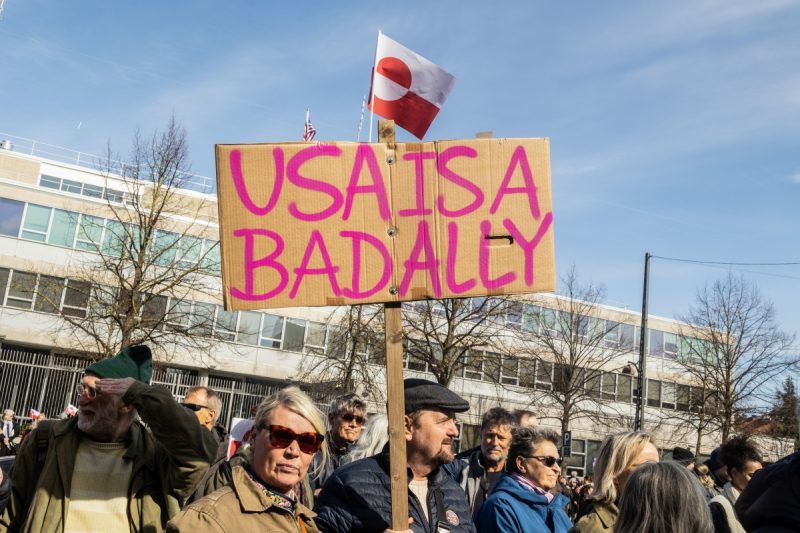
NATO is keeping conspicuously quiet as Trump revives his push to prise Greenland from Denmark, wary of being dragged into a bilateral spat between allies that Copenhagen warns could fracture the alliance. Instead, officials are rallying around a shared Arctic agenda, framing Russia’s military footprint and China’s growing presence in the High North as the unifying security challenge.
Contributors: Laurent Geslin, Claudie Moreau, Théophane Hartmann, Thomas Møller Nielsen, Magnus Lund Nielsen, Sofía Sánchez Manzanaro
Editors: Christina Zhao, Sofia Mandilara, Charles Szumski