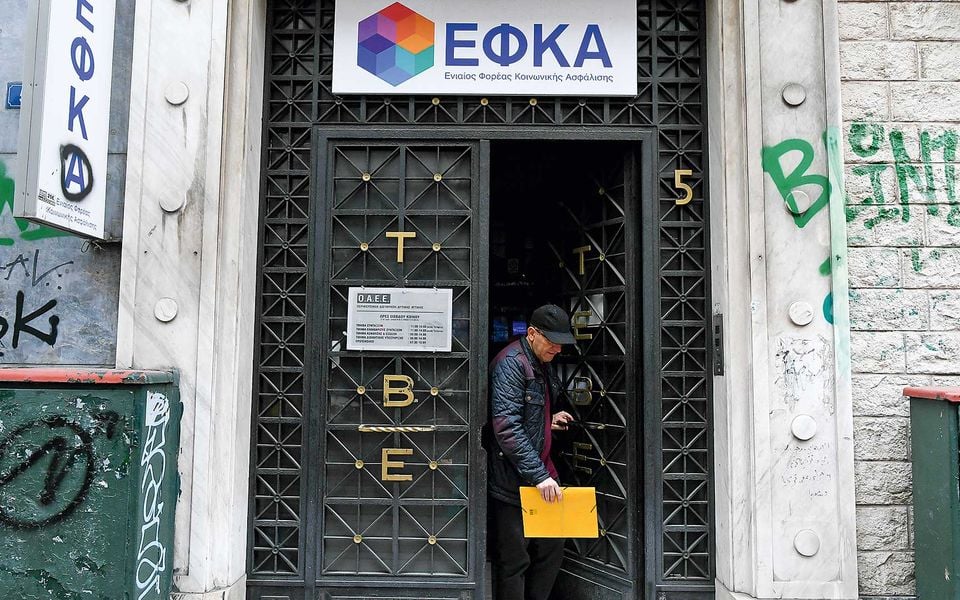
The vast majority of Greeks remain completely dependent on the first pillar of insurance, namely the public pension system, led by the Single Social Security Entity (EFKA).
The low savings-insurance culture is, in fact, another disadvantage that comes on top other problems, the demographic and the fiscal, testing on the one hand the sustainability of the system and on the other the adequacy of the income of the elderly.
A recent survey by Insurance Europe, the European insurance and reinsurance federation, showed four out of 10 Europeans and six out of 10 Greeks do not save for their pension, thereby recording a significant gap in pension savings. It also illustrated the future impasse, as besides not investing in private insurance and especially in private pension plans, the Greeks’ saving capacity also appears to be very low. The categories of savings programs for which Greeks were asked to respond are purely private insurance programs – the so-called third pillar – professional funds or other investment products with eye toward savings (mainly long-term) for which 59% responded that they do not have any. Deposits were excluded from the savings options.
The main obstacle does not appear to be a lack of willingness, but financial incapacity: Almost half of Greeks (44%) state that they would like to save but cannot afford to do so. An additional 15% say they intend to start saving in the near future, while 17% say they are interested but feel they do not have sufficient information.
While the sector-specific funds that provide benefits complementary to social security have been institution-based since 2002, Greece is a laggard among OECD member countries based on the value of the assets of such funds as a percentage of GDP with 0.1%, or 1% if all four mandatory social security funds are included.
Overall, fewer than 250,000 employees are insured in sector funds, i.e. almost 4.9% of the total economically active population of the country and 6% of those employed, that is, just six out of 100 employees.