We all know we live in a special place. Since moving here four years ago, we are greeted each morning with “Hi neighbor!” and “Have a blessed day!” This is a place with an abundance of and deep love for wildlife and a culture of catching or hunting one’s dinner. A place where hard work earns respect, where life experience is valued as much as formal education. A place where people will tell you like it is and expect the same from you. People here help their neighbors as they can after a fire, a death, or when a hurricane is headed our way. There is a mix of families here, Black and white, who go back for generations, living alongside a steady stream of newer comers from other parts of the country and world. No place is perfect and there are challenges of course, but this truly is a special place. A place proud of being welcoming and safe to live, work and raise a family.
Which is why it is so disturbing that, because of decisions made by faraway bureaucrats, there is a segment of our special community living in terror – afraid to leave their homes even to go to work or take their child to school. One of my neighbors, who fled the aftermath of a genocide in Guatemala, told me, “We used to feel so safe here, like this was our town too.” She is raising a beautiful, vibrant family here. But they are now afraid of being torn apart like the families already torn apart this year. After years – sometimes decades – of living, working, and raising families here, 11 residents of our small town have been arrested, or detained by ICE in the past year. Some remain in prison in awful conditions and an unclear future. Some have been deported to places where they may or may not be safe, leaving children behind with no father, and wives scrambling to care for their families.
I am not talking about people with serious criminal records as the news would have you believe. I’m talking about law-abiding, church-going, family-oriented, hard-working, tax-paying mothers and fathers. Courageous and persistent people who have risked a great deal to make a good life for themselves and their families. Our neighbors. You know them. The young man who cooks at your favorite restaurant, the mother who cleans houses and hotel rooms, the carpenter who built the boxes in the community garden, the man who shucked oysters in the morning and ran his store in the afternoon. These are families with children who go to school with your children, families you know from the soccer team or church.
How is it possible that in a town as close knit as ours, so many of our neighbors can disappear in the blink of an eye, leaving children – the future of this place – traumatized and forcibly separated from their fathers? What are we, as neighbors and people of conscience, going to do about it?
There are many misconceptions and outright lies being told about our immigrant neighbors and about immigration policy and ICE’s current operations. I would like to start with three.
First, there is the misconception that people are either “legal” or “illegal” and that someone can just go “get legal” if they wanted to. This is simply not the case. There are 22 different ways the federal government can give permission for a person to come and visit, live, or work here. Every one of these visas, green cards, protected statuses, refugee programs, asylum processes, etc. has a different set of rules, regulations, and timelines. Certain pathways are available to people from certain countries, but not from others. Some processes last three years while others have wait times of 120 years. Some processes give work authorization or permission to get a drivers license, others do not. Worst of all, under this administration, rules that people have diligently followed have been changed midstream, resulting in sudden changes in status. A person who was in-status yesterday can, with the stroke of a pen in DC, fall out of status despite having followed all the rules and checked in every year for ten years.
The second misconception is actually an outright lie: that ICE is targeting dangerous people with serious criminal records for deportation. The percentage of people deported fitting that description? Nationally, 5 to 8%. Locally here, 0%. Zero. In fact, not one of the people picked up by or handed over to ICE from Franklin County had a serious criminal record of any kind.
This leads us to the third fact. While in the past ICE may have prioritized deporting dangerous people, the current ICE is all about filling quotas. People who last year would have been left alone to work through their process (asylum seekers, long-term residents like the father who has been in Apalachicola 17 years, or the local painter with US citizen children) are now being snatched up to fill a quota. This is law enforcement at its worst, sacrificing public safety and trust in order to draw a paycheck.
Someone (a Republican neighbor) asked me last week in the parking lot of Ace: “I’m confused. After someone’s been here over five years and works hard and we know them and can vouch for them, can’t we just give them authorization to work and drive and live in peace?” Yes we could. But it would take an act of Congress. The long-term solution may be to give friends and neighbors in places like this a faster pathway to citizenship as President Reagan did for millions of immigrants in 1986.
But in the meantime, we must come together and show up for our neighbors as we would want our neighbors to show up for us. I know many in this community share this sentiment though they fear to say so out loud. Please say so, out loud. Tell your neighbors you are glad they are here. Join with others who are working to keep all our families safe.
Dr. Martin Luther King, Jr. said “the ultimate measure of a man is not where he stands in moments of comfort and convenience, but where he stands at times of challenge and controversy.” We live in challenging times and it is my prayer that we, each one of us individually and together, as a community, can rise above the rhetoric and division and care for one another, neighbor to neighbor.
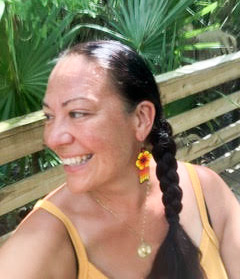
Xochitl Bervera is a farmer, entrepreneur, and community builder who was born in Mexico and now calls Apalachicola home.