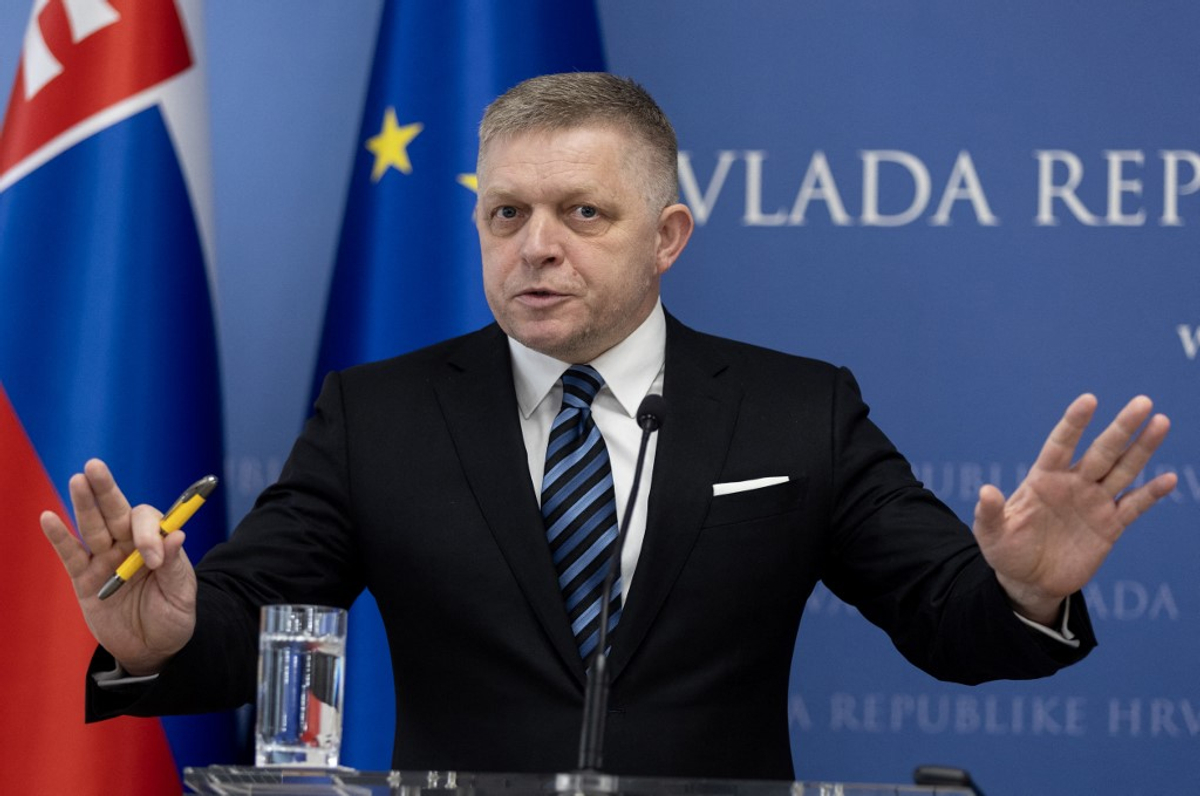
Slovak Prime Minister Robert Fico vowed before he took office that “not a single bullet” would be delivered by his government to Kyiv, but his country’s arms industry is booming, driven largely by frontline demand in Ukraine.
Since coming to power in October 2023, Fico, known as one of the most Moscow-friendly leaders in the EU, has moved to end Slovakia’s military aid to Ukraine, claiming that it only serves to prolong the war.
Follow our coverage of the war on the @Kyivpost_official.
The Eurosceptic leader has criticized EU sanctions on Moscow and opposed Ukraine’s NATO ambitions. He has also met with Vladimir Putin, drawing the ire of other bloc leaders who have cold-shouldered the Russian president.
But while the government in Bratislava has turned away from arming Kyiv, Slovakia’s private arms makers are profiting from selling weapons to Ukraine.
Arms exports surge
In 2024, Slovakia’s arms exports rose to €1.15 billion, equal to about 1% of the nation’s economic output. That is roughly double the level recorded in 2023 and about ten times higher than before Russia launched its full-scale invasion of Ukraine in 2022.
According to the analytical and consulting company Oxford Economics, Slovakia has become one of the world’s fastest-rising arms exporters relative to the share of total exports, with the figure climbing to about 0.7% in the 2022–2024 period.
Other Topics of Interest
Polish Consulate in Odesa Damaged by Russian Strike
Odesa has been one of the hardest-hit regions in recent weeks, sustaining frequent attacks which have left tens of thousands of residents without electricity, heating and water supplies.
In terms of this metric, Slovakia has outpaced bigger arms exporters including the United States, Poland and the Czech Republic.
While 2025 was not included in the statistics, Slovak news portal SME estimates that arms exports could have reached between 1.7 and 2% of GDP last year—a record figure.
‘Support for trade’
Slovak Deputy Defense Minister Igor Melicher said the pattern “does not show support for war, but support for trade.”
“The Slovak government pledged to its citizens in its manifesto that we will not send a single bullet from our state warehouses to Ukraine, and we are keeping this promise,” Melicher told Politico in August.
“We joined the European Union because of the values we share. We also respect the free market. Therefore, restricting defense industry companies would be quite hypocritical on our part,” he added.