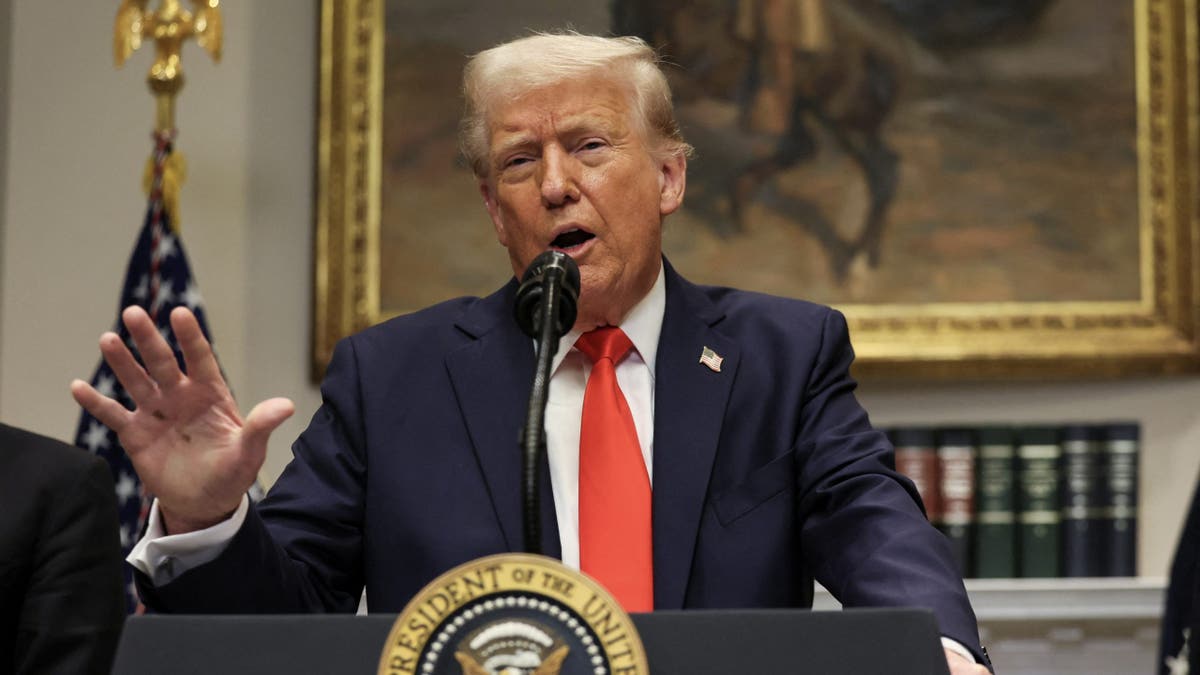
The White House said President Donald Trump will unveil a new “healthcare affordability framework” later this week, describing the effort as a bid to blunt rising insurance premiums and mounting medical costs after months of uncertainty over federal subsidies. Officials framed the announcement as a renewed push to provide relief to consumers, but they also signaled the proposal is not final and the timing could change.
The administration’s public posture includes a clear preference for routing federal funds to individuals rather than to insurers. On his social platform the president wrote that, “The only healthcare I will support or approve is sending the money directly back to the people, with nothing going to the big, fat, rich insurance companies, who have made $trillions, and ripped off America long enough,” adding that “The people will be allowed to negotiate and buy their own, much better, insurance. Power to the People.”
After announcing the intent to act from Detroit on Jan. 13, White House officials acknowledged the rollout had been postponed from an earlier expected unveiling. One White House official cautioned that “until President Trump makes an announcement himself, any reporting about the Administration’s healthcare positions is mere speculation.” The administration has not released an outline, cost estimates, legislative or regulatory path, or scoring from independent analysts.
The lack of detail leaves significant questions for markets, insurers and consumers. Insurers base 2026 plan pricing on expectations around federal policy and risk pools; sustained uncertainty can push insurers to file larger rate increases to hedge potential subsidy losses. That dynamic risks creating a feedback loop: higher premiums can produce so-called sticker shock that deters enrollment, worsening risk pools and prompting further price pressure. Enrollment timing intensifies the stakes—consumers generally must sign up before December 15 for coverage starting January 1, and open enrollment runs through January 15—meaning any last-minute policy shifts can have immediate effects on plan choices and market stability.

AI-generated illustration
Economically, a shift toward direct payments to individuals would reshape how premium assistance flows through the system. If federal assistance bypasses insurers, insurers could face revenue and risk-management changes that affect competition and pricing. Conversely, consumers receiving cash support could exert more price pressure on plans if they are able to shop across offerings, though the extent of that discipline depends on plan availability, network design and the structure of cost sharing.
Policy analysts will be watching how the administration proposes to reconcile immediate consumer relief with fiscal constraints and the mechanics of subsidy delivery. Major questions include whether the framework would require new legislation or could be implemented through executive action, how it would be scored by the Congressional Budget Office or other budget offices, and what transitional rules would protect people already enrolled.
Insurers, consumer advocates and lawmakers will likely demand rapid clarity. The administration’s next steps—publishing detailed policy text, providing cost estimates and laying out an implementation timetable—will determine whether the framework calms markets or adds another layer of uncertainty to an already precarious enrollment season.