By Amy Burtch
As a student at NC State University, Lottie Pate learned that showing up is integral to discovering what she wanted.
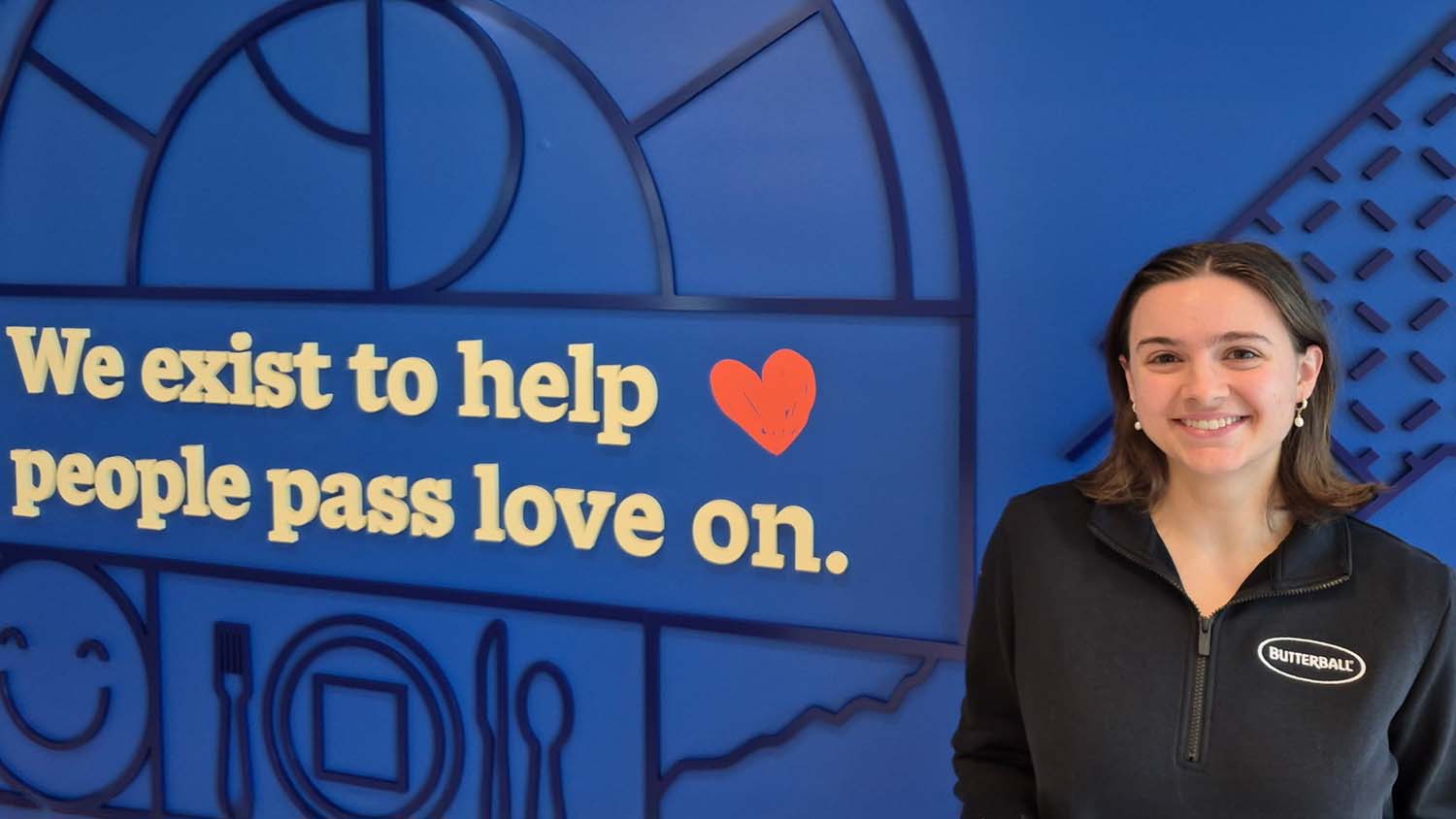
Showing up for positions with the Howling Cow Dairy Education Center and Creamery, the Zheng Lab for Food Chemistry, a local brewing company and the NC State Food Science Club ignited Pate’s professional aspirations while giving her a hands-on try at what would become her future career as a research and development (R&D) food scientist at Butterball, LLC.
A year after graduation, she continues to show up for new discoveries in her work, attributing her gumption and success to her time with the College of Agriculture and Life Sciences (CALS).
Discovering Food Science
Growing up, Pate enjoyed TV shows like “How It’s Made” and “Unwrapped,” both of which focused on the manufacturing process of products and food. She also excelled at chemistry in high school.
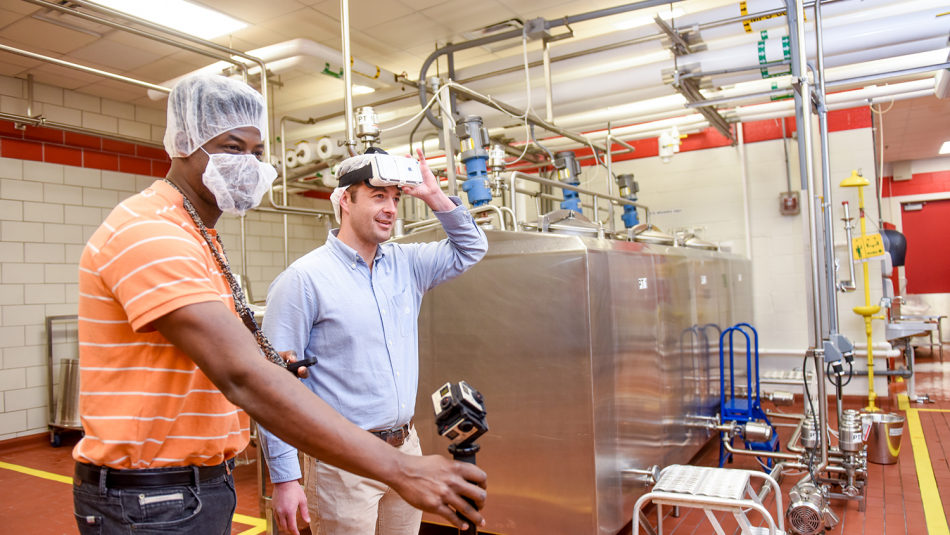
In college, she thought she would apply a chemistry degree to a career in the food or fragrance industries, but then discovered food science when a twist of fate landed her in quality assurance at the Howling Cow Creamery.
“At Howling Cow, I learned that food science was ‘a thing’ and quickly realized it was something I could do for my career,” Pate says.
Inspired, she pivoted to major in food science, which set her on a path to discovering her career. By the time she graduated in 2024, she had a job lined up at Butterball.
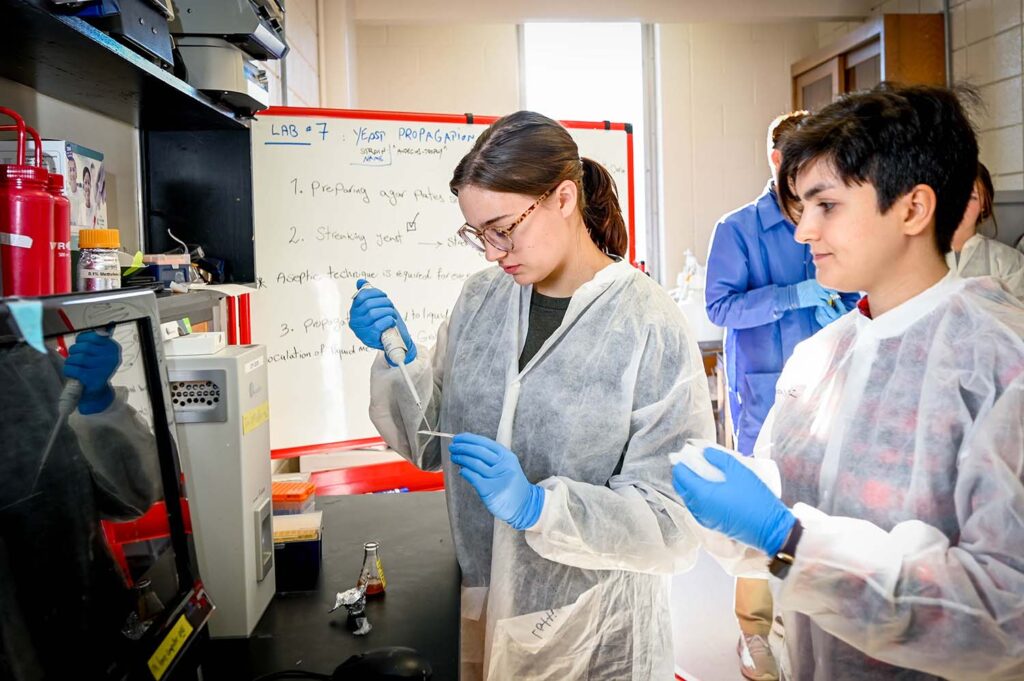 Lottie Pate in the Zheng Lab for Food Chemistry.
Inside R&D at Butterball
One might think an R&D food scientist would be isolated in a lab toiling away on research. But that is far from the case for Pate at Butterball.
“The job involves a lot of teamwork and communication,” she says. “It is a collaborative environment, and that was a pleasant surprise for me.”
In a “technical support meets food scientist” role, Pate works with different teams — from marketing and purchasing to operations and accounting — to achieve objectives like cost savings or process optimization. She also weighs in on innovation projects, ingredient substitutions and production decisions.
“If you want to commercialize a new product or make a change, it involves many teams,” Pate says. “The role is less benchtop and theoretical chemistry and more making of physical samples to be eaten.”
Expand Your Palate
Feeding Industry Success
Pate credits her courses and relationships with professors as essential to her professional preparation, noting that Dana Hanson, associate professor of meat science, first introduced her to Butterball.
“Having people who believe in you will help you get further,” she says. “I was grateful for Dr. Hanson’s support.”
Pate’s upper-level food science classes have helped her with essential technical skills in her first year on the job.
In Analytical Techniques in Food & Bioprocessing Science, she learned about research processes, critical thinking skills, and how to draft a standard operating procedure. In Chemistry of Food and Bioprocessed Materials, she discovered how functional ingredients work within food.
Lecturer Sebastian Wolfrum’s brewing science courses taught Pate about industrial processes, including the technical skills required to work in a plant and understand plant layouts.
As a CALS student, Pate also regularly worked in teams, experience that serves her well in her work at Butterball.
Her final senior project, auditing food safety at Howling Cow Creamery with the support of Lynette Johnson, assistant professor and food safety Extension specialist, required teamwork, where Pate learned to delegate tasks and communicate with her team for efficient project execution.
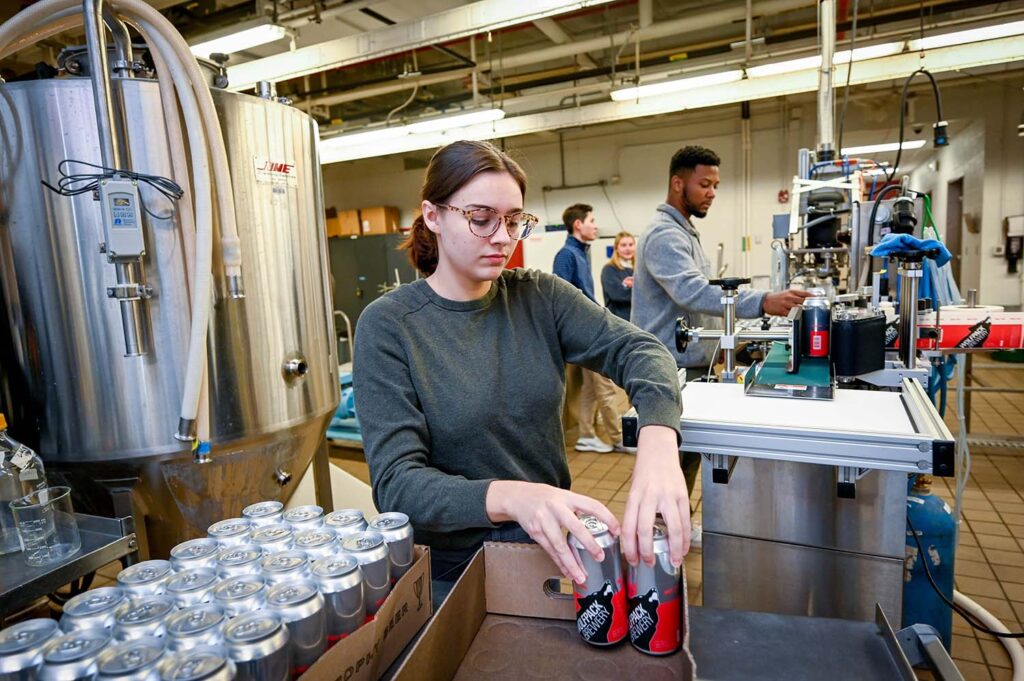 Pate worked in the Wolfpack Brewing Lab as part of her minor in brewing science.
Experiential Learning Drives Career Readiness
Pate’s hands-on experience at NC State also added value to her academic studies and continues to inform her current professional work.
In her role in quality assurance at the dairy plant, she plated samples and counted cultures to keep bacteria in check (and discovered food science).
As an undergraduate research assistant in the Zheng Lab for Food Chemistry, she learned about functional food chemistry using dairy products. The research focused on a pea protein sprayed with blueberry polyphenols, studying rheological behaviors as well as nutritional aspects.
“Dr. Zheng pushed me to learn how to research,” she says. “He wanted me to know how to structure research, process samples, write about processes and track resources.”
She also earned a minor in brewing science and worked in the brewing industry for over two years, including an internship with Bond Brothers Beer Company in Cary, North Carolina.
“I learned how to formulate new beer recipes, monitor active fermentations, rotate cellar stock and clean tanks,” she says.
The Art of Showing Up
Key to Pate’s success both in her college and professional careers has been showing up.
From attending club meetings, career fairs and campus-wide events to even staying late to clean labs, she put in the time and effort to “talk to new people and put herself out there.”
Those efforts paid off, and she is excited about where her career in food R&D will take her.
“Every week, I am making pilot samples or doing a production run,” she says. “Something is always happening.”