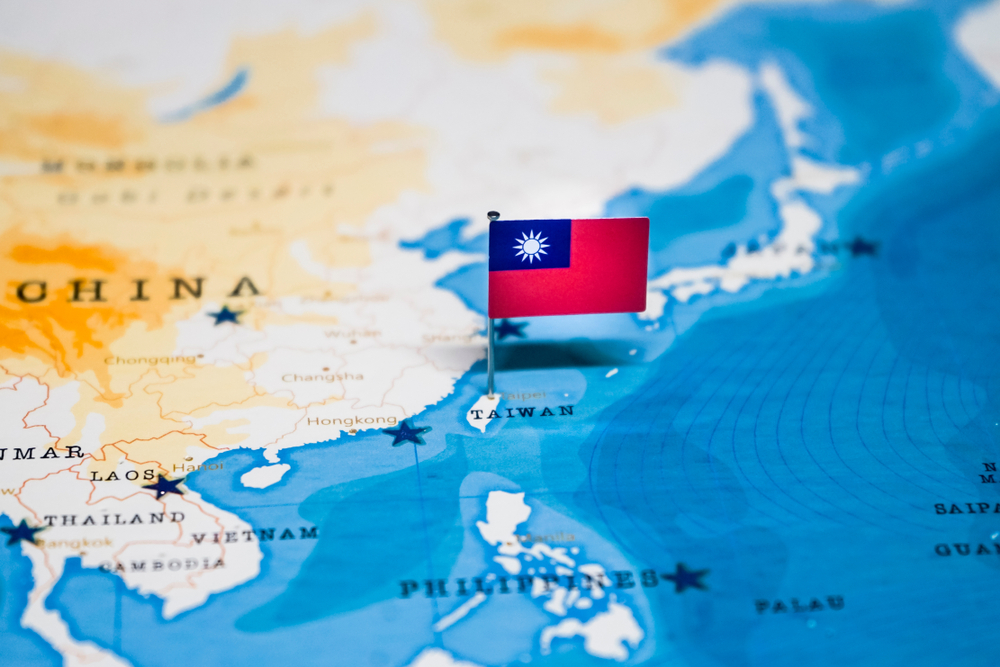
The possibility of China invading Taiwan militarily stands as the greatest geopolitical risk to equity markets, because of the outsize impact this would have on the tech sector globally and markets such as Nasdaq.
Overall, the risk to markets from such an event would be far more severe than those experienced around others, such as Venezuela recently, according to a briefing that included Mikael Lok, group CIO and co-CEO Asset Management, Norman Villamin, group chief strategist, Nicolas Laroche, global head of Advisory & Asset Allocation and Peter Kinsella, head of Investment Services UK.
Key reasons put forward for the equity downside risk associated with Taiwan include:
Critical dependency for AI and tech: A conflict in Taiwan would immediately derail the global “AI story”. Major technology companies such as AMD, Apple, and Nvidia are heavily dependent on Taiwan’s supply chain.
Irreplaceable supply chain: There is “zero way” for these companies to replace the manufacturing capabilities found in Taiwan. They estimate it would take a decade to repatriate that level of expertise and infrastructure to the US.
Catastrophic market impact: If China were to move on Taiwan, it is predicted to be a “disaster on the market”. Because companies like Nvidia make up a significant portion (8%) of the S&P 500, a disruption there would negatively impact the entire MSCI World index.
To tackle this risk, investors may wish to consider strategic hedging, such as considering options on TSMC (the semiconductor company), which trade at relatively inexpensive levels compared to the price of shares.
Overall, the briefing heard that geopolitical risk is a key risk for investors to factor into their thinking, and is driving expectations around both traditional asset classes such as equities and government bonds, as much as support for safehaven assets such as gold or the Swiss franc – above and beyond fundamentals, such as a blend of strong consumer investor demand for gold, amid central bank buying of the metal as the dollar weakens on expectations of rate cuts.
Europe vs US?
The US vs China relationship may be the chief driver of geopolitical risk ongoing, however, when asked about the possibility of US vs Europe in the wake of events such as the Trump administration’s push to acquire Greenland and the earlier push to foist greater defence spending on NATO’s European members, the briefing heard that the emergence of any such competition would depend on European countries coalescing around a single response to the US.
Examples exist of the European response at the individual level, such as Germany’s decision to announce greater spending on defence and infrastructure, but so far a universal European response has not defined the trans-Atlantic relationship.