Following the decision of the Member States on 9 January, nothing now stands in the way of the signing of the trade agreement between the EU and the members of the Latin American trade bloc Mercosur, thereby putting to rest many years of uncertainty surrounding what amounts to the EU’s most important trade agreement — both politically and economically. In a period of global instability, in which the law of the jungle is clearly gaining ground over the rules of the international community, the agreement with the countries of Latin America sends a clear signal that fair and rules-based partnerships are still possible. Alongside other EU agreements, such as that with Indonesia, the Mercosur agreement represents a further stepping stone towards strengthening international law and rejecting the law of the jungle.
In light of growing nationalist and imperial tendencies throughout the world, the European Union needs to demonstrate that it still has a role to play. It needs to focus on fair and rules-based agreements with reliable partners, thereby strengthening multilateralism. At the same time, there can be no doubt that the US’ most recent political and military actions must not be allowed to form a precedent for future developments. Unless the EU presents a clear, united and decisive political front, this will, however, not be possible. Europe must not be allowed to put a spanner in its own works. Decision processes leading up to the Mercosur agreement clearly highlighted existing weaknesses, especially since the US is known to systematically exploit such internal tensions, as evidenced in the National Security Strategy published in November.
An important political signal
Latin America traditionally maintains close relationships with Europe — and the Mercosur countries are constitutional democracies with which we can cooperate well on a political level. The agreement is therefore more than a pure trade agreement. It is based on common geopolitical and economic rules and focuses on partnership, sustainability and climate protection. For the first time, the implementation of the Paris Climate Agreement will be anchored in a trade agreement that is binding for both sides. In the current situation, this is also an important political signal.
The EU urgently needs new, reliable economic partners to secure its strong import and export structures in industries such as automotive, machines, chemicals, pharmaceuticals and clothing. In addition, the agreement presents an opportunity to diversify supply chains under good working conditions and environmental standards, particularly when it comes to energy sources and raw materials. New economic impetus is being created and markets opened on both sides. Benefits for investors include both planning and legal reliability. Investments in sustainable energy projects and digital services can trigger new developments. Joint projects improve environmental protection and limit climate change. The countries of Latin America, notably Brazil, are pursuing a course of reindustrialisation that the agreement is in a position to support. At the same time, the EU is in competition with China, which already supplies 27 per cent of the Mercosur countries’ imports and has pushed the EU into second place with 19 per cent.
The agreement forms a basis for evaluating and handling geopolitical risks, such as the rerouting of trade as a consequence of global tensions.
New perspectives are also opening up on both sides in agriculture, based on clear, binding standards. The EU Commission estimates that agricultural and food exports from the EU could increase by up to 50 per cent, particularly with dairy products, cheese, chocolate, wine and alcoholic drinks. Protection against counterfeiting is guaranteed for 357 European food products. This will help to secure jobs in the EU. Estimates suggest that the Mercosur agreement could increase the EU’s gross domestic product by 0.1 per cent, a relevant factor in a context of weak growth. The Mercosur countries expect a rise of 0.3 per cent. Trade with these countries currently amounts to only 2.5 per cent of total EU foreign trade.
The EU stands for economic development that is geared towards the interests of people in Europe and in partner countries. This also includes common initiatives related to monitoring and protective measures in the area of sustainability. The agreement provides a common basis for this. There is frequent criticism of the deforestation taking place in the Amazon region and of other developments in the Mercosur countries. Improvements cannot, however, be brought about by finger wagging but only by commitment based on partnership. The Brazilian government also aims to prohibit illegal logging, a goal that is anchored in law. There is a requirement for cooperative measures, including the shared use of monitoring instruments such as satellite data; the exchange of tracking systems, as products from illegally deforested areas are excluded from the agreement; and technical support for the Mercosur countries, also in the context of the Global Gateway Initiative.
The measures include a precise evaluation and greater transparency in value chains, using instruments such as the EU Deforestation Regulation (EUDR) and the Corporate Sustainability Due Diligence Regulation (CSDDR). In this way, the agreement’s sustainability requirements can be implemented, and links between trade liberalisation and sustainability goals can be more easily understood on both sides. This is a joint task. Moreover, the agreement forms a basis for evaluating and handling geopolitical risks, such as the rerouting of trade as a consequence of global tensions, for example, by conflict-related diversions of Chinese exports.
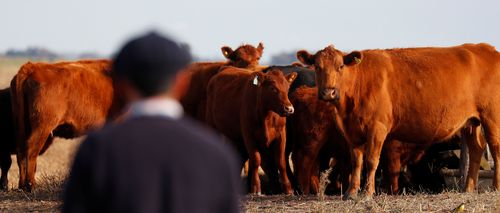
I particularly welcome the measures that have been announced to protect European farmers. The practical safeguard clauses that I helped negotiate to limit too large imports of sensitive agricultural products, such as beef, demonstrate that trade policy and a strong agricultural sector are not mutually exclusive. Within the framework of the agreement, a dialogue will also take place about production methods, including the use of pesticides. At the same time, it is clear that strict checks are already in place today. The EU food standards allow neither hormone-treated beef nor the use of certain types of animal medication or prohibited pesticide residues. Comprehensive veterinary and other checks are well-established and are being stepped up. They also apply to the more than three million tonnes of soy that are already imported duty-free from Brazil to help compensate for the feed protein deficit in poultry, pork and beef production.
All in all, the EU and politicians in the Member States need to work harder to convey the effect and importance of trade agreements more effectively.
There are no protests against these imports. In the debate about agriculture and trade, there is a need for greater honesty on all sides. The EU’s agricultural and food exports achieved a trade surplus of €63.6 billion in 2024, largely with countries with a trade agreement in place, including Canada, where the ratification of the CETA agreement was also accompanied by controversial discussions.
All in all, the EU and politicians in the Member States need to work harder to convey the effect and importance of trade agreements more effectively. The political and economic benefits must be clearly stated and discussed extensively. In the case of the Mercosur agreement, this has only been successful to a point. It is all the more important to make up for this in the coming months.
Following the signing in Paraguay, the agreement can be put on a stable footing. After careful consideration, the European Parliament is likely to take a final vote on the agreement in three to four months and accompany its implementation constructively, but also critically. The goal remains a fair-trade agreement that opens up opportunities for people in Europe and Latin America, protects high standards and strengthens Europe’s international influence.