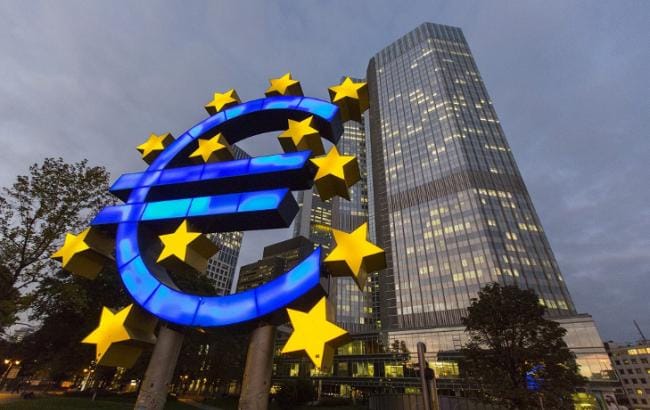
Eurogroup ministers are due to nominate a candidate at their meeting on Monday, 19 January 2026, from a shortlist of six. The appointment would replace Spain’s Luis de Guindos, whose term ends at the end of May 2026.
ECON’s stance reflects Parliament’s formal consultative role in senior ECB appointments. While the committee’s view can shape political momentum, it does not determine the outcome. Under the selection procedure, ministers first agree a nomination, the Council adopts a recommendation to the European Council, and EU leaders then take the final decision, expected at a summit in March 2026. The ECB and Parliament are consulted during the process, but neither institution has a veto.
The Eurogroup presidency has set out the voting threshold for the nomination: a reinforced qualified majority requiring support from at least 16 of the 21 euro area countries, representing at least 65 per cent of the euro area population.
The shortlist comprises central bankers and a senior finance minister: Centeno and Kazāks, alongside Estonia’s Madis Müller, Finland’s Olli Rehn, Lithuania’s Rimantas Šadžius, and Croatia’s Boris Vujčić.
The ECON committee’s endorsement of Kazāks and Centeno came on Wednesday, 14 January 2026, days before ministers meet. Market and policy watchers had, prior to the committee’s signal, widely regarded Rehn as a leading contender, with Kazāks and Vujčić also seen as credible choices.
Each candidate brings a different institutional background. Kazāks has led the Bank of Latvia since late 2019 and sits on the ECB Governing Council, which sets euro area monetary policy. Vujčić has been governor of the Croatian National Bank since 2012, joining the Governing Council after Croatia adopted the euro in 2023. Müller is governor of Eesti Pank, also a Governing Council member. Rehn is governor of the Bank of Finland and a long-serving European economic policymaker. Šadžius was nominated by Lithuania as its candidate; the Lithuanian finance ministry said he has held senior economic roles in national government and EU institutions, including at the European Court of Auditors.
Centeno’s candidacy carries a distinct political profile. Portugal formally submitted him as a contender after his term as governor of the Bank of Portugal ended in October 2025. He previously served as Portugal’s finance minister and as president of the Eurogroup. Reuters has described him as a dovish voice in ECB policy debates during his time on the Governing Council.
The appointment is the first step in a broader cycle of impending turnover at the top of the ECB. Several executive board posts are due to change hands before the end of 2027, including the presidency, as Christine Lagarde’s term is expected to end in 2027 under the ECB’s non-renewable term rules.
That wider reshuffle has sharpened attention on balance within the ECB’s six-member executive board. Reuters has noted that, historically, the board has been dominated by men from the euro area’s largest economies—France, Germany, Italy and Spain—while no former communist member state from the east has held an executive board seat since the ECB’s creation in 1998. Reuters also reported that women have held 19 per cent of board seats since inception.
For governments, the vice-presidency is also part of a wider negotiation over national influence in euro area institutions. With more senior posts—including the president, the chief economist, and the board member responsible for market operations—due for replacement in 2027, some capitals view the 2026 decision as an early marker in a longer contest.
Ministers are expected to weigh technical competence, experience of euro area crisis management and institutional seniority, alongside political considerations such as regional representation and the distribution of posts among member states. ECON’s signal for Kazāks and Centeno adds a parliamentary preference to that equation, but the decisive bargaining will take place among finance ministers on 19 January, and then among EU leaders in March.
Post Views: 992