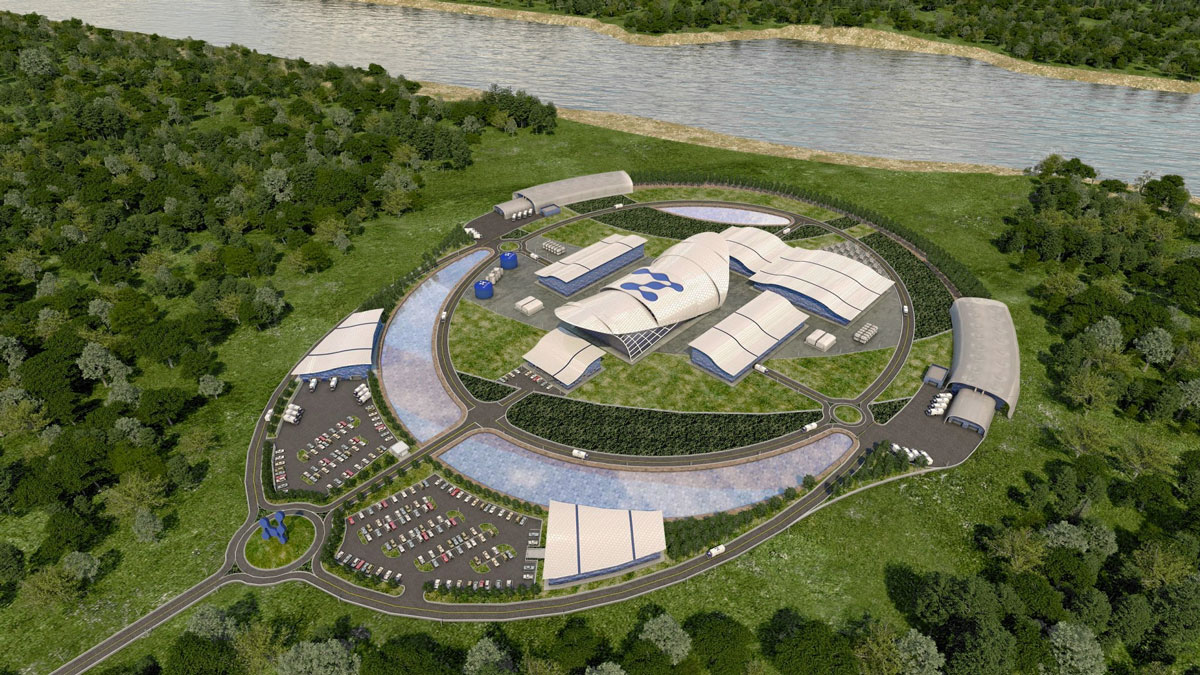
Romania has the potential to become the first country in Europe to implement small modular reactors (SMR), an innovative nuclear energy production technology. The country could thus act as a catalyst for the spread of this technology in the region.
According to the International Atomic Energy Agency (IAEA), small and medium-sized or modular reactors are an option for meeting the need for flexible power generation for a wider range of users and applications. Small modular reactors, deployable either as single or multi-module plant, offer the possibility to combine nuclear with alternative energy sources, including renewables.
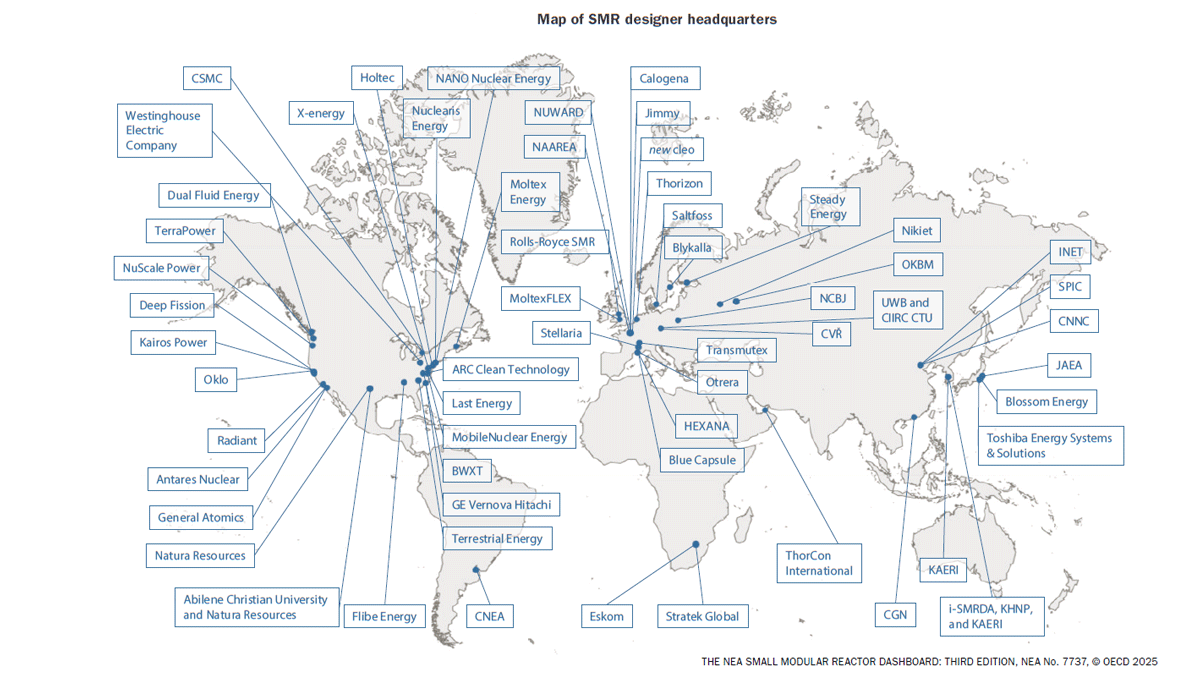
The latest edition of the OECD Nuclear Energy Agency’s Small Modular Reactor Dashboard identifies 127 SMR designs, which is up from 98 in its previous edition. It also reports that since that 2024 edition there has been an 81% increase in the number of SMR designs to have secured at least one source of funding, or funding commitment.
Nuclearelectrica-NuScalePower Cooperation Agreement
Nuclearelectrica has signed a memorandum with NuScale Power (USA) for the evaluation and implementation of an SMR in Romania. The first small modular reactor could be operational in 2027-2028. The project could turn Romania into a regional pioneer, with industrial, technological and economic benefits.
As Cosmin Ghita, CEO of Nuclearelectrica, pointed out, the small modular reactor project in Doicesti could become an extraordinary benchmark for the energy security we so desperately need and for the energy of the future. This project places Romania among the first countries in the world to implement modular nuclear technology, with direct benefits for the transition to a green economy.
In December 2025, Energy Minister Bogdan Ivan announced that Doicesti was in the final stage of design and feasibility studies for the SMR 6 small modular reactor project, which will create over 2,000 jobs during construction and over 230 permanent jobs for the operation of the plant.
“At Doicesti we are in the last stage of design and feasibility studies for the SMR project. I congratulate the Romanian companies involved in this project, which have committed to financing solutions for FEED 2 and will complete this stage by February 28, 2026,” the minister said at the time. “The technology behind the project is the only one in the world to have received two design approvals from the US nuclear regulator. Six small nuclear reactors, each with an installed capacity of 77 MW, will produce 462 MW of baseload power at a capacity factor of over 95%.”
The Energy Minister also stated that he had requested a clear analysis of the development and other SMR projects in Romania, as this is a safe, emission-free technology capable of delivering constant energy and supporting the national system for at least another 30 years.
The Ministry of Energy reaffirms its support for the continuation of the SMR project in Doicesti, which is currently in Phase 2 of the Design and Feasibility Studies. Following extensive discussions with the project company’s shareholders, a solution was identified to fully finance the current stage of development. According to the current roadmap, the final investment decision is expected later this year. At the same time, the Ministry of Energy is exploring the possibility of developing new SMR projects in Romania, with the aim of positioning our country as a leader and promoter of innovative and safe nuclear technology.
“The Doicesti SMR project continues, with the support of the Ministry of Energy. I would like to thank the shareholders of the project company who found the solution and resources necessary to finalize the final phase of the design and feasibility studies, which will provide us with all the information needed for a final investment decision, scheduled for 2026,” he said.
The SMR project in Doicesti will continue with the unchanged shareholding structure of the project company RoPower Nuclear, consisting of Nuclearelectrica and Nova Power and Gas.
“The project team is very close to finalizing the last stage of studies necessary for a correct and final investment decision. At this moment, we consider that it is appropriate that the shareholder structure remains unchanged, and based on the conclusions of the feasibility study, we will open the project to investors,” Bogdan Ivan explained.
“I believe in this project because it comes up with an innovative and reliable solution to our need for baseload energy. It works constantly, regardless of weather conditions, water flow or the strength of the sun and, very importantly, with no harmful emissions into the atmosphere. That’s why we are exploring new possibilities to develop similar projects in Romania. In addition to energy, we are talking about our secure place in an emerging industry that generates jobs, expertise, and profit for Romanian companies, as well as the training of generations of highly specialized experts for the future,” the Energy Minister emphasized.
Firm stance for a pro-nuclear energy policy
Former Energy Minister Victor Grigorescu explained why Romania must continue to take a firm stance for a pro-nuclear energy policy.
“First of all, we have Nuclearelectrica as a main partner in the Doicesti project, because we ensure the presence of a traditional player in this new area of technology. The Romanian state and investors on the stock exchange who invest in Nuclearelectrica have an interest, and it is basically a way for an important company in the national energy system to look to the future.
On the other hand, there are also some challenges, which at the public policy level are not yet well defined, the energy expert emphasizes.
“Firstly, in Brussels, the commitment to the nuclear sector or the direction of development of the nuclear sector is not yet entirely clear. There are still member states that are sceptical about the future of the nuclear industry, as well as other voices that say nuclear energy is not necessarily green energy. I believe that Romania should continue to take a firm stance in supporting this pro-nuclear energy policy. Why? Because without it we cannot secure funding. SMR projects are quite expensive. As with any new technology that has not seen significant market development and without European funding, these will not necessarily be competitive. This is also an aspect related to European funds.
Secondly, I think we still need infrastructure. In addition to the actual financing of a project, we need Brussels to introduce new rules on the development of new technologies and on obtaining permits for these technologies.”
Single market with fewer barriers
“We are amid a major change in the energy market, which has a single trend, namely, to have a single market with fewer barriers. This is a positive thing, but this new European policy should not lead to a loss of competitiveness, especially for Eastern Europe, where financial resources and procedures are not necessarily comparable to those in Western Europe. And if we are not careful, these projects may face real problems in reaching the market, finding investors, and starting production. I would say it is very important to look at this part of European policies,” Victor Grigorescu warns.
Romania and the need for a technology partner
There are other projects in Romania based on other technologies, and Romania needs a technology partner, because this technology is not widely available. Is the US a major partner for us?
“This is another aspect that complements the strategy regarding SMRs, namely, strengthening a partnership between Nuclearelectrica or other players in the energy sector in Romania on the one hand, and technology owners, mainly from the United States, on the other. There are probably other areas, but the US remains a very serious incubator for such technologies, especially since they mainly originate from the military sector. And there is certainly a second area of expertise in the European Union, with France probably being the biggest supporter of the nuclear industry.
The second important partner that Romania needs for the SMR industry, after the United States, is France, or equally so. I don’t think there is a difference between the two partnerships, because at the end of the day they have their own characteristics,” the expert points out.
The cooperation between Nuclearelectrica and the US company NuScale Power is one of the most ambitious energy projects in Romania and one of the most advanced SMR projects in Europe.
Nuclearelectrica-NuScale Power Cooperation: The first framework agreement for starting technical and economic studies on SMR technology
2019 was the first important step when Nuclearelectrica and NuScale Power signed a Memorandum of Understanding to evaluate the potential of implementing a small modular reactor in Romania. The memorandum provided for the exchange of technical and operational information; analysis of the feasibility of NuScale technology in Romania; assessment of opportunities for locating components and the supply chain.
It represented a framework agreement for the commencement of technical and economic studies on SMR technology, and the collaboration was then extended through additional agreements, such as the involvement of Romanian and international partners and the identification of possible construction sites.
Doicesti – the pilot project that could become a model for converting old, high-emission power plants into clean nuclear facilities
Following technical analyses, Romania selected the site of the former thermal power plant in Doicesti as the first location for the implementation of an SMR. The reasons included: the existence of energy infrastructure; efficient connections to power transmission grids; land available and previously studied for energy activities; the possibility of converting a former fossil fuel power plant into a nuclear one.
The proposed technology is the NuScale modular reactor, model VOYGR, developed by NuScale Power. This model’s main features are modules of approximately 77 MW each; the possibility of installing 4, 6, or 12 modules, depending on requirements; modular construction with prefabricated components, which reduces construction time; passive safety systems that do not require electrical power or human intervention to shut down the reactor.
6 SMR modules with 462 MW
For Romania, the planned configuration is 6 SMR modules with a total power of about 462 MW. Once the site was chosen, the project entered the advanced design stage, known as FEED. Specifically, this stage includes:
Detailed site assessments Environmental studies Geotechnical studies Preliminary plant design Updated cost and schedule estimates Identifying infrastructure needs Analysis of regulatory requirements.
International involvement and strategic support
The SMR project developed alongside NuScale is part of the energy cooperation between Romania and the United States. It benefits from: US technical and financial support in the initial phases; cooperation between institutions in both countries; and international interest in transforming Romania into a model for SMR implementation in Europe.
One of the most advanced projects within Western initiatives in Europe
By introducing the small modular reactor, Romania has the following objectives: diversifying and decarbonizing the energy mix; increasing domestic energy production; creating a new nuclear industry based on modular components; reconverting coal-mining areas and old infrastructure; increasing energy independence; developing the workforce through nuclear training programs.
SMRs also enable the powering of large industrial consumers, integration with hydrogen projects and heat production.
Challenges and uncertainties
While the project is promising and advanced by European standards, there are several challenges.
First, it is necessary to obtain all nuclear energy permits and secure full financing. A local supply chain must be built, and legislation must also be adapted for modular technologies.
Although it seems secondary, it is important to mention the acceptance of residents and communication with the public.
And last but not least, there are the potential technological or logistical delays especially since SMRs are a new technology and their implementation requires rigorous procedures.
Long-term outlook and impact
If the Doicesti project succeeds, Romania could become the first country in Europe with an operational SMR and a regional centre for SMR design and implementation.
The Romanian state will be a provider of expertise in the field of advanced nuclear technologies and a pioneer in the conversion of old power plants into clean nuclear facilities. The project has major strategic potential for the entire region.
The future of SMR in the global energy mix
SMRs have the potential to play an increasingly important role in the global energy mix. They can replace coal or gas-fired power plants, cutting carbon emissions.
They can also complement renewables, providing stability to the grid. Let’s not forget that early adoption can develop local industry, train specialized personnel, and boost technology exports.
SMRs can provide energy security through domestic, controllable, and reliable energy, but obstacles include high long-term costs, regulations, public reluctance, and nuclear waste management.
Small modular reactors are a promising direction for the future of nuclear energy. Combining the advantages of conventional nuclear power plants with flexibility and modularity, SMRs offer realistic solutions for the energy transition. Romania has the chance to become a regional pioneer of SMRs, with energy, industrial and economic benefits.
Success will depend on rigorous implementation, robust regulation, transparency and adherence to the highest safety standards.
The European Union finances green projects with a low carbon footprint, which means that nuclear energy, strictly speaking from a legal point of view, is not currently considered by the European Commission to be a 100% green technology.
What consequences does it have? Energy experts argue that if funding for nuclear energy is desired, proof of carbon emission reductions for new technologies is required. Some calculations are needed, which becomes a somewhat political issue, analysts say. And for this, the Romanian government, together with other Member States, must convince Brussels that this energy is truly green. It’s a complicated, long-term battle.
“It is not very clear now which nuclear projects have been financed directly from European funds, but rather from national funds. Wind energy, solar energy, batteries—all these new production segments have enjoyed favourable tax treatment. So, taxation is a key element, at least for Romania at the moment,” Victor Grigorescu says.
First of all, Nuclearelectrica must finance numerous projects, and it will be a very big effort to convince investors, to convince banks, to obtain new financing. Everything depends, of course, on the geopolitical situation. If the situation worsens, all companies in Romania will have difficulties in obtaining financing.
Nuclearelectrica and the risk of multiple projects
There are two projects that Nuclearelectrica has to realize before the SMR or in parallel. These are: extending the life of reactor one and investing in reactors three and four.
All these works are scheduled to be completed by 2030, which means a huge investment effort. Therefore, it will be a significant challenge for Nuclearelectrica to achieve all these objectives within the set deadline.
Moreover, the Extraordinary General Meeting of Shareholders of Nuclearelectrica on September 3, 2025, came to a surprising decision: the SMR project at Doicesti remains blocked. The reason? The Shareholders’ Agreement was not approved. The document was to be signed between Nuclearelectrica, Nova Power & Gas, and DSPE Beta Private Equity Fund, but the overwhelming majority of votes cast were abstentions.
According to the agreement reached at the GMS in September, which was tacitly rejected by the Romanian state, the South Korean investment fund was supposed to acquire a 39.5% stake in the project company RoPower Nuclear, in which Nuclearelectrica would have become the largest shareholder, but a minority one, with 46.5% of the shares. As part of the capital increase agreement, Nova Power & Gas’s stake in the share capital would have been reduced to 13.95%.
Nuclearelectrica has reconvened its shareholders on December 18, 2025, to approve the so-called Shareholders’ Agreement whereby the South Korean investment fund DS Private Equity enters the project company RoPower Nuclear, which will develop the small modular reactors (SMR) project in Doicesti.
Shareholders have once again blocked Korean partners from DSPE from acquiring a stake in RoPower Nuclear for the SMR project in Doicesti, leaving the current shareholding structure unchanged, although the Ministry of Energy has reiterated that the project is moving forward, exploring new SMR sites. The decision maintained the blockage for the entry of Korean partners, in the context of lengthy discussions about the management and shareholding structure, thus suspending the project in its current form.
The SMR project in Doicesti will continue with the unchanged shareholding structure of the project company RoPower Nuclear, consisting of Nuclearelectrica and Nova Power and Gas.
Outcome
For now, the Cernavoda nuclear power plant remains in the spotlight, with major investments in the refurbishment of Unit 1 and preparing Units 3 and 4. However, without the advancement of the SMR project in Doicesti, Romania is missing out on an opportunity to enter the new era of modular nuclear energy more quickly.