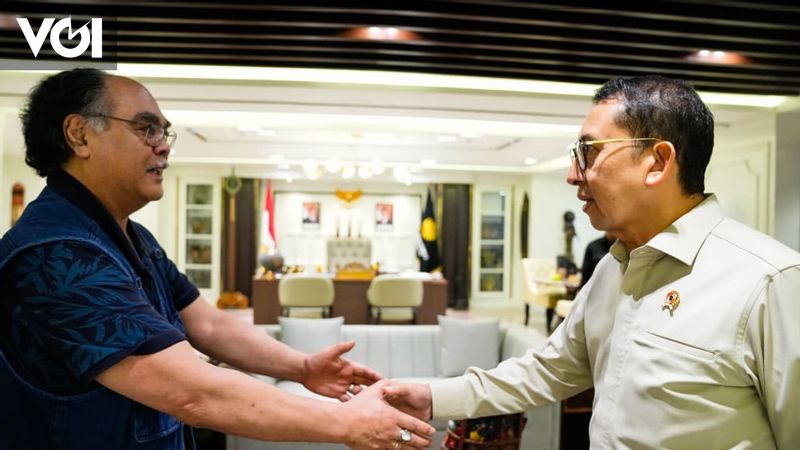
JAKARTA – The Indonesian government through the Ministry of Culture is beginning to look at the great potential of the diaspora in the Netherlands as the spearhead of cultural diplomacy. One of the main focuses is the development of Pencak Silat which is now being fought for so that it is not only known as a sport, but also as a deep cultural identity.
Minister of Culture Fadli Zon assessed that the emotional closeness of Indonesian descendants in the Netherlands to their ancestral culture is very strong, but has not been optimally utilized.
“This potential is great for cultural diplomacy if it is managed seriously and sustainably,” said Fadli in a meeting with representatives of the Nederlandse Pencak Silat Federatie (NPSF).
The Power of 2.5 Million Diaspora
NPSF data shows a staggering fact: about 20 percent of the Dutch population has Indonesian ancestry. This figure is equivalent to 2 to 2.5 million people.
This massive number is considered a very strong mass base to introduce the face of Indonesia on the international stage through Pencak Silat, keris, to wayang.
Against the “Just Sports” Current
During the meeting, Bradley from NPSF revealed the challenges faced abroad. Currently, Pencak Silat is more often seen only from the dimension of sport or physical martial arts alone. This is feared to erode the philosophical and cultural values contained in it.
Responding to this challenge, NPSF is preparing:
Culture-based curriculum: Silat will be taught as an extracurricular activity at primary and secondary levels in the Netherlands.
Character Education: The main focus is not just fighting, but rather the cultivation of traditional values and character.
Inclusivity: Respecting various streams, including the Cimande stream which is already popular there.
‘Indonesian Fund’ support 2026
Minister Fadli Zon emphasized the government’s commitment to support this movement in a concrete manner. He revealed that the government would reopen the Indonesian Fund scheme in February 2026.
This cultural endowment scheme can be used by cultural communities and the diaspora to finance activities related to intangible cultural heritage that has been recognized by UNESCO, including Pencak Silat.
“This is a real support so that knowledge about traditions remains alive and has a sustainable ecosystem abroad,” said Fadli.
The English, Chinese, Japanese, Arabic, and French versions are automatically generated by the AI. So there may still be inaccuracies in translating, please always see Indonesian as our main language.
(system supported by DigitalSiber.id)