New agreements focus on bolstering Lebanon’s security sector and supporting crucial recovery initiatives
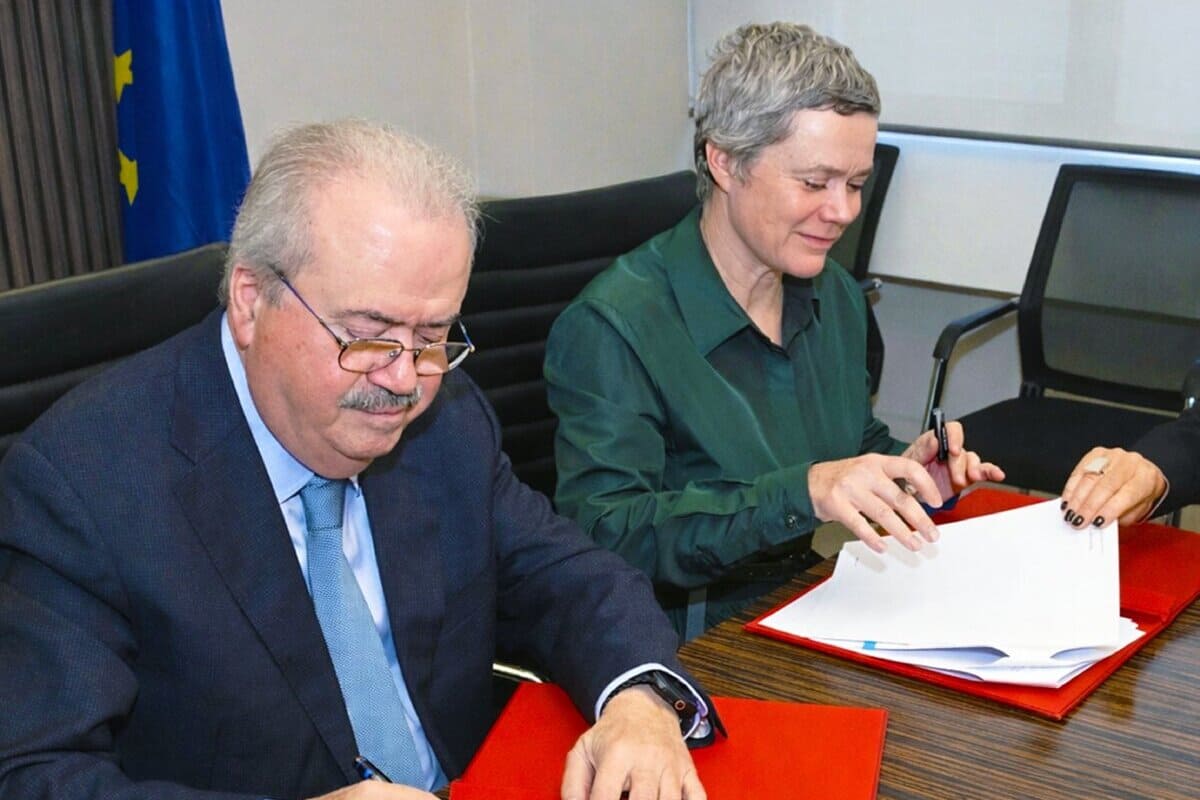
The European Union and Lebanon’s government have entered into six new financing agreements, amounting to EUR110.5 million ($128.55 million) in grants, aimed at bolstering the security sector, facilitating recovery in regions impacted by recent conflicts, and advancing crucial reform initiatives.
According to an EU delegation cited by the state-run news agency NNA, all agreements were signed with Minister of Finance Yassin Jaber.
These grants are part of the EUR1 billion support package unveiled by European Commission President Ursula von der Leyen during her visit to Beirut in May 2014.
“These grants confirm the European Union’s firm commitment to Lebanon’s stability, sovereignty, and security and to strengthening state institutions at this critical juncture in the country’s history,” the delegation said.
“The agreements also reflect renewed momentum in relations between the European Union and Lebanon, manifested in the resumption of the work of the EU-Lebanon Association Council, increased high-level exchanges, and the conclusion of several new cooperation initiatives.”
The EU delegation indicated that it continues to offer unconditional support to Lebanese security institutions. It explained that EUR30 million is set to be allocated to enhance the capacity of internal security forces in combating organized crime and cybercrime, while also supporting all security agencies in their counterterrorism operations, including efforts to counter terrorist financing and smuggling.
Additionally, it was reported that an extra EUR25 million will be directed towards improving integrated border management at land border crossings and airports, as well as enhancing maritime security. To ensure the ongoing operation of vital security facilities, EUR8 million is planned for sustainable and reliable energy solutions for Lebanese security institutions.
A funding package of EUR25 million is also proposed to aid reconstruction efforts in southern Lebanon and the Beqaa Valley, the regions most impacted by the war. The program is expected to collaborate closely with municipalities to provide essential services, support small-scale agricultural and environmental initiatives, create jobs through skills development, assist local businesses, and foster social cohesion. The same source emphasized that supporting reforms in Lebanon remains a priority, with EUR13.5 million allocated to aid in the implementation of the National Anti-Corruption Strategy and to assist selected public institutions in strengthening their internal procedures and controls, including through digital transformation, to enhance transparency in service provision to citizens.
The agreements are part of the EUR132 million package announced by the Lebanese Minister of Finance the previous month. The EU delegation remarked that these programs were developed in close consultation with Lebanese counterparts, including security agencies and relevant ministries. It added that the implementation will involve EU Member State agencies and UN partners, leveraging their technical expertise and extensive experience.
The delegation emphasized that these agreements signify a new chapter in the cooperation between the European Union and Lebanon, reaffirming that the EU remains a reliable and committed partner, dedicated to supporting stability, recovery, and reform in Lebanon and among its people.