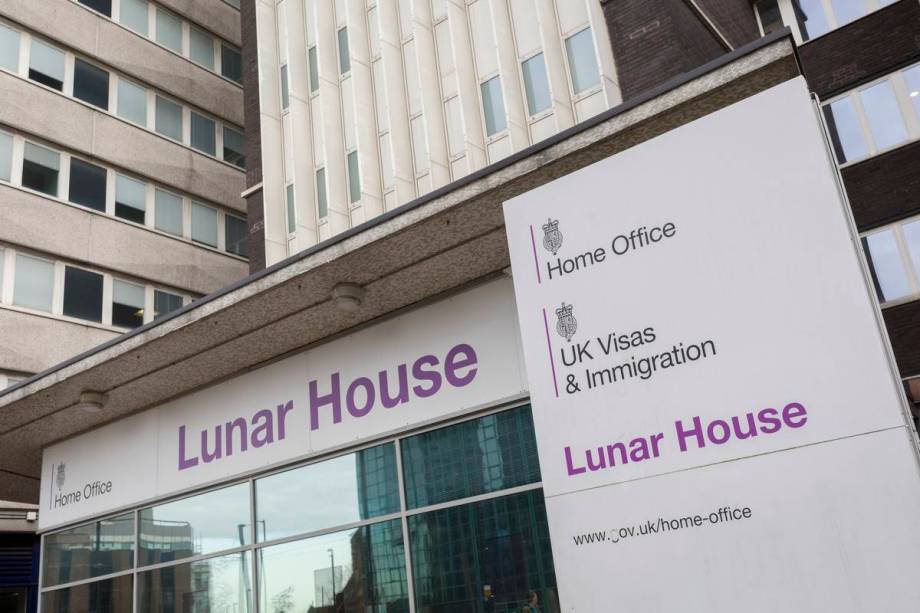
In a landmark decision, a Palestinian citizen of Israel has been granted asylum in the UK after a protracted legal struggle that exposed Britain’s political attempts to override its own asylum procedures. The man, known as Hasan, is believed to be the first Palestinian with Israeli citizenship to be granted refugee status in the UK, on the grounds of a “well-founded fear of persecution” if returned to Israel.
Hasan, 26, was born inside Israel as a member of the Palestinian community that survived the ethnic cleansing of 1948, referred to by Palestinians as the Nakba. Like over 1.9 million other Palestinian citizens of Israel, he grew up under a system of entrenched racial discrimination that human rights groups including Amnesty International, Human Rights Watch and B’Tselem have defined as apartheid. Hasan also feared persecution for his public pro-Palestinian advocacy while living in the UK.
Despite arriving in the UK as a baby and spending most of his life in the country, Hasan was denied leave to remain due to changes in Home Office policy. After returning briefly to Israel as a teenager, he later re-entered the UK on a visitor visa and in 2019 claimed asylum, citing both Israel’s systematic discrimination against its Palestinian citizens and his participation in protests denouncing Israeli apartheid and war crimes in Gaza.
Read: The evolving face of apartheid: How Israel’s policies institutionalise Palestinian displacement
His case was initially accepted in March 2024, when Home Office decision-makers concluded that he faced a credible risk of persecution if deported. Internal documents cited evidence of apartheid, arbitrary arrest, discriminatory laws, and political retaliation by Israel against dissenting Palestinian citizens. The Home Office formally accepted that he could not be returned to Israel.
However, following media coverage, then-home secretary James Cleverly intervened to block the decision. Documents show Cleverly’s office requested urgent advice on how to “withdraw and revoke” Hasan’s refugee status. But legal experts within the Home Office responded that ministers could not overrule legal findings based on international refugee law.
Backed by the Joint Council for the Welfare of Immigrants (JCWI), Hasan launched a judicial review and ultimately prevailed. In December 2025, the Home Office issued a letter confirming his refugee status. “I claimed asylum nearly seven years ago, and all that time I’ve been denied the right to work, study or rent,” Hasan said. “I’ve also been living under the threat of removal to Israel, a genocidal, apartheid regime that persecutes Palestinians. The British government can no longer deny this.”
The ruling sets a powerful precedent, implicitly acknowledging what Palestinians and international human rights bodies have long asserted: that Palestinian citizens of Israel face systemic oppression. Israeli law privileges Jewish nationality over citizenship, creating a two-tier system where Palestinian citizens are subjected to land confiscation, restricted movement, surveillance, and exclusion from key state functions.
Taher Gulamhussein, Hasan’s solicitor at JCWI, described the government’s obstruction as politically motivated. “Three Home Office decision-makers found Hasan met the legal criteria for refugee status,” he said. “Yet three home secretaries, both Conservative and Labour, sought to reverse that finding for political reasons. We are pleased that Hasan can finally live in safety.”
Seema Syeda, a spokesperson for JCWI, added: “The wider public may have questions as to whether Israel also applied diplomatic pressure on the home secretary.”
The decision comes amid growing international scrutiny of Israel’s actions in Gaza, where its ongoing assault has been widely denounced as genocidal. For Palestinians inside Israel, who make up over 20 per cent of the population, the structural violence of apartheid is deeply intertwined with Israel’s broader settler-colonial project.