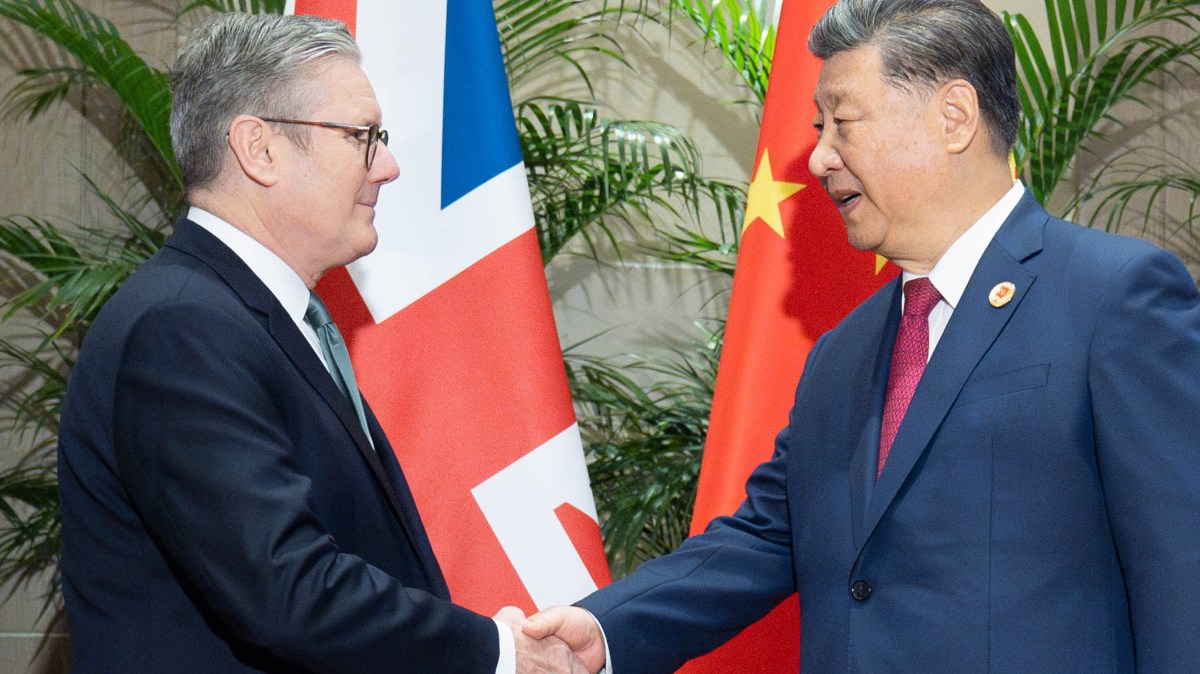
Sir Keir Starmer must set out clearly whether the UK wants to strengthen economic ties with China as part of a drive to protect 90,000 jobs in the country’s energy industry from geopolitical and trade tensions.
Tens of thousands of jobs in the UK could be wiped out if China were to cut off access to key components used in the production of electric vehicles and solar panels as part of a retaliation in the global trade war.
The warning, issued on Friday by the Institute for Public Policy Research (IPPR), an economic think tank that is influential within Labour circles, underscored the leverage that China could utilise from its near monopoly over the supply of resources needed to transition toward more climate-friendly production.
The IPPR said: “Relying on a single source of supply leaves the UK and our allies more vulnerable to geopolitical and economic shocks. This is particularly the case in a world of escalating trade tensions where restrictions on energy-related products are increasingly used as a strategic tool.”
The think tank urged the prime minister to “set out a clear position on Chinese investment” so that businesses can plan where to base their supply chains and if they need to divest from the country.
Last year China restricted overseas purchases of rare earths as part of its retaliation against President Trump’s punitive tariffs on the country. On Tuesday, the US government removed a ban on the sale of the chipmaker Nvidia’s second most powerful artificial intelligence processors to China. Trump said last month that he had decided to allow the sales because his administration would collect 25 per cent of the proceeds.
Sales to China of Nvidia’s most sophisticated AI processor, known as “Blackwell”, remain banned.
China controls about 90 per cent of the world’s refining capacity for critical minerals. The IPPR said that the prime minister should partner with allied countries to “build international stockpiles” to be used in the event of disruption to supply chains.
“The UK is a small open trading nation sailing through an international economy whose waters are getting choppier by the day,” Pranesh Narayanan, a senior research fellow at the IPPR, said.
“Trump’s trade war with China, the rise of conflicts around the world, these shocks ultimately hurt the UK economy because we rely so much on trade to source the essentials, including clean-energy technologies.”
In opposition and during the early days of the Labour government, Rachel Reeves emphasised the importance of bringing supply chains closer to or within the UK, and basing them in countries that were deemed more friendly.
This economic strategy, dubbed “securonomics”, has barely been mentioned by the chancellor of late, particularly since Trump won the 2024 presidential election.
Starmer is expected to approve the construction of a vast Chinese embassy in east London soon, despite concerns about potential security risks posed by the building. The approval is expected to come before the prime minister visits China, most likely to happen at the end of the month.