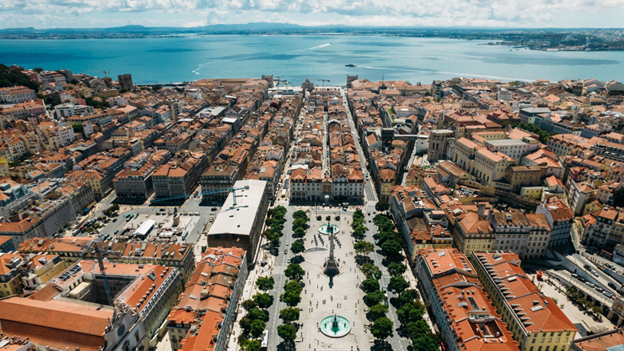
Portugal’s real estate market enters 2026 continuing its upward trajectory, but with a crucial shift: the transition from speculative momentum to strategic opportunity. International interest remains strong, domestic demand steady, and buyers are increasingly focused on lifestyle-driven locations where infrastructure, tourism appeal, and accessibility intersect before prices are fully recognized by international capital.
After years of double-digit growth that transformed Portugal into one of Europe’s hottest property markets, 2026 marks a new chapter. The explosive growth phase has concluded. What remains is a market with genuine fundamentals requiring more sophisticated analysis—and potentially offering more sustainable returns for investors who combine strategic foresight with local insight.
The Numbers Define the Landscape
Portugal’s national residential property prices reached €3,019 per square meter at the close of 2025, with market analysts projecting growth of 2-7% for 2026. This represents a dramatic deceleration from the double-digit increases that characterized much of the 2020-2024 period, but beneath this apparent cooling lies sustainable demand driven by demographics, policy interventions, and evolving buyer profiles.
Euribor’s stabilization around 2% provides unprecedented clarity for leveraged investments. After reaching punishing levels above 4% in late 2023, borrowing costs have normalized, with major Portuguese banks projecting rates to hold between 2.0-2.5% through 2028. For international investors, this creates a multi-year window of financing predictability.
Interest rates, while having risen across Europe, remain favorable relative to other Western markets, supporting financing opportunities for both residential and multi-unit investments.
The Tax Package That Reshapes Investment Strategy
Portugal’s government approved a sweeping fiscal package in late 2025 that fundamentally alters the investment calculus. The measures, representing €200-300 million in annual investment, are designed to address housing affordability while maintaining Portugal’s attractiveness to foreign capital.
The most significant change: a reduction in VAT on new construction from 23% to 6% for properties valued up to €648,000. For developers and buyers of newly built units, this represents immediate savings of over €100,000 on a typical Lisbon apartment. Investors focused on new developments suddenly have a structural cost advantage that didn’t exist twelve months ago.
The rental market saw equally dramatic reforms. IRS (income tax) rates on rental income dropped from 25% to 10% for properties meeting “moderate rent” thresholds, creating powerful incentives for landlords to price units within reach of middle-class Portuguese households. Meanwhile, the government increased IMT (property transfer tax) rates for non-resident buyers on higher-value transactions, cooling speculative demand while encouraging productive, long-term investment.
The tax structure now favors those providing affordable housing and supporting new construction.
Where the Next Wave of Value Is Building
Urban centers like Lisbon and Porto have seen significant capital inflows, driving up prices and compressing yields in prime neighborhoods. While these strongholds remain attractive, particularly for high-end residential units and established rental markets, the next wave of value creation is emerging in secondary markets that offer compelling fundamentals without the premium pricing.
Braga and Setúbal have shown annual growth exceeding 17%, driven by infrastructure investment, university expansion, and quality-of-life migration from Portugal’s most expensive metros. These markets offer gross rental yields of 5-6%, compared to 3-4% in prime Lisbon neighborhoods, while benefiting from improving transport links and commercial development. Coastal Algarve towns, including Lagos and Portimão, continue to offer attractive opportunities, particularly for vacation rental properties, but even smaller towns in these regions may provide the highest upside for strategic, long-term investors.
“Relatively high returns with relatively low risk can be found in the suburbs of Lisbon and Porto, particularly on the south side,” says Yehonatan Gourvitch, CEO of Maven Investment Management. “The risk is lower because the buyer pool is versatile, including both local residents and international investors.”
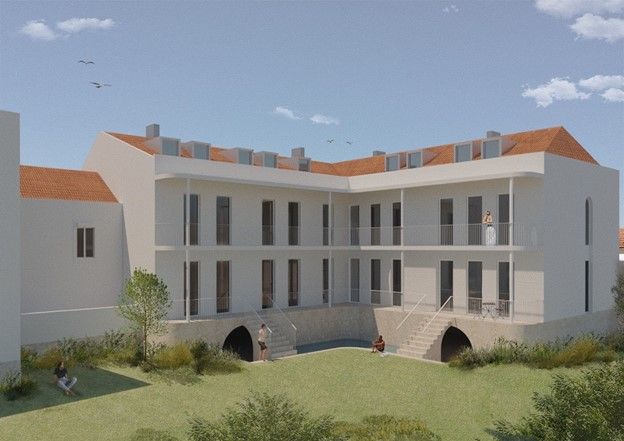 Credits: Supplied Image; Author: Client;
These trends are evident in new developments like Castelo in Setúbal and Riverscape in Almada, offering high-potential returns, versatile buyer demand, and prime locations that make them standout opportunities for both local and international investors. Areas like Almada and Setúbal benefit from Lisbon’s employment base while offering accessible housing costs, a value proposition that appeals to domestic buyers priced out of Lisbon and international investors seeking yield.
With construction and renovation timelines still running longer than expected, investors are increasingly looking for turn-key properties that generate cash flow from day one. Portugal’s construction sector faces an acute shortage of skilled trades, construction companies report a deficit of approximately 50,000 workers, forcing projects to recruit internationally and extending delivery timelines beyond initial estimates. Construction costs in Lisbon have increased 12% year-over-year, with skilled labor commanding premium wages.
This reality is reshaping investor preferences decisively toward completed properties. Turn-key units eliminate construction risk, delivery uncertainty, and the challenge of managing contractor relationships in a foreign market with language barriers and unfamiliar permitting processes. For international investors especially, completed properties in professionally managed developments offer immediate rental income, transparent operating costs, and the ability to acquire assets remotely with confidence.
The 6% VAT benefit applies to recently completed inventory as well, making newly finished developments particularly attractive. Build-to-rent projects delivered by established developers combine the tax advantages of new construction with the certainty of completed product, positioning them as standout opportunities in a labor-constrained market.
Rental demand, particularly from remote workers and expats, continues to bolster investor confidence in turn-key assets. Short-term rental regulations have stabilized following recent reforms, reducing uncertainty for long-term investors while creating premium value for properties that already hold AL licenses. These properties can command significantly higher cash flows in tourist-heavy areas while navigating a regulatory environment where new licenses are increasingly difficult to obtain.
Strategic Positioning for 2026
Portugal’s €50 billion infrastructure pipeline funded through the Recovery and Resilience Plan must be committed by 2026, creating hard deadlines for project delivery. Investors positioned in markets benefiting from new transport links, commercial zones, and public facilities stand to capture significant appreciation as these projects complete. Monitoring urban development initiatives and government-backed projects can identify neighborhoods poised for transformation before international capital flows fully recognize the opportunity.
Investors focused on multi-unit properties are increasingly finding that diversification across regions, combining stable urban rentals with high-yield secondary city opportunities, mitigates risk and strengthens portfolio performance. Success in 2026 requires identifying specific submarkets where infrastructure improvements, demographic trends, and pricing create genuine value rather than speculative.
Cross-border buyers may find particular value in secondary cities where lifestyle improvements, connectivity enhancements, and early-stage urban projects create opportunities not yet recognized by larger institutional capital. These markets offer the versatility of buyer pools that include both local residents upgrading their housing and international investors seeking Portuguese lifestyle at accessible price points.
Portugal’s real estate market in 2026 rewards investors who approach it with analytical rigor rather than momentum-chasing enthusiasm. With regulatory clarity established, financing costs stabilized, and tax incentives favoring productive investment, the fundamentals are firmly in place. The question is not whether Portugal remains attractive, it unquestionably does, but where within Portugal the most compelling risk-adjusted returns can be found.
For those willing to look beyond the obvious, to understand the impact of infrastructure timelines and tax policy shifts, and to position capital where genuine demand is building before prices fully adjust, Portugal offers one of Europe’s most compelling real estate stories. Just one that now rewards local insight over broad-brush enthusiasm.
Stay ahead of Portugal’s evolving real estate landscape. Subscribe to the Portugal Investors Newsletter for monthly market analysis, curated insights, early alerts on emerging opportunities, and the data-driven perspective that keeps investors informed.
Disclaimer:
The views expressed on this page are those of the author and not of The Portugal News.