Federal immigration court in Buffalo, N.Y., is in a newish four-story office building located across from the Robert H. Jackson Federal Courthouse. The building has no exterior signage, nothing to indicate the kinds of profoundly sad things that go on within its walls. It is a building I never even noticed until I started volunteering with Justice for Migrant Families and the New York Immigration Coalition to accompany individuals and families appearing in immigration court for deportation hearings.
I am a lawyer, but I do not appear in immigration court in that capacity. Rather I go as someone to accompany and walk with people in what is a terrifying moment in their lives. I am there to bear witness to some of the worst actions of our government, undertaken in the name of “We the People.”
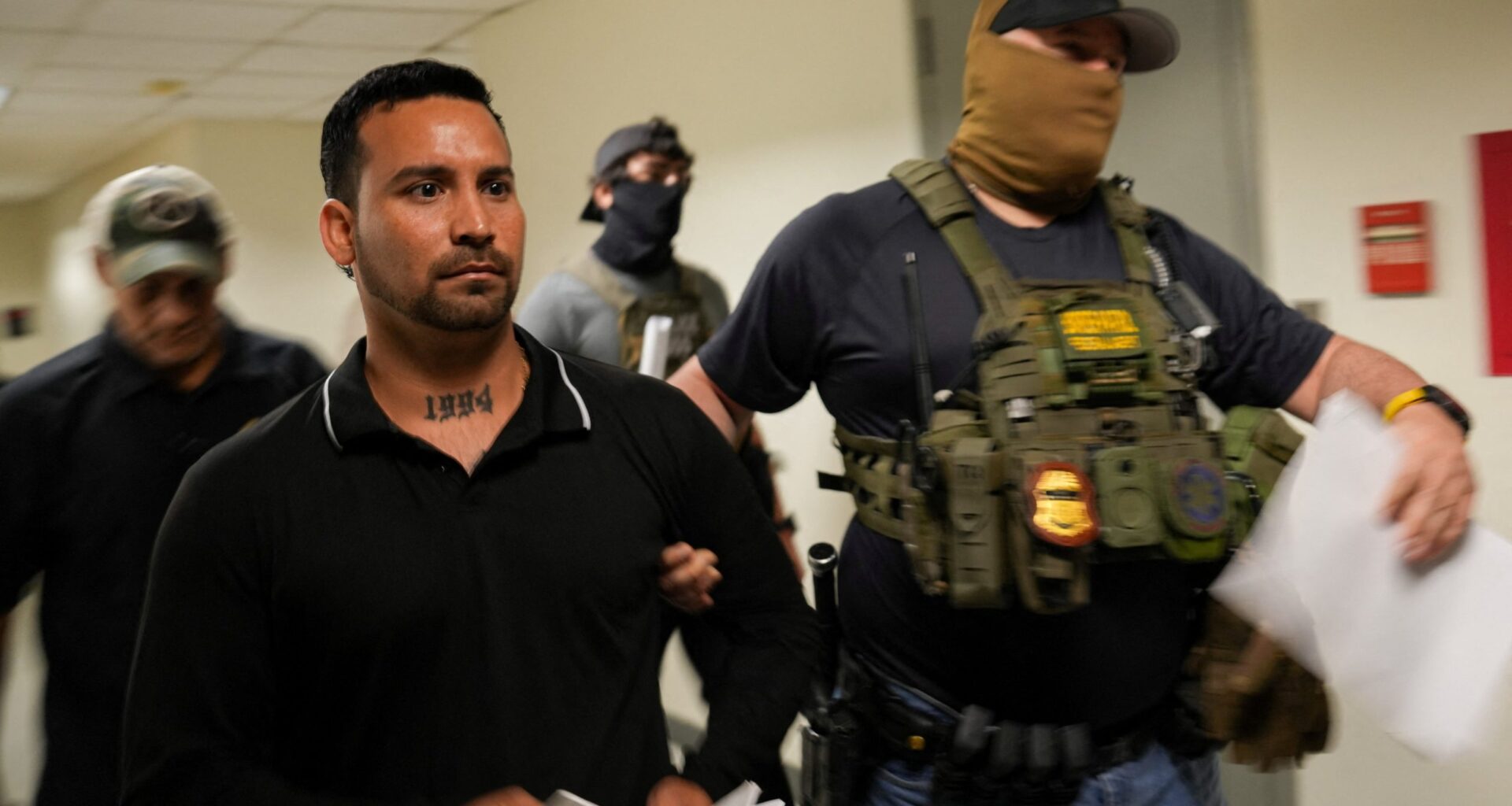
The courtrooms are on the third floor. When you exit the elevator, you need to pass through a metal detector before you can enter the waiting room. In the waiting room, there are often Immigration and Customs Enforcement officers in plain clothes who are toggling between multiple cellphones, checking the court’s docket and watching people enter and leave the courtrooms.
In Buffalo and in other cities around the nation, ICE and the government are playing a sadistic game of cat-and-mouse with migrants who try to comply with the law, assert their rights to contest their deportation and claim asylum in this country. Unsuspecting and generally law-abiding migrants appear in court in good faith, and if their case is dismissed, they can be subject to immediate arrest and detention in the hallways of this building.
In the waiting room, I provide individuals and families not represented by counsel (there are many) with a handout that describes some of their rights in immigration court, including the right to appear virtually rather than in person. I have been struggling to learn Spanish for the past few years, so I use my limited Spanish language skills to ask some: Do you want me to accompany you into the courtroom?
I study the faces of the people waiting to be called and see a mixture of terror, dread and resignation. A beautiful 5-year-old boy, the son of a Senegalese woman, plays make-believe games on the floor of the waiting room, oblivious to the drama unfolding next door as his mother presents her case against deportation. The mom emerges from the courtroom, shaken but composed, until she learns that the judge has ruled against her and that she and her son now face deportation. She dissolves into tears.
A Guatemalan woman waits patiently with her young daughter for nearly four hours for the “right” to advise the court that she will voluntarily deport herself, an increasingly common result for migrants who conclude that they are not welcome here and that they need to give up on their pursuit of safety and security in the United States.
A woman from Mexico arrives at court with her three boys and her social worker, who has driven them there. This family has seen its share of trauma. The woman’s husband was killed by the drug cartel in Mexico, and she was threatened as well. She escaped across the Texas border and was apprehended with the boys in El Paso. She moved to New York and hoped for a friendlier immigration court in Western New York. She supports her family by working a graveyard shift in a local food plant.
While we wait outside the courtroom (we are not allowed inside), the pastor of her Catholic church, Father Mark, arrives. Sadly, her case does not go well. Conducting a hearing without an interpreter, the judge summarily disposes of her case. She emerges from the court and we escort her and the boys into an elevator. When the doors open at the ground floor, we see an ICE agent, who looks at us and then disappears behind a frosted glass door. Was it Father Mark’s Roman collar that deterred them, we wonder? We quickly usher the family out the door and onto the street.
It is not until we gather away from the courthouse that she realizes that her case has not gone well and that she and her boys may now be subject to deportation. I sit across the table from her as her tears form. Her middle son hugs her and strokes her hair. It’s a scene that will haunt me for days. Yet I am consoled by the way Father Mark brought the face of Jesus Christ to this family in a very dark hour.
During my 12 years as a Jesuit college president, I would encourage our students to seek out opportunities to learn about the real world—not just the typical internships that lead to jobs after graduation but experiences that would expose them to the complex, difficult and messy issues in life.
The late superior general of the Jesuits, Father Peter Hans Kolvenbach, summarized it well in a memorable talk at Santa Clara University in 2000 when he said, “Students…must let the gritty reality of this world into their lives, so they can learn to feel it, think about it critically, respond to its suffering, and engage it constructively.”
This advice applies not just to students, but to all of us who are privileged to live in relative comfort in our country. We need to let the gritty reality of this world—of migration, deportation, poverty, even violence into our lives, because, as Father Kolvenbach said: “When the heart is touched by direct experience, the mind may be challenged to change. Personal involvement with innocent suffering, with the injustice others suffer, is the catalyst for solidarity which then gives rise to intellectual inquiry and moral reflection.”
And maybe, just maybe, real change.
Related