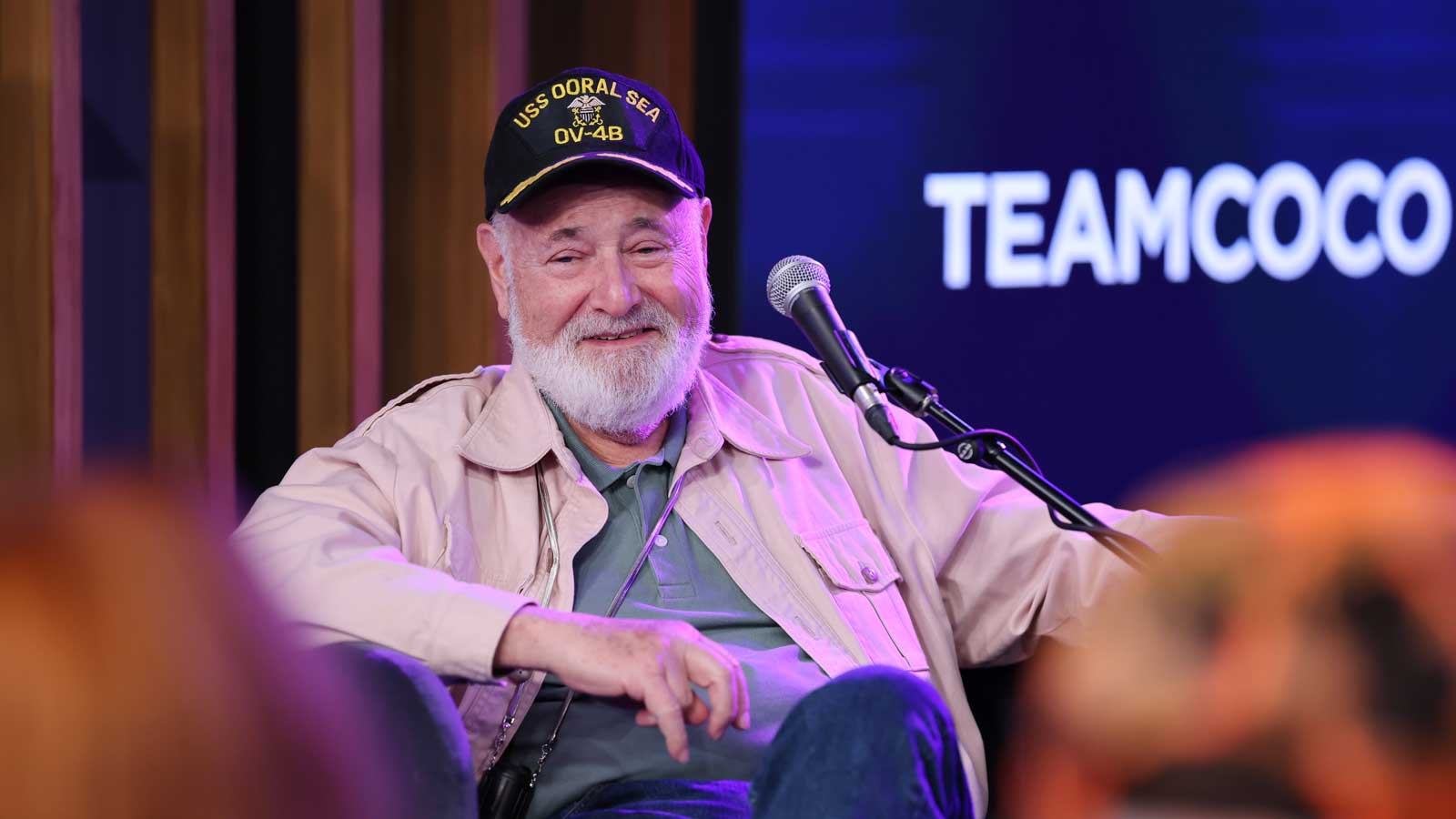
To honor Rob Reiner, the legendary actor and filmmaker whose life ended tragically in December, I watched a handful of his films over the holidays, including “The American President.”
Written by Aaron Sorkin and released in 1995, it’s about a boy who meets a girl, only the boy is the president of the United States, and the girl is an environmental lobbyist who has been tasked with convincing said boy to support an ambitious emissions reduction bill.
Overcoming his initial reluctance, President Andrew Shepherd, played by Michael Douglas, does the right thing when, using the country’s highest office as a bully pulpit, he delivers a stirring speech on a range of issues, including emissions reduction: “Tomorrow morning, the White House is sending a bill to Congress for its consideration. It’s White House Resolution 455, an energy bill requiring a 20% reduction of the emission of fossil fuels over the next 10 years. It is by far the most aggressive stride ever taken in the fight to reverse the effects of global warming.”
In a short tribute to Rob Reiner and his wife Michele Singer Reiner, who died alongside her husband, historian Heather Cox Richardson highlighted this speech on her popular Substack newsletter, describing it as “a meditation on what it means to be the president of the United States.”
Indeed, “The American President” is about the office itself and its capacity to appeal to our better angels through a clear definition of, and commitment to, the common good. Speaking to The New York Times in 1995, Reiner said that he had intended his film to be a “paean to the presidency,” an institution, he added, that had taken its share of hits, from Watergate to Iran-Contra.
Watching the film in 2025 – against the backdrop of one presidential scandal after another, and now against the backdrop of a second Trump administration – I was struck by how much has changed.
In the early 1990s, the problem seemed so simple. We knew the cause, and we knew the solution. Even George H.W. Bush got it: “Those who think we are powerless to do anything about the greenhouse effect,” he said in 1988, “are forgetting about the White House effect,” adding that global warming isn’t “a liberal or a conservative thing.” But it is a thing, he implied, and it requires political leadership.
That sentiment is echoed in “The American President” when Sydney Wade, the plucky lobbyist played by Annette Bening, predicts that “Ten years from now any car with an internal combustion engine is going to be considered a collectors’ item.”
Of course, we all know what happened: Presidents came and went; treaties were negotiated but never ratified; climate bills were proposed; and one – the Inflation Reduction Act, the only major climate bill to ever clear the U.S. Senate – was passed in 2022, only to be rolled back three years later.
Meanwhile, the climate itself was politicized, becoming one thing to liberals and another thing to conservatives. For its part, the Democratic Party accepted the science and acknowledged what was already obvious and the severity of what will come down the pike, even if it didn’t always put its money where its mouth was. The Republican Party, however, checked out of reality. Captured by denialism, anti-intellectualism, and an instinctive distrust of expertise – or what climate scientist Ben Santer calls the forces of unreason – it rejected the science and now insists that wind is “woke.”
“The American President” may be a Rob Reiner rom-com, but 30 years later, it can be watched as a Rob Reiner what-if film: What if successive presidents and Congresses had worked across the aisle to reduce emissions?
Republish This Story
