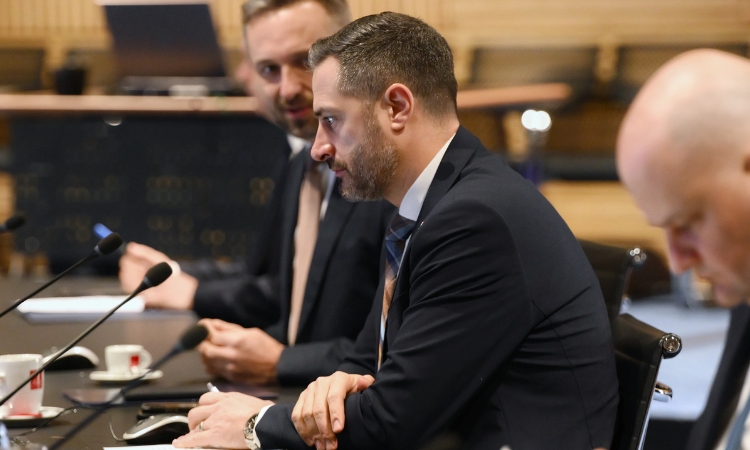
Ton�i Glavina, Croatia’s Minister of Tourism and Sport, offered a sober message about the country’s most important industry: if prices are not stabilized soon, the consequences will be felt by travelers and destinations alike.
Speaking on national television this week, Mr. Glavina addressed the effects of a broad set of tourism, housing, and tax reforms that are quietly reshaping how Croatia manages visitor growth. The most visible result so far has been numerical but symbolic: nearly 10,000 fewer tourist beds registered nationwide following recent tax changes.
For Croatia, a country that welcomed more than 20 million visitors annually before the pandemic, fewer beds might sound like a retreat. Mr. Glavina sees it differently.
“This was not a short-term measure,� he said. “It was a change of direction.�
Fewer Beds, Fuller Rooms
The reforms were designed to curb unchecked expansion in short-term rentals, improve occupancy in existing accommodations, and restore balance to cities strained by seasonal tourism pressure. Local governments retain control over flat-rate rental taxes, within a nationally defined minimum and maximum, while the central goal remains consistent: more sustainable destinations and more housing for residents.
The early indicators suggest a shift is underway. For the first time since 2018, private accommodation providers recorded higher occupancy rates. At the same time, 14 percent more taxpayers entered the long-term rental market, and more than 3,600 property owners moved partially or fully from short-term to long-term leasing.
“These are exactly the results we were looking for,� Mr. Glavina said.
Housing Pressures and a Slowing Market
Behind the tourism reforms lies a deeper concern shared across Europe’s most popular destinations: housing affordability. While property prices in Croatia have not yet fallen, Mr. Glavina cited informal data from real estate agencies showing a 30 percent drop in property sales in Adriatic counties, a signal that price stabilization — or even declines — could follow.
Croatia is among the first European countries to attempt such a comprehensive intervention. The hope, Mr. Glavina said, is not necessarily to reduce prices of new construction, but to ease pressure on older housing stock and long-term rentals.
Travelers Are Watching Prices Closely
If housing reform is a long game, the upcoming tourist season is a short one — and it hinges on price sensitivity.
Research cited by the ministry suggests travelers in 2026 are likely to travel less and spend less, making cost a decisive factor in destination choice. Croatia, long celebrated for value as much as beauty, now competes head-to-head with Mediterranean rivals.
“The guest decides at the last minute,� Mr. Glavina said. “Calmly, rationally — between Croatia, Spain, or Italy.�
Accommodation alone, he noted, is not the primary driver of inflation. Hotel and campsite performance grew modestly last year, by 2.4 percent and 2.2 percent respectively. The sharper price pressures are elsewhere: retail, restaurants, transport — the everyday costs that travelers feel most acutely.
A Necessary Reset
The minister’s conclusion was direct. Stabilizing prices is no longer optional.
“If we don’t do it,� he said, “we will feel it in tourism results — and already this year.�
For visitors, Croatia remains what it has long been: a country of luminous coastlines, historic cities, and layered cultural landscapes. But behind the postcard views, a recalibration is underway — one that may determine whether Croatia’s next chapter in tourism is defined by volume, or by balance.
@croatiafulloflife Jankovac in Papuk shows a serene winter landscape, with snow blanketing the forest and trails stretching into the hills â�„ï¸�???? ???? @capture_croatia #CroatiaFullOfLife #Papuk ♬ Epic Music(863502) – Draganov89