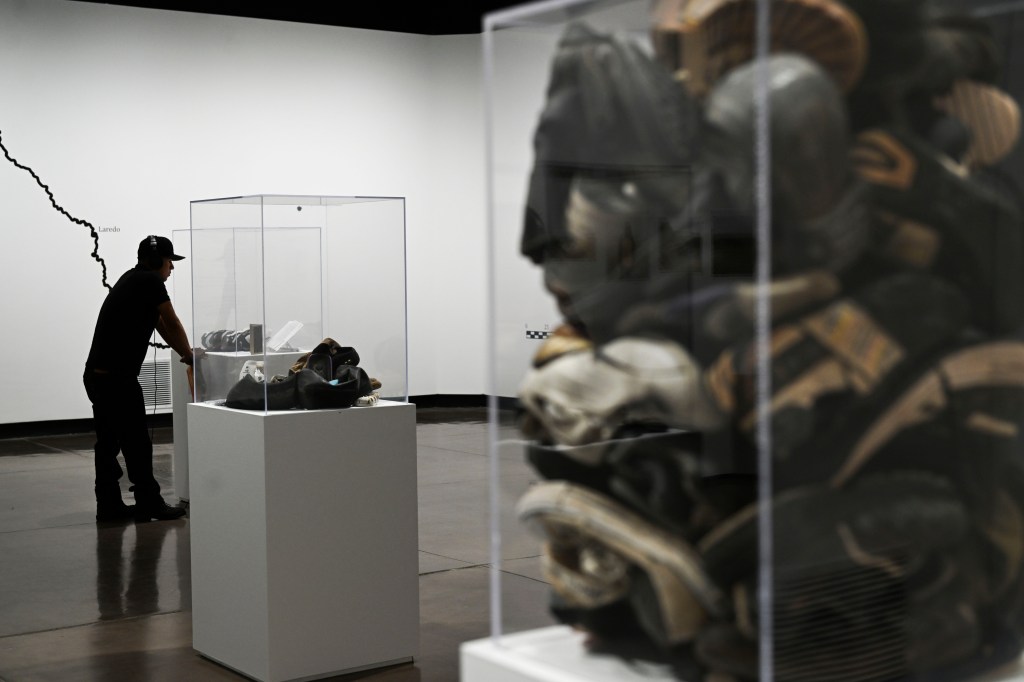
A new exhibit focused on “the human cost of U.S. border policies” opened this week at Chaffey College.
“Hostile Terrain 94” is now on display at the Wignall Museum, 5885 Haven Ave., on the college’s Rancho Cucamonga campus.
In 1994, the U.S. Border Patrol implemented the immigration enforcement strategy “Prevention Through Deterrence,” shifting border crossings away from urban centers, according to the Undocumented Migration Project, the nonprofit creator of the exhibit. That strategy increased the number of migrant deaths due to people crossing in more treacherous areas.
Students at Chaffey as well as at San Bernardino Valley College and Cal State San Bernardino participated in the exhibit’s creation, according to a Chaffey College news release.
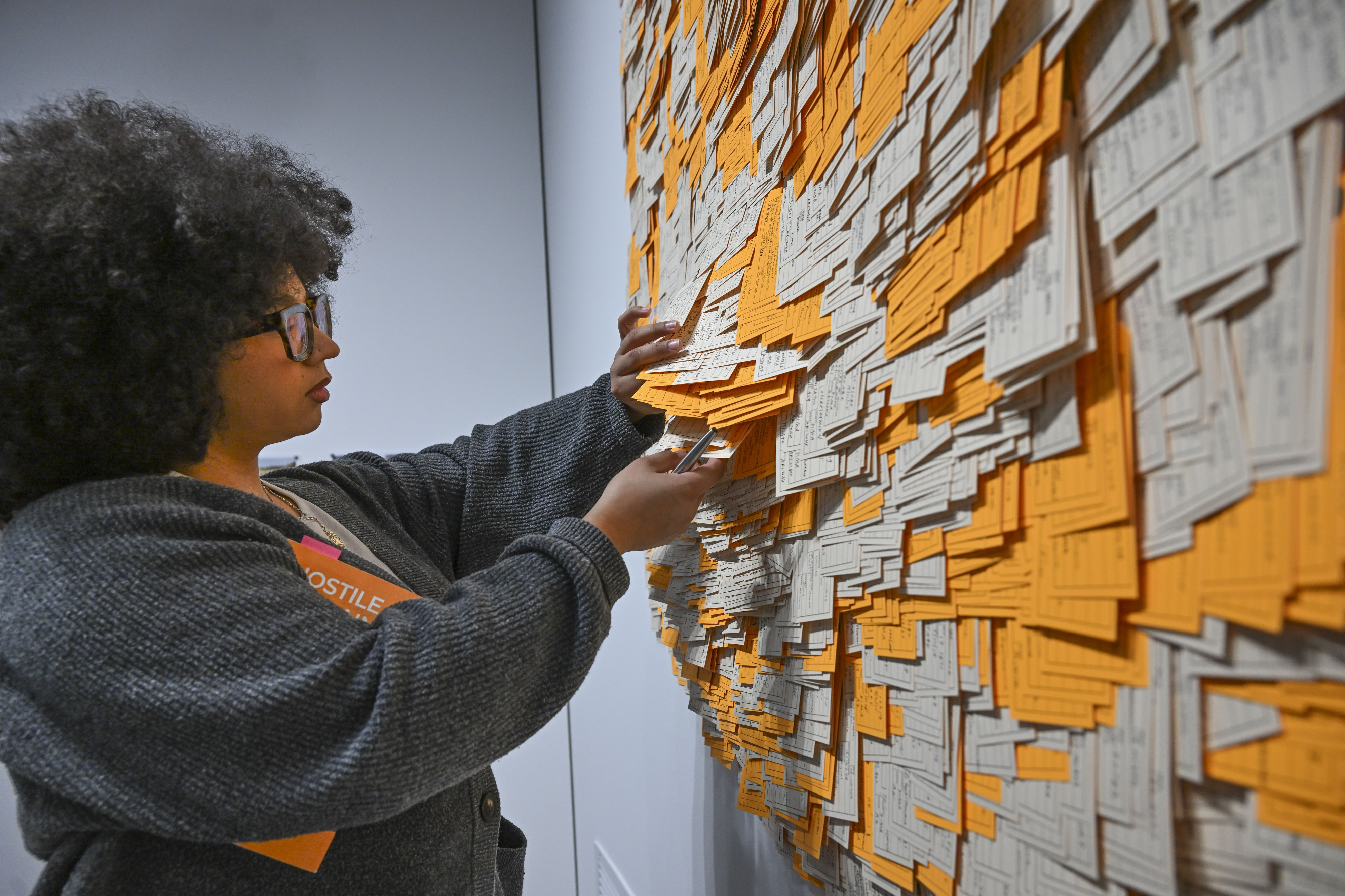
Tatyana Henry, a gallery assistant at the Wignall Museum, looks through written tags representing migrants who died along their route on Thursday, Jan. 15, 2026, as part of the “Hostile Terrain 94” exhibit on display at the museum at Chaffey College in Rancho Cucamonga. (Photo by Anjali Sharif-Paul, The Sun/SCNG)
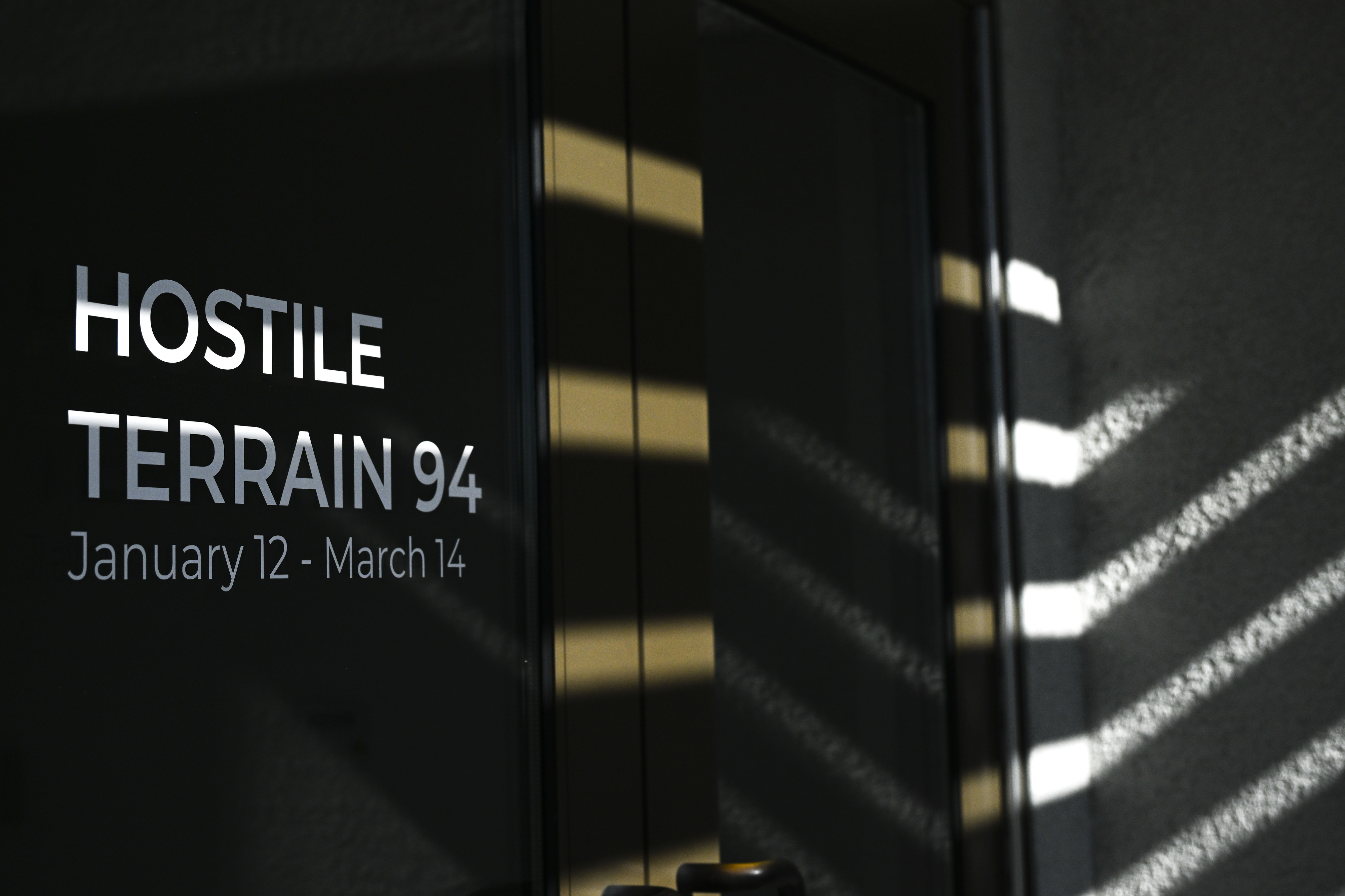
A sign for “Hostile Terrain 94,” an exhibit at the Wignall Museum at Chaffey College in Rancho Cucamonga, is seen on Thursday, Jan. 15, 2026. The exhibit opened this week and runs through March 14. (Photo by Anjali Sharif-Paul, The Sun/SCNG)
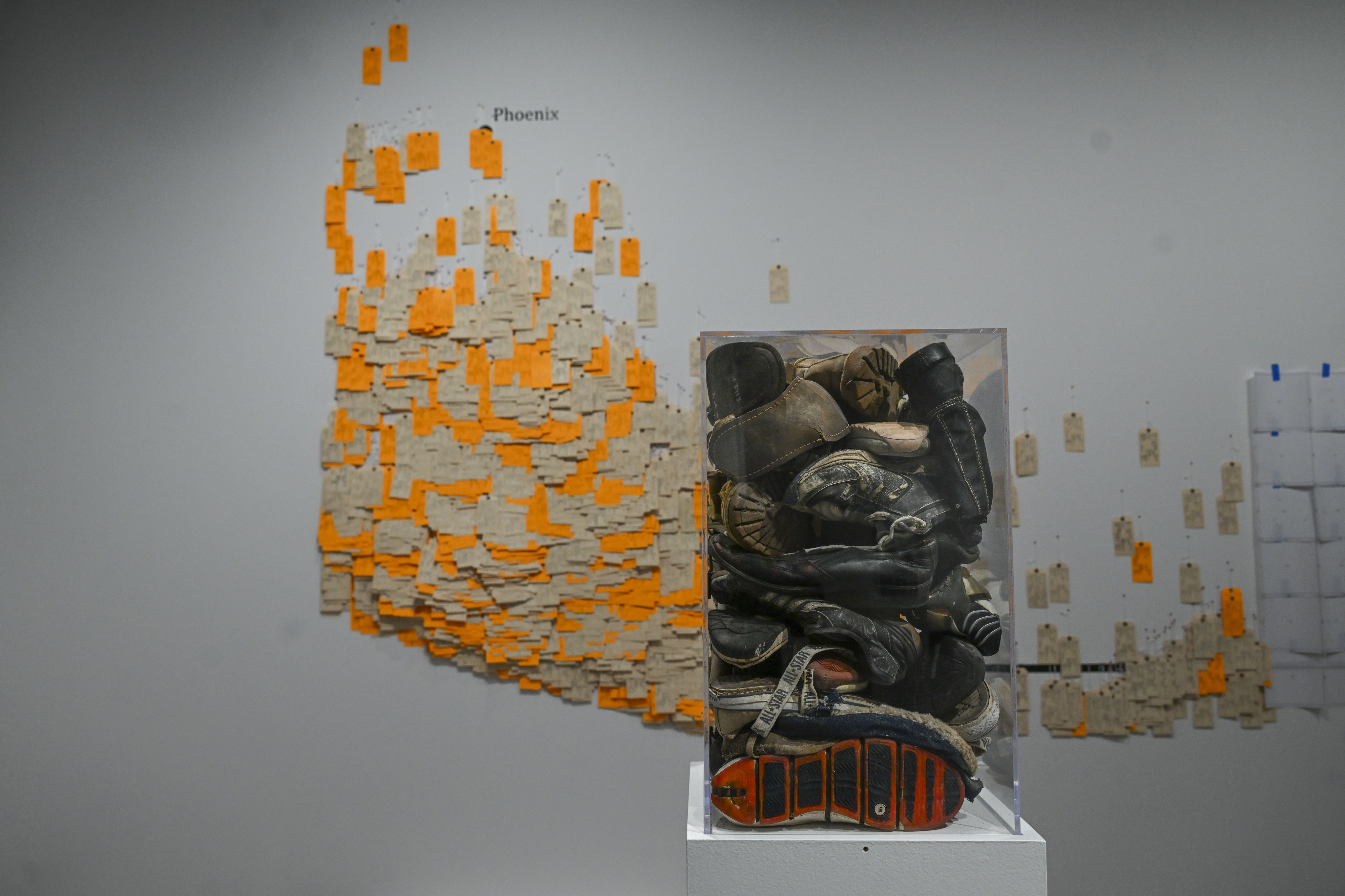
Remnants of shoes worn by traveling migrants are encased as part of the “Hostile Terrain 94” exhibit at the Wignall Museum at Chaffey College in Rancho Cucamonga on Thursday, Jan. 15, 2026. (Photo by Anjali Sharif-Paul, The Sun/SCNG)
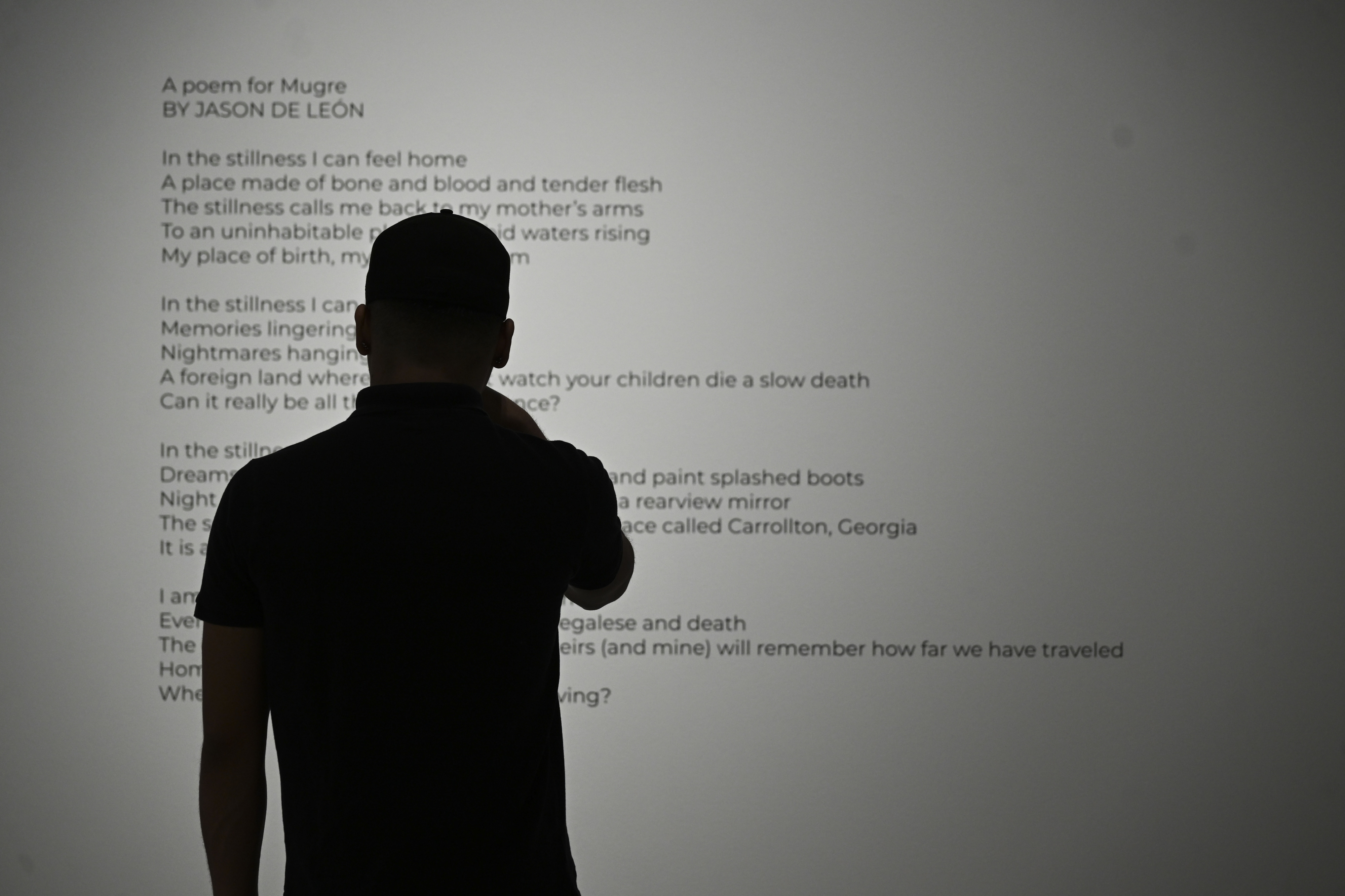
A visitor reads a poem by Jason De León, the anthropologist behind the “Hostile Terrain 94” exhibit, on display at the Wignall Museum at Chaffey College in Rancho Cucamonga on Thursday, Jan. 15, 2026. (Photo by Anjali Sharif-Paul, The Sun/SCNG)
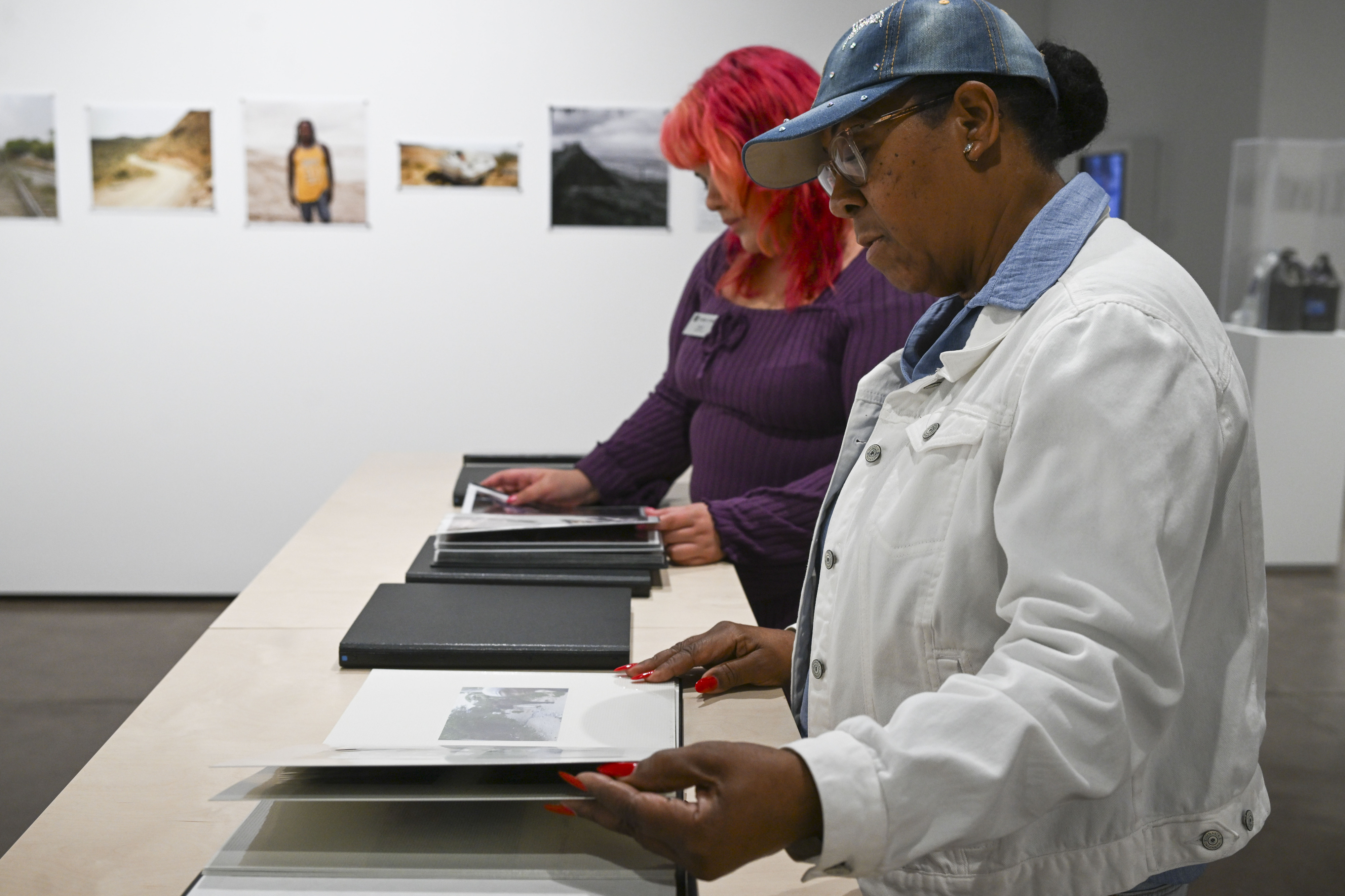
Mechell Prater and Lizzeth Camacho look through photographs taken by Jason De León and Michael Wells on Thursday, Jan. 15, 2026, as part of the “Hostile Terrain 94” exhibit now on display at the Wignall Museum at Chaffey College in Rancho Cucamonga. (Photo by Anjali Sharif-Paul, The Sun/SCNG)
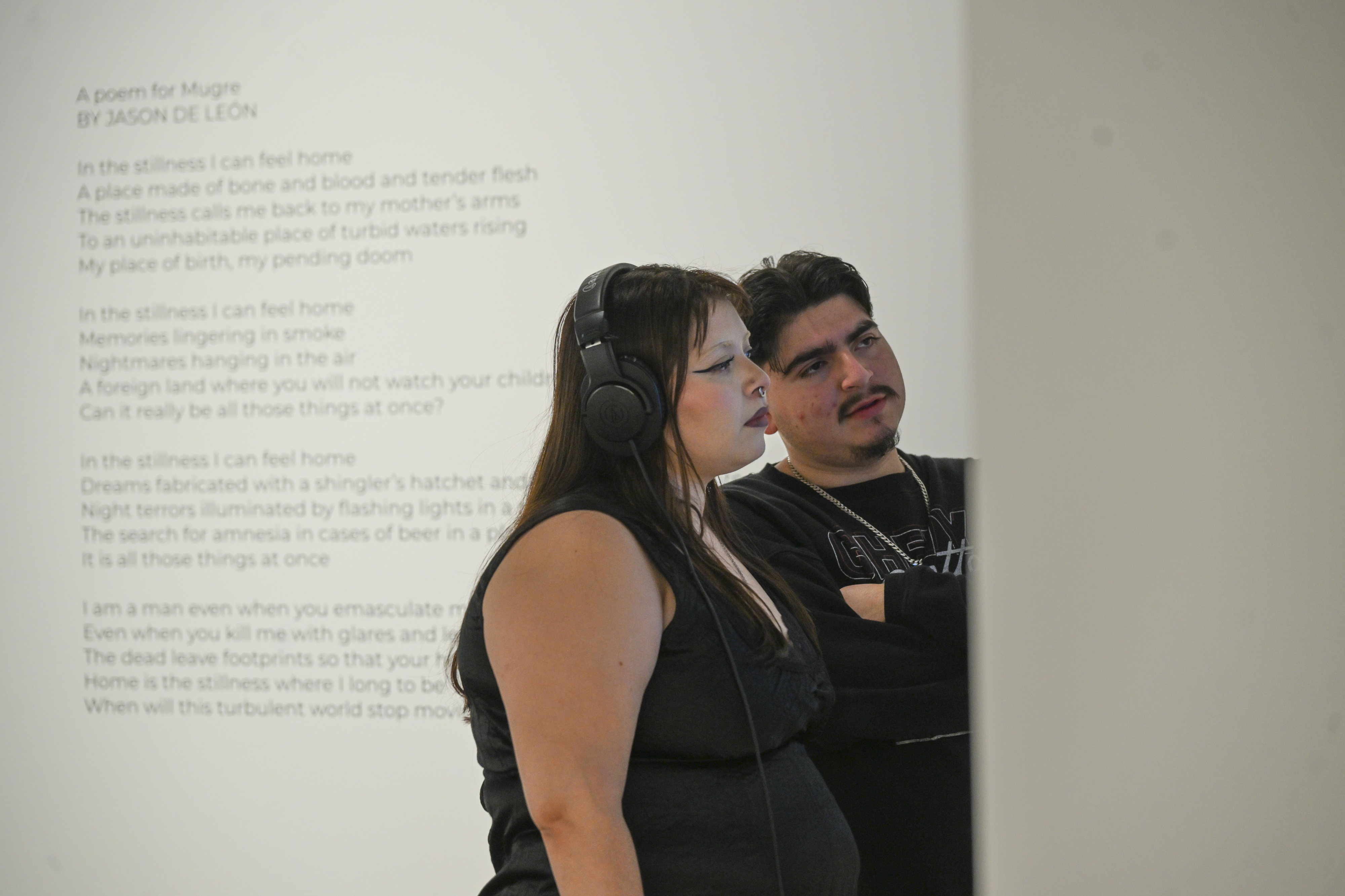
Students, from left, Dania and Daniel Urruita listen to an audio display on Thursday, Jan. 15, 2026, as part of “Hostile Terrain 94,” an exhibit at the Wignall Museum at Chaffey College in Rancho Cucamonga. (Photo by Anjali Sharif-Paul, The Sun/SCNG)
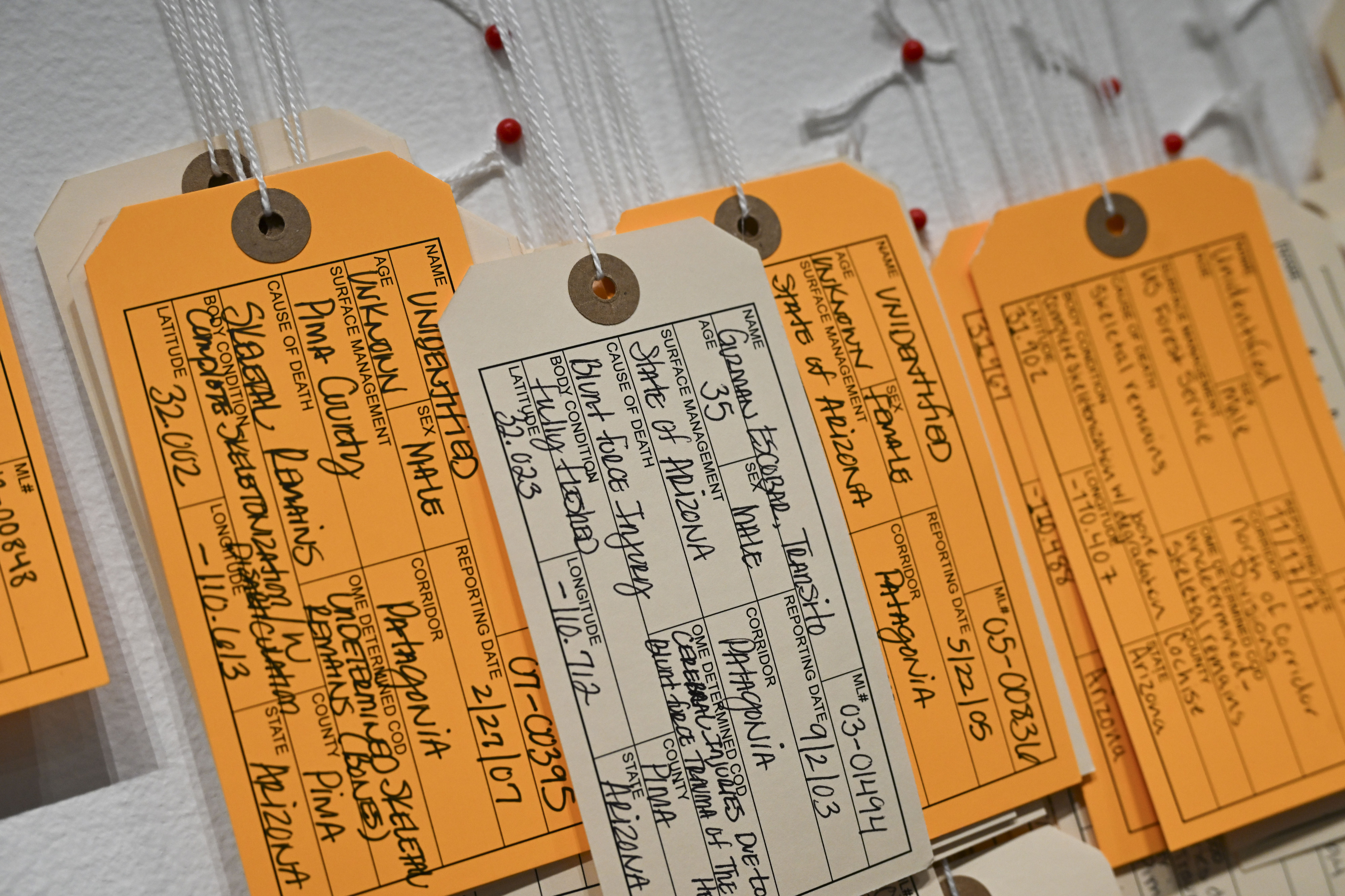
Written tags documenting traveling migrants who have died along their route are displayed on Thursday, Jan. 15, 2026, as part of the “Hostile Terrain 94” exhibit at the Wignall Museum at Chaffey College in Rancho Cucamonga. (Photo by Anjali Sharif-Paul, The Sun/SCNG)
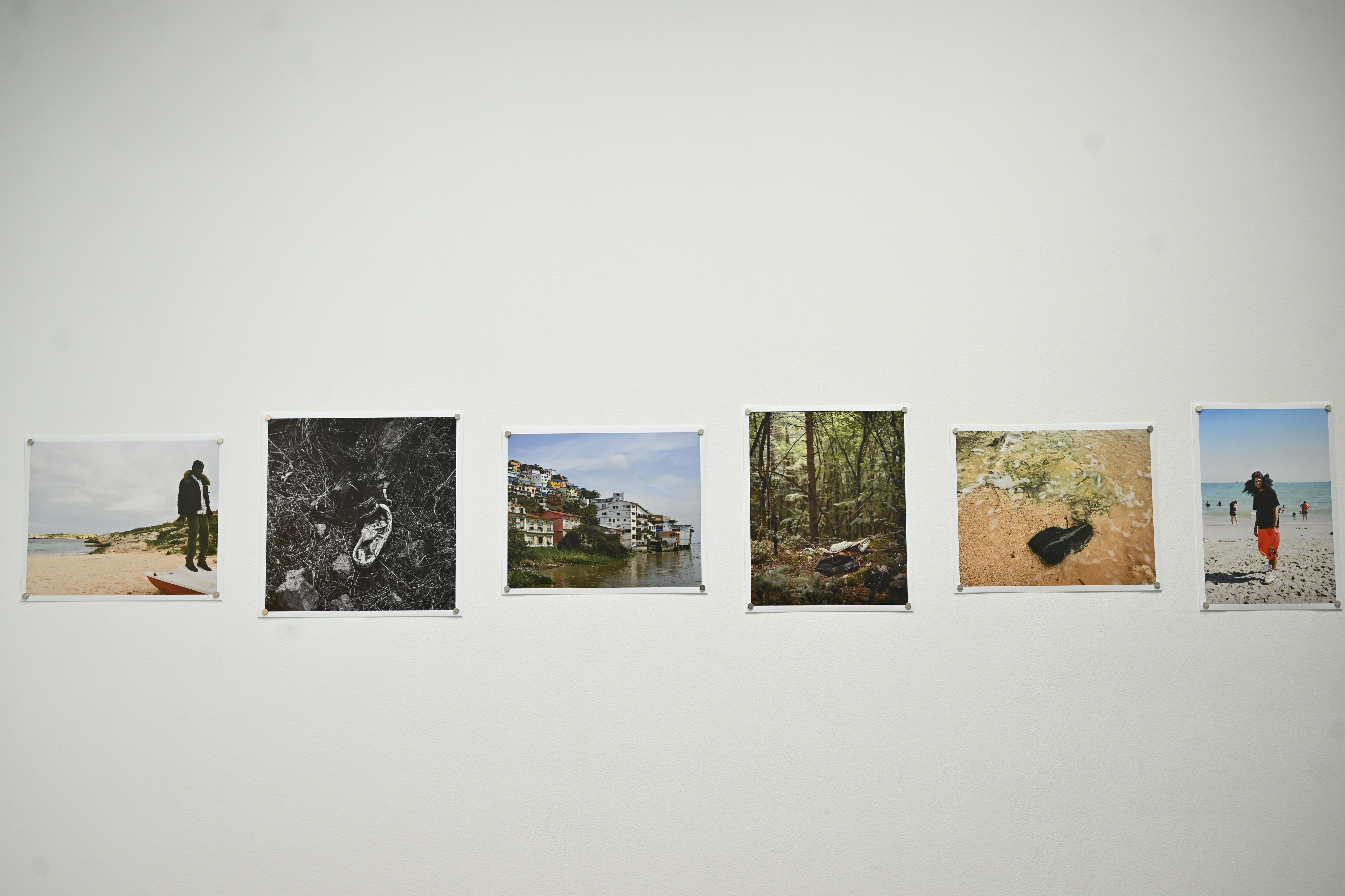
Photos from Jason De León and Michael Wells documenting project of migrants are displayed apart of their exhibit Hostile Terrain 94, at the Wignall Museum at Chaffey College in Rancho Cucamonga, is seen on Thursday, Jan. 15, 2026. The exhibit, which opened this week, displays details of migrants who have died while crossing into the United States from Mexico and South America. (Photo by Anjali Sharif-Paul, The Sun/SCNG)
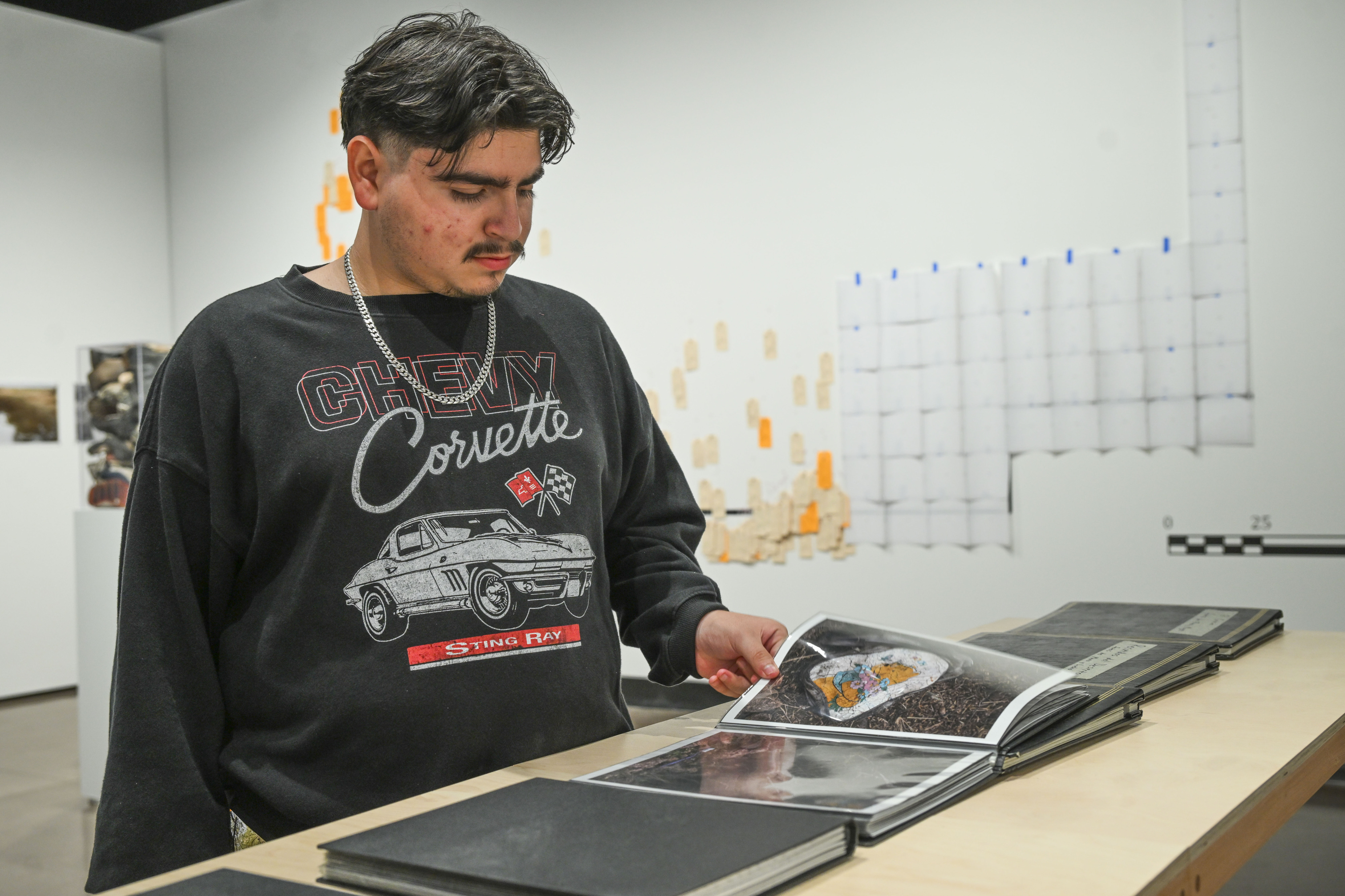
Daniel Urrutia, a student at Chaffey College, looks through photographs taken by Jason De León and Michael Wells as part of the Hostile Terrain 94 exhibit on display at the Wignall Museum on the campus in Rancho Cucamonga on Thursday, Jan. 15, 2026. (Photo by Anjali Sharif-Paul, The Sun/SCNG)

A visitor listens to an audio display as part of “Hostile Terrain 94,” an exhibit at the Wignall Museum at Chaffey College in Rancho Cucamonga on Thursday, Jan. 15, 2026. Opened this week, the exhibit documents the deaths of thousands of migrants who died while traveling from Mexico into the United States since 1994. (Photo by Anjali Sharif-Paul, The Sun/SCNG)
Show Caption
1 of 10
Tatyana Henry, a gallery assistant at the Wignall Museum, looks through written tags representing migrants who died along their route on Thursday, Jan. 15, 2026, as part of the “Hostile Terrain 94” exhibit on display at the museum at Chaffey College in Rancho Cucamonga. (Photo by Anjali Sharif-Paul, The Sun/SCNG)
The students examined data of thousands of migrants who died while crossing from Mexico to the United States since 1994, that data was then used to fill out toe tags for the fallen migrants.
More than 350 people filled out 4,400 tags in workshop sessions in October and November. Those tags are presented on a map as part of the exhibition. Audio, video and other artifacts are also part of the exhibit, which is up through March 14.
A special exhibition walkthrough and reception is being held from 10:30 a.m. to 2 p.m. Tuesday, Feb. 10.
There is no cost of admission to the Wignall Museum and it’s open 10 a.m. to 4 p.m. Monday through Thursday and noon to 4 p.m. Saturdays.