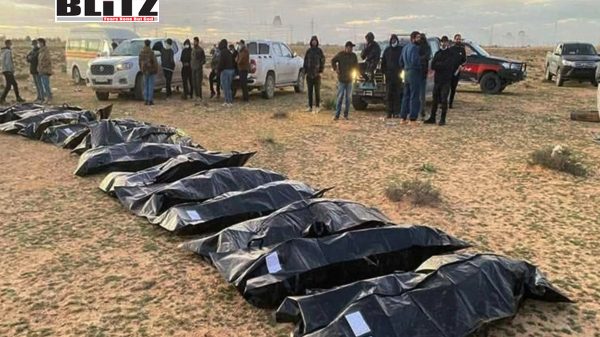
Libya mass grave discovery exposes ongoing migrant abuses and humanitarian crisis
Another mass grave discovery in eastern Libya has once again exposed the country’s deepening humanitarian crisis and the persistent lawlessness that has flourished in the years since the collapse of central authority. The finding of at least 21 bodies on a farm near the city of Ajdabiya underscores the extreme vulnerability of migrants transiting through Libya and highlights the ongoing failures of governance, security, and accountability in the oil-rich North African state.
According to local media reports, the mass grave was uncovered on January 15 after security forces received information that migrants from sub-Saharan Africa were being held at a farm in the area. The property lies roughly ten kilometers southeast of Ajdabiya, a strategic town located about 160 kilometers south of Benghazi in eastern Libya. When authorities raided the site, they reportedly discovered a grave containing the bodies of 21 people, including men, women, and children.
The Internal Security Agency in eastern Libya confirmed the discovery, telling the television channel al-Masar that it had found “a mass grave containing the bodies of 21 people of various African nationalities.” A security source, speaking anonymously to Reuters, said that survivors who were taken to hospital showed signs of torture and reported that other migrants had been held with them before disappearing. The source added that many of the victims bore physical evidence of abuse, raising serious concerns about systematic violence against migrants held at the site.
Security officials arrested the owner of the farm, who reportedly admitted that a mass grave existed on his property. Images reviewed by Reuters appeared to show security personnel and volunteers from the Libyan Red Crescent placing bodies into black plastic bags as part of the recovery operation. While the precise cause of death has not yet been established, authorities have said an investigation is underway to determine how the victims died and whether others may be implicated.
This discovery is not an isolated incident but part of a broader and deeply troubling pattern that has emerged across Libya over the past decade. Since the overthrow and killing of longtime leader Muammar Gaddafi in 2011, the country has fractured into rival administrations backed by competing armed groups. The absence of a unified state and the proliferation of militias have created conditions in which human trafficking networks operate with relative impunity.
Libya’s geographic position makes it a key transit hub for migrants and refugees attempting to reach Europe via the Mediterranean Sea. Thousands of people from sub-Saharan Africa, as well as from parts of the Middle East and South Asia, pass through Libya each year, often fleeing conflict, poverty, or environmental stress in their home countries. Many become trapped in Libya due to a lack of resources, border controls, or interception at sea, leaving them exposed to exploitation, detention, and violence.
Human rights organizations and United Nations agencies have repeatedly documented abuses against migrants in Libya, including arbitrary detention, forced labor, extortion, and physical abuse. Detention facilities, both official and unofficial, are often run by armed groups that nominally align with state institutions but operate with little oversight. Migrants are frequently held in overcrowded and unsanitary conditions, with limited access to food, medical care, or legal protection.
The Ajdabiya mass grave follows a series of similar discoveries that have raised international alarm. In February 2025, Libyan authorities, working alongside the International Organization for Migration (IOM), reported the discovery of two mass graves in southeastern Libya containing the bodies of dozens of migrants. According to the IOM, some of those bodies showed signs consistent with gunshot wounds, suggesting that the victims may have been killed rather than dying from neglect or illness.
Later, in June of the same year, the United Nations Human Rights Office reported that dozens of bodies had been found in detention centers in Tripoli. The UN said the remains were discovered at both official and unofficial sites operated by the Stabilization Support Apparatus (SSA), an armed group tasked with supporting government security. The findings prompted calls for an independent and transparent investigation, as well as accountability for those responsible.
The repeated emergence of mass graves has intensified scrutiny of Libya’s fragmented security sector and the role of armed groups that exercise de facto control over territory, detention facilities, and migration routes. While Libyan authorities periodically announce arrests or investigations following such discoveries, human rights advocates argue that prosecutions remain rare and that systemic abuses continue largely unchecked.
For families of the victims, the impact is devastating. Many migrants travel without formal documentation, making identification of bodies difficult and leaving relatives in their home countries with little information about what happened to their loved ones. International organizations have stressed the importance of forensic investigations, proper identification, and cooperation with countries of origin to ensure dignity for the dead and some measure of closure for families.
The situation also raises uncomfortable questions for the international community. European governments, concerned about irregular migration across the Mediterranean, have supported efforts to strengthen Libyan coast guard capabilities and curb departures. Critics argue that such policies, while reducing arrivals in Europe, have contributed to trapping migrants in a country where they face serious risks of abuse and exploitation.
As investigations into the Ajdabiya mass grave continue, the discovery serves as another stark reminder that Libya’s migration crisis is inseparable from its broader political and security breakdown. Without meaningful progress toward national reconciliation, the rule of law, and accountability for armed actors, abuses against migrants are likely to persist. The bodies unearthed on a remote farm in eastern Libya are not only evidence of individual crimes, but also of a systemic failure that has endured for more than a decade.
Please follow Blitz on Google News Channel
Nasreen Tarannum, an architect by profession writes on diversified topics out of passion.