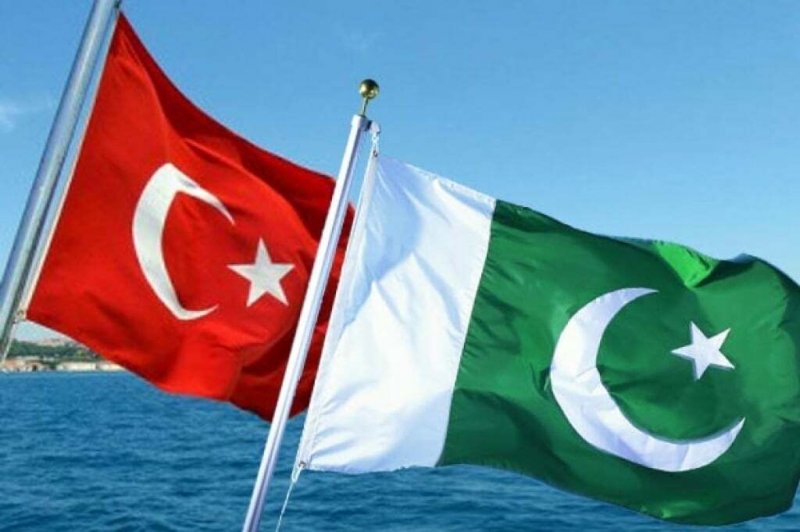
The Horn of Africa has become a central arena where global and regional powers test influence, protect trade routes, and project strategic intent, News.az reports
India expanding engagement now intersects with a closer alignment between Türkiye and Pakistan, creating a complex competitive landscape that reaches far beyond local politics. Control of access points, security partnerships, and economic corridors in this region carries consequences for maritime trade, energy flows, and diplomatic leverage across Africa, the Middle East, and South Asia.
This contest is not a conventional military standoff. It is a layered struggle built on ports, logistics, diplomacy, development assistance, and security cooperation. As the Horn of Africa gains prominence, India seeks to consolidate its footprint while Türkiye and Pakistan coordinate their approaches, each advancing national interests through partnerships and presence.
Why the Horn of Africa matters strategically
The Horn of Africa occupies a unique position at the crossroads of the Red Sea, the Gulf of Aden, and the Indian Ocean. This geography places it along some of the world most vital sea lanes connecting Asia to Europe and the Mediterranean. A large share of global trade and energy shipments transits these waters, making stability and access essential.
For regional states, proximity to shipping lanes offers economic opportunity through ports and logistics hubs. For external powers, the region provides leverage over maritime security and trade continuity. Piracy, regional conflicts, and great power competition have elevated the Horn of Africa from a peripheral area to a strategic focal point.
India strategic interests and objectives
India views the Horn of Africa as an extension of its broader Indian Ocean strategy. Ensuring open sea lanes and protecting commerce are core priorities. India has increased diplomatic engagement, development assistance, and naval cooperation with countries across East Africa.
Economic connectivity is central to India approach. Investments in port development, trade facilitation, and capacity building aim to strengthen ties and create mutual benefit. India emphasizes partnership rather than dominance, framing its role as supportive of regional stability and growth.
Security cooperation also plays a role. India has participated in maritime security efforts and supports regional initiatives that counter piracy and protect shipping. This approach aligns with India broader vision of a stable and rules based maritime order.
Türkiye growing footprint in the region
Türkiye has expanded its presence in the Horn of Africa over the past decade through diplomacy, trade, humanitarian aid, and security cooperation. Ankara presents itself as a partner that combines development assistance with strategic engagement.
Türkiye engagement includes infrastructure projects, commercial investment, and security training. Its approach often emphasizes historical ties and solidarity, positioning Türkiye as a trusted partner distinct from traditional Western actors.
Military cooperation has also increased, most visibly through training missions and security agreements. This presence enhances Türkiye influence and provides Ankara with strategic depth along key maritime routes.
Pakistan role and alignment with Türkiye
Pakistan involvement in the Horn of Africa is less visible than Türkiye but is growing through diplomatic coordination and security cooperation. Islamabad shares long standing defense ties with Ankara and aligns with Türkiye on several international issues.
Through this alignment, Pakistan extends its strategic reach beyond South Asia. Naval cooperation, training exchanges, and diplomatic coordination allow Pakistan to participate indirectly in regional dynamics that affect Indian Ocean security.
For Pakistan, collaboration with Türkiye offers access to new partnerships and platforms. It also supports Islamabad broader aim of balancing India influence in regions beyond South Asia.
How alignment reshapes regional dynamics
The alignment between Türkiye and Pakistan introduces a coordinated approach that contrasts with India more bilateral engagement style. By sharing perspectives and resources, Türkiye and Pakistan amplify their collective influence.
This coordination does not necessarily imply confrontation but does create competitive pressure. Regional states in the Horn of Africa navigate multiple suitors, weighing economic benefits, security assurances, and political alignment.
As a result, diplomacy becomes more complex. Countries in the region seek to maximize gains while avoiding entanglement in rivalries.
Key regional actors in the Horn of Africa
Several countries anchor the Horn of Africa strategic landscape. Ethiopia plays a central role due to its population size and regional influence despite being landlocked. Access to ports remains a core issue shaping its foreign relations.
Djibouti hosts multiple foreign military facilities and serves as a critical logistics hub near the Bab el Mandeb strait. Its choices affect maritime security and external power presence.
Somalia occupies a strategic coastline and has become a focal point for security cooperation and development assistance. Stability there directly influences shipping safety.
Eritrea also factors into regional calculations through its Red Sea coastline and evolving diplomatic posture.
Maritime security and trade routes
Maritime security underpins all external engagement in the Horn of Africa. The region proximity to chokepoints means disruptions can have global impact. India prioritizes freedom of navigation and cooperation with regional navies.
Türkiye and Pakistan emphasize capacity building and defense ties. Training programs and joint exercises aim to enhance local security forces while strengthening bilateral bonds.
These differing approaches coexist but also compete. Each actor seeks to be seen as the most reliable partner in safeguarding maritime interests.
Economic competition and development models
Economic engagement is another arena of competition. India promotes trade, technology transfer, and development projects aligned with local priorities. Its narrative focuses on mutual growth and long term partnership.
Türkiye combines commercial investment with humanitarian assistance, often delivering visible projects that build goodwill. Pakistan complements this through diplomatic support and selective economic initiatives.
For Horn of Africa states, this competition offers opportunities but also requires careful balancing to avoid overdependence on any single partner.
Political influence and diplomatic narratives
Diplomatic narratives shape perception and trust. India emphasizes shared democratic values and non interference. Türkiye highlights cultural affinity and solidarity. Pakistan underscores strategic cooperation and shared security concerns.
These narratives resonate differently across the region. Local leaders assess which partnerships align best with domestic needs and external pressures.
The battle for influence therefore unfolds not only through material projects but also through messaging and identity.
Impact on regional stability
External competition can bring investment and attention but also risks exacerbating tensions. Overlapping security commitments may complicate coordination and crisis response.
However, competition does not inevitably lead to conflict. If managed carefully, it can encourage higher standards of engagement and greater benefits for local populations.
Regional institutions and multilateral frameworks play a role in mitigating risks and promoting cooperation.
Global implications beyond the region
The contest in the Horn of Africa reflects wider shifts in global power distribution. Emerging and middle powers increasingly assert influence beyond their immediate neighborhoods.
For India, engagement in the Horn of Africa reinforces its role as a net security provider in the Indian Ocean. For Türkiye and Pakistan, alignment extends strategic reach and counters rival influence.
These dynamics intersect with interests of other actors including Gulf states, China, and Western powers, adding layers to an already complex environment.
Future trajectories and scenarios
Several scenarios could unfold. Competition may intensify as projects expand and security cooperation deepens. Alternatively, pragmatic coexistence may prevail with each actor focusing on distinct niches.
Regional states will continue to exercise agency, shaping outcomes through their choices. Their priorities in development, sovereignty, and stability will influence which partnerships succeed.
The evolution of conflicts and governance in the Horn of Africa will also affect external strategies. Stability attracts investment while instability raises security stakes.
Why this contest will persist
The strategic value of the Horn of Africa is enduring. Maritime trade will continue to rely on these routes, and regional states will seek partners to develop infrastructure and ensure security.
India, Türkiye, and Pakistan have long term interests that extend beyond short term projects. Their engagement reflects structural factors rather than temporary trends.
As a result, the battle for influence is likely to persist, evolving in form but remaining central to regional geopolitics.
Conclusion
The Horn of Africa has emerged as a key theater where India and a Türkiye Pakistan alignment pursue influence through diplomacy, security cooperation, and economic engagement. This competition is nuanced and multifaceted, shaped by geography, trade, and regional aspirations.
Rather than a zero sum struggle, it represents a dynamic process where local and external actors negotiate interests and priorities. The outcome will depend on how partnerships deliver stability and prosperity to the region.
As global attention remains fixed on maritime security and connectivity, the Horn of Africa will continue to be a strategic crossroads. The interplay between India and the Türkiye Pakistan alignment will remain a defining feature of this evolving landscape.