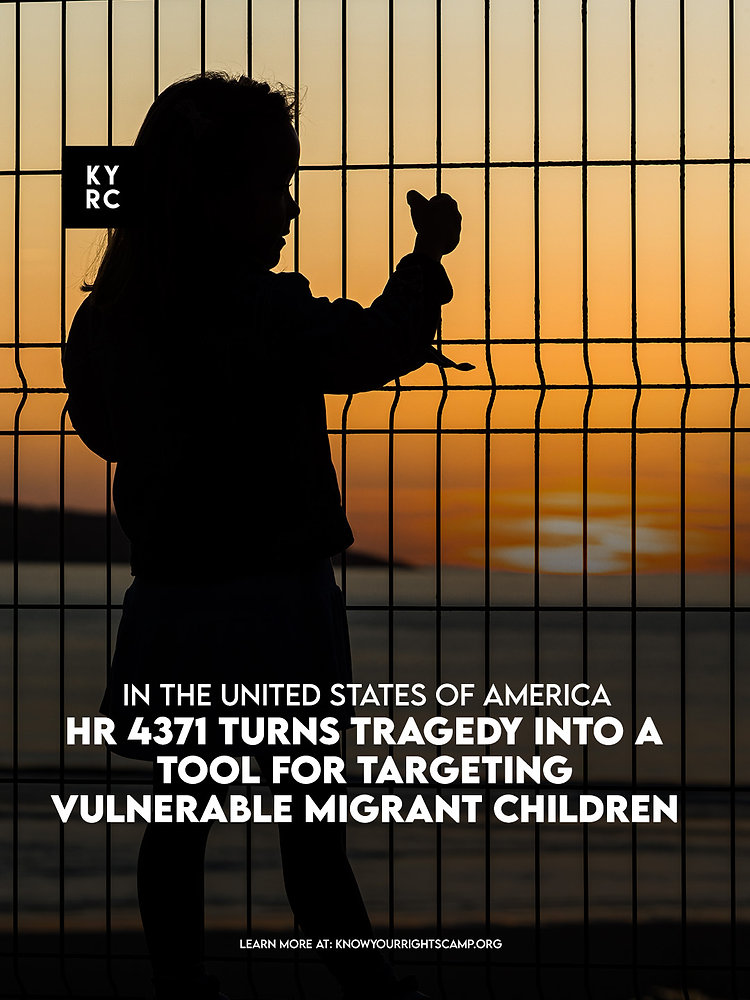

The House’s passage of HR 4371, the Kayla Hamilton Act, is being framed by supporters as a necessary safety measure, but many see it as a deeply discriminatory attack on vulnerable migrant children. While the bill claims it would require federal officials to “consider additional information” when placing “unaccompanied” minors, its real impact is far harsher. As ACLU deputy policy director Sarah Mehta explains, the legislation “allows the authorities to prolong the detention of children who have family in the U.S. by prohibiting their release to parents and sponsors unless they are U.S. citizens or lawful permanent residents.” This weaponizes a tragedy to justify policies that disproportionately harm Latinx and immigrant youth.
Supporters of the bill, including House Speaker Mike Johnson, have used Kayla Hamilton’s heartbreaking murder to justify sweeping punitive action. Johnson wrote that the bill “puts an end to this madness,” blaming a “wide-open border” for her death. But critics argue the legislation exploits a horrific event to push discriminatory targeting of children who had nothing to do with that crime. Mehta warns that the bill hands unchecked power to officials, giving the DHS secretary “,who is not a judge,” the authority to label a child a “flight risk” and detain them in a secure facility; essentially “a prison“with “no evidentiary standard or basis.”
Mehta stresses that HR 4371 bypasses established legal safeguards. Without the Administrative Procedures Act applying, the government can “create new regulations related to the detention of vulnerable kids without any notice,” shutting out input from medical or child-welfare experts. She describes a grim pattern: “There are hundreds of unaccompanied children in detention… put in detention ostensibly to protect them, but really as part of a larger narrative… criminalizing and vilifying kids.” The bill even authorizes invasive searches, supposedly to identify gang affiliation through tattoos, a practice she calls “appalling and dangerous,” especially since many tattoos are benign and many of these children are “victims of serious violence, including gang violence and sex trafficking.”
Past abuses confirm these fears. As Mehta notes, teens have been labeled gang members based on “scribbles in his notebook” or tattoos misread by officials, leading to traumatic detention. For opponents, HR 4371 doesn’t protect children; it targets them, expanding discriminatory punishment under the guise of public safety.