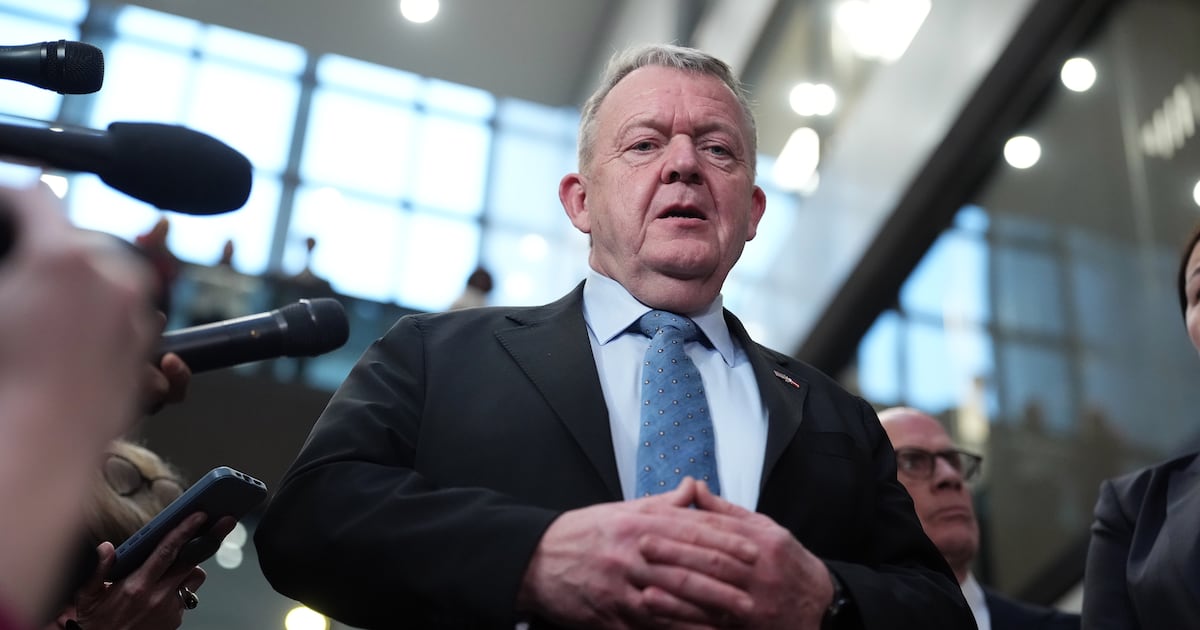
Denmark has welcomed Donald Trump‘s announcement that he will drop tariffs and rule out force to take Greenland, but warned that the US president still “has an ambition we can’t accommodate”.
Mr Trump rowed back on his threat to slap tariffs on Nato allies who opposed his ambitions to annex Greenland on Wednesday night after he and the alliance’s chief “formed the framework of a future deal” for the Arctic region.
In recent days Mr Trump had upped the pressure on Europe to cede control of Greenland or face the consequences, saying that Nato owed it to the US to grant it full rights to the territory.
Denmark’s foreign minister, Lars Lokke Rasmussen, said on Wednesday night that the day had “ended better than it started” and it was “positive” that Mr Trump planned to end the trade war.
“It is a signal, I hope, that we can now have talks with Trump’s people,” he said, adding that discussions needed to end in a way that “respects the Greenlandic people.”
But he added: “Trump saying he won’t use force is a good signal, but it is still clear that Trump has an ambition that we can’t accommodate”.
Swedish foreign minister Maria Malmer Stenergard also welcomed the change in Mr Trump’s stance on Greenland.
“Good that Trump has now backed away from tariffs on those of us who have supported Denmark and Greenland,” she said on X.
“The demands about moving borders has received well-earned criticism. That is also why we have repeated that we will not be blackmailed. It appears that our work together with allies has had an impact.”
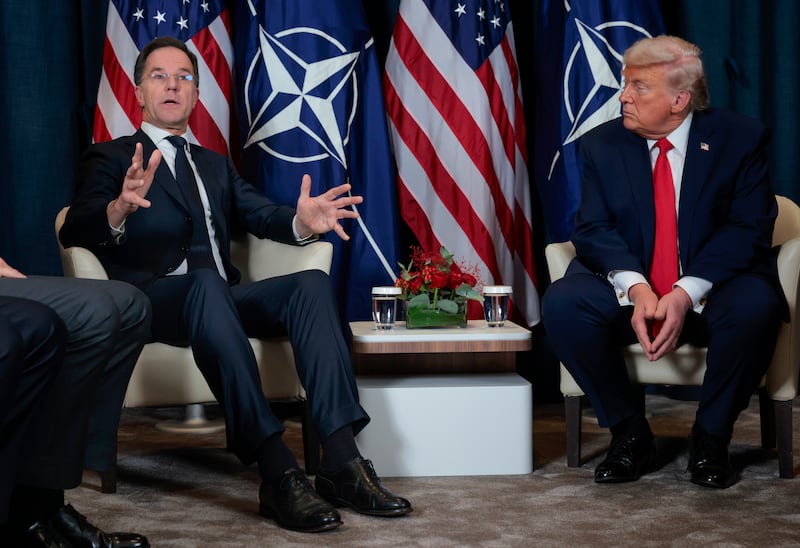
US president Donald Trump (right) with Nato secretary general Mark Rutte in Davos on Wednesday. Photograph: Chip Somodevilla/Getty
The European Union’s 27 leaders, meanwhile, will meet in Brussels on Thursday evening to game out a joint response to the developments.
The European Council summit had been expected to discuss the prospects of talking the US president down from his demands that negotiations begin immediately to arrange the “sale” of Greenland from Denmark to the US.
French president Emmanuel Macron had signalled that he wanted the EU to take a tougher stance in its relations with the White House than it has to date.
Discussions between the European Commission and national capitals had indicated a clear desire from most governments to avoid an economically damaging trade war between Brussels and Washington.
The EU summit had intended to sound out the levels of political support for various steps of possible retaliation, in the event the Trump administration proceeded with threats to levy fresh tariffs on Denmark and other EU countries on February 1st.
An initial EU retaliation, limited to a package of counter-tariffs to hit up to €93 billion worth of US trade, had been on the agenda.
The European Parliament, meanwhile, decided to suspend its work on the European Union’s trade deal with the United States in protest at president Donald Trump’s demands to acquire Greenland and threats of tariffs on European allies who oppose his plan.
The EU assembly has been debating legislative proposals to remove many EU import duties on US goods, a key part of the agreement struck in Turnberry, Scotland, at the end of July, as well as to continue zero duties for US lobsters, initially agreed with Trump in 2020.
The proposals require approval by the parliament and EU governments.
Many politicians have complained that the trade deal is lopsided, with the EU required to cut most import duties while the US sticks to a broad rate of 15 per cent.
However, they had previously appeared willing to accept it, albeit with conditions, such as an 18-month sunset clause and measures to respond to possible surges of US imports.
The trade committee of the European Parliament was due to set its position in votes on January 26th-27th. However, this has now been postponed.
The chair of the committee Bernd Lange told a news conference on Wednesday that the new tariff threats had broken the Turnberry deal, saying it would now be put on hold until further notice.
However, freezing the deal risks angering Trump, which could lead to higher US tariffs. The Trump administration has also ruled out any concessions, such as cutting tariffs on spirits or steel, until the deal is in place.
Separately, European Central Bank president Christine Lagarde walked out of a dinner at the World Economic Forum during a speech critical of Europe by US commerce secretary Howard Lutnick.
The ECB president exited during a passage of heavy criticism levelled at Europe by Mr Lutnick that drew heckling at the dinner on Tuesday night, said one of the sources who was briefed on what happened.
The dinner was hosted by BlackRock chief executive Larry Fink as co-chairman of the World Economic Forum for all of the major members of the forum along with heads of state and other dignitaries, a person who was invited to it said.
A couple of hundred people were invited to the dinner. Mr Fink ended the dinner before dessert after the heckling incident as people were walking out, one of the sources said. – Additional reporting by Reuters and Bloomberg