Santiago, Chile/Mexico City, Mexico
Reuters
Some Venezuelans scattered throughout Latin America say they are weighing whether to plot a future back home as the US ouster of long-time leader Nicolas Maduro raises cautious hopes for democratic elections and a way out of economic collapse.
About a quarter of Venezuela’s population has fanned out across Latin America, the Caribbean, Spain and the United States since 2014, fleeing an oil-dependent economy crippled by mismanagement.
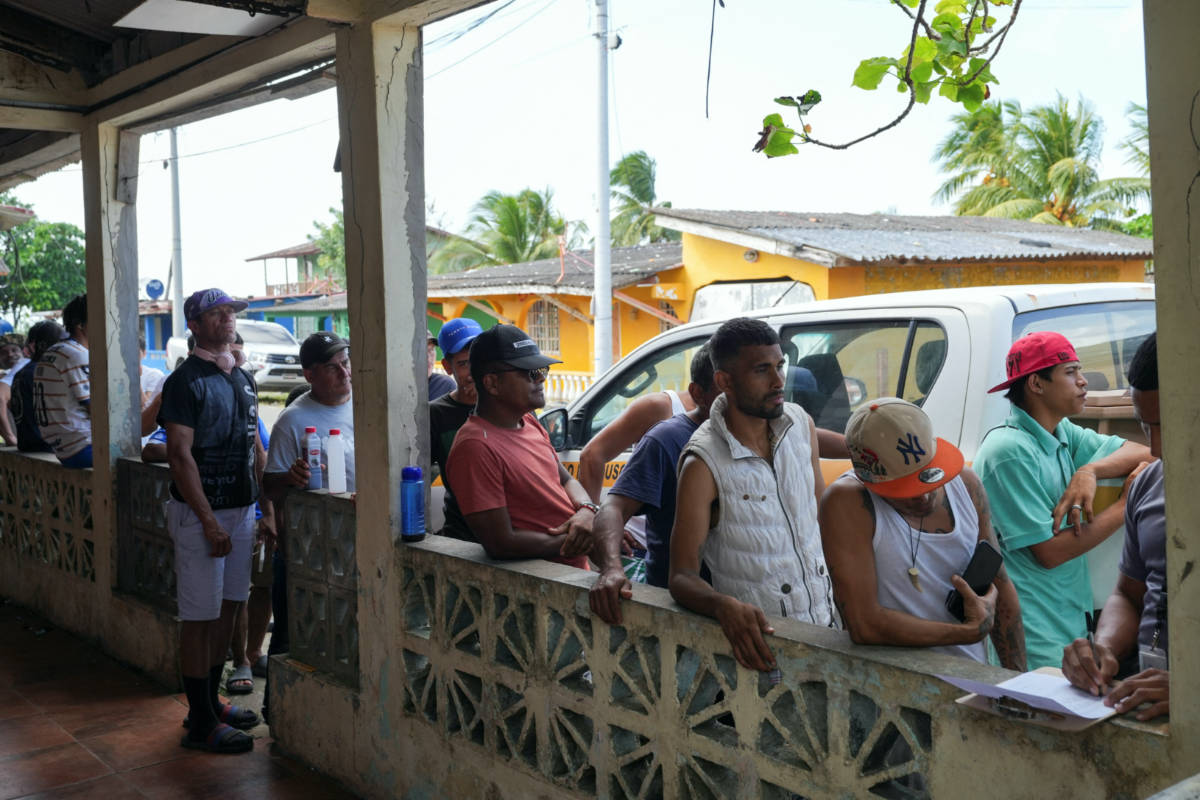
Venezuelan migrants sign up as they wait for the day’s only food distribution while they search for a way to pay for a boat to Colombia, amid renewed hopes of returning home following the US capture of Nicolas Maduro and prospects for democratic elections and economic recovery, in Miramar, Panama, on 14th January, 2026. PICTURE: Reuters/Enea Lebrun
“I want to return to my country, I want to help rebuild,” said Juan Carlos Viloria, a doctor who helps run a migrant advocacy group in Colombia, host to Latin America’s largest Venezuelan migrant population.
However, with Maduro’s former Vice President, Delcy Rodriguez, tightening her grip on power, fears about continued government repression and economic insecurity were holding people back, he said. He added that border communities in north-eastern Colombia he works with have even seen a rise in people crossing into Colombia to earn some cash while the situation in Venezuela stabilises.
The exodus of about eight million people from the OPEC member transformed demographics throughout the Americas. In the United States, Venezuelans arrived in such large numbers at the southern border that they became the face of US President Donald Trump’s hard-line migration policy.
We rely on our readers to fund Sight’s work – become a financial supporter today!
Some have settled in their new countries, and moving again would not be an easy choice. But their decision to return or stay put could dramatically influence Venezuela’s future.
“Rebuilding Venezuela will require many of the talents of those of us who have left,” said Viloria, one of a dozen migrants – from day workers to business owners to engineers – that Reuters interviewed in Colombia, Peru, Chile, Mexico and Panama, countries that all saw an influx of Venezuelans in recent years.
Nicole Carrasco, who moved to Chile in 2019 after her father was arrested, said she feared nothing had yet changed for political prisoners and their families.
“It is not as if Venezuela is free yet – there are still many very bad people in power,” Carrasco said, adding that she longed to return home to see family and eat traditional foods like arepas.
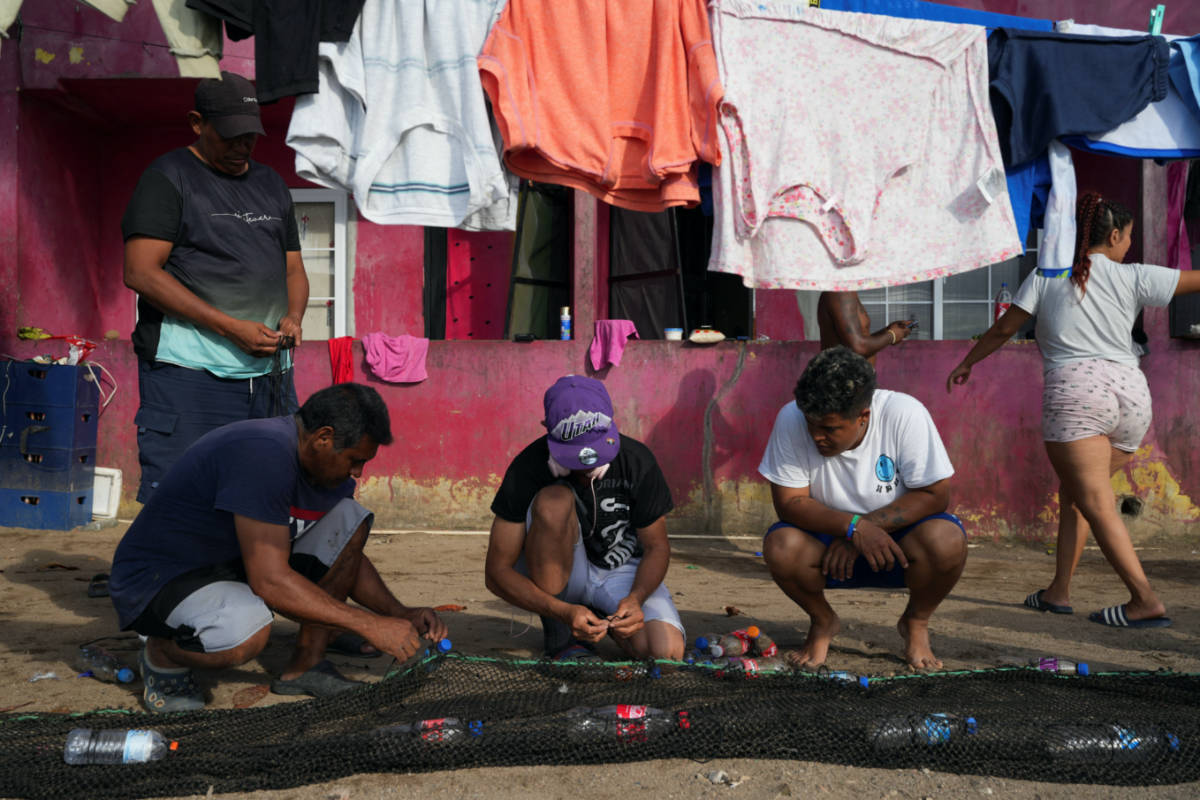
Venezuelan migrant fisherman Angelo Petit builds an improvised fishing net to fish for food with the help of Ronelkys Pereira and Jose Luis De Avila near the shelter where they have been stranded for weeks after self‑deporting from the US, as he tries to raise money for a boat to Colombia, amid renewed hopes of returning home following the US capture of Nicolas Maduro and prospects for democratic elections and economic recovery, in Miramar, Panama, on 14th January, 2026. PICTURE: Reuters/Enea Lebrun
Opposition leader and Nobel Peace Prize winner Maria Corina Machado – whose candidate was widely seen as the legitimate winner of the 2024 election that Maduro was accused of rigging – has called for a transition of power as soon as possible so Venezuelans can return home.
While many migrants Reuters spoke to expressed uncertainty about the short term, they were hopeful the change will ultimately be for the better.
Luis Diaz was traveling through Panama, back to Venezuela after a year in Mexico.
“I don’t know whether it’s good or bad,” he said. “Now they’ve done what they’ve done, something different is going to start.”
Omar Alvarez, a Venezuelan migrant also passing through Panama on his journey home, said he was confident, however, that with hard work Venezuela could become a better place to live in.
“All of us outside Venezuela, I think we can come together and recover our country by working together, like we have always done in every country we’ve arrived in,” he said. “I say that with all of us united, our country’s economy will rise again.”