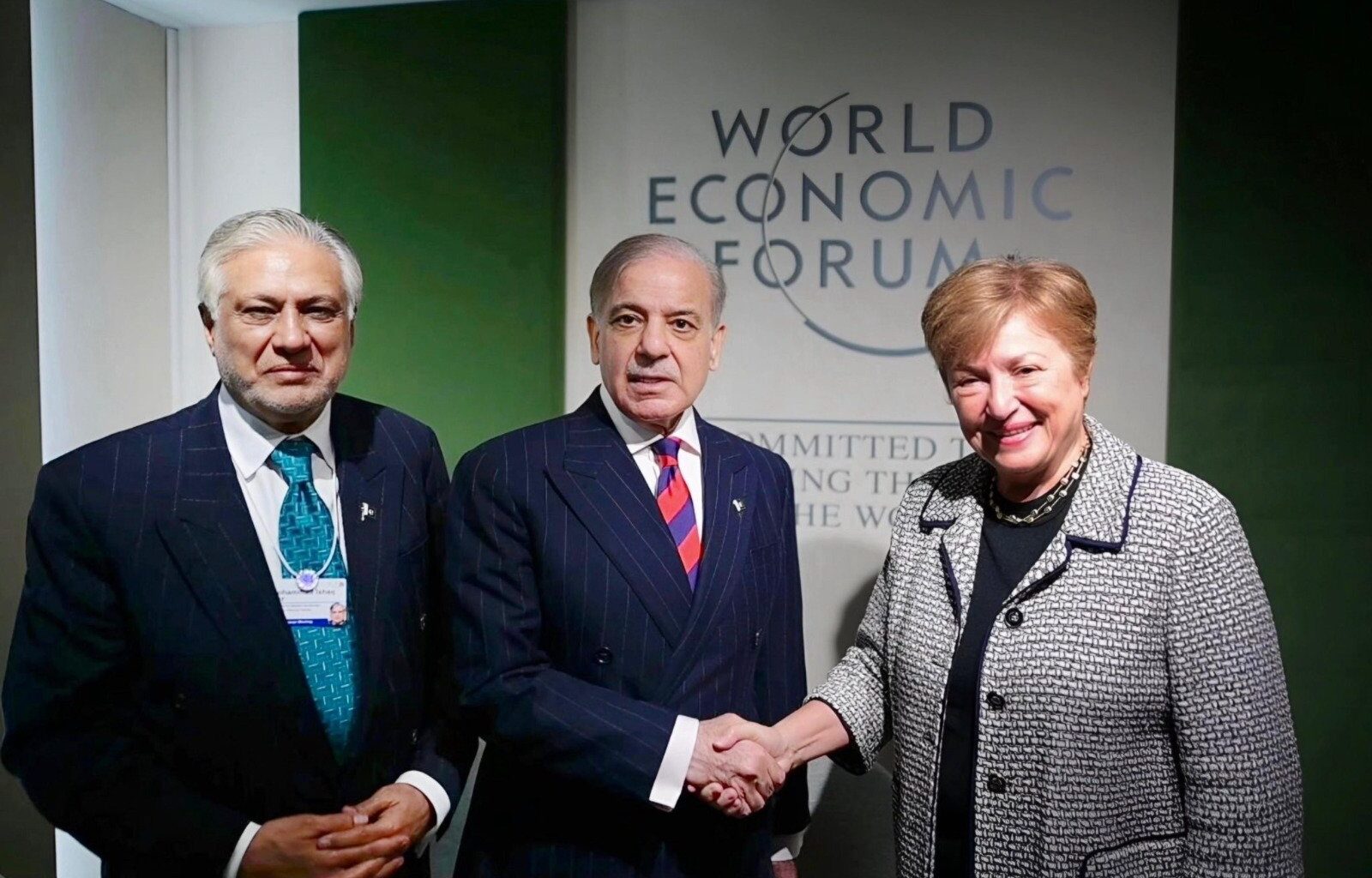
Davos (TDI): Pakistan’s ongoing economic reform agenda received positive acknowledgment from the International Monetary Fund (IMF) as senior officials met on the sidelines of the World Economic Forum (WEF) 2026.
An IMF envoy expressed appreciation for Pakistan’s recent stabilization measures and progress on structural reforms during a meeting with the country’s Prime Minister, Shehbaz Sharif, and Deputy Prime Minister/Foreign Minister, Ishaq Dar.
Pakistani leadership held discussions with Kristalina Georgieva, Managing Director of the IMF, focusing on the country’s improving macroeconomic indicators and reform trajectory.
The interaction took place amid a series of high-level engagements at Davos, where global leaders, policymakers, and financial institutions are deliberating on economic challenges and opportunities.
During the meeting, Pakistan shared details of its improving economic outlook, highlighting gains made through fiscal consolidation, tighter monetary management, and policy measures aimed at restoring stability.
Officials noted that inflationary pressures have begun to ease, external balances have shown signs of improvement, and confidence in the economy is gradually returning due to consistent policy implementation.
Georgieva reportedly acknowledged and appreciated Pakistan’s efforts to stabilize its economy under challenging global conditions.
Read More: IMF Approves Release of $1.2B for Pakistan, Nods Reform Implementation
She was briefed on the government’s progress in advancing structural reforms, particularly in areas such as taxation, energy sector governance, and public financial management.
These reforms are seen as critical to addressing long-standing vulnerabilities and laying the foundation for sustainable and inclusive growth.
Both sides reaffirmed Pakistan’s strong commitment to fiscal discipline and revenue mobilization, recognizing these as essential pillars for long-term economic resilience.
The discussions also emphasized the importance of broadening the tax base, improving compliance, and enhancing transparency to ensure durable economic recovery.
In addition to Pakistan’s domestic reform agenda, the meeting included an exchange of views on the global economic outlook.
The conversation underscored the uncertainties facing the world economy, including geopolitical tensions, tightening financial conditions, and uneven post-pandemic recovery across regions.
In this context, the role of multilateral institutions such as the IMF was highlighted as crucial in supporting economic stability, particularly for developing and emerging economies.