From reproductive rights to climate change to Big Tech, The Independent is on the ground when the story is developing. Whether it’s investigating the financials of Elon Musk’s pro-Trump PAC or producing our latest documentary, ‘The A Word’, which shines a light on the American women fighting for reproductive rights, we know how important it is to parse out the facts from the messaging.
At such a critical moment in US history, we need reporters on the ground. Your donation allows us to keep sending journalists to speak to both sides of the story.
The Independent is trusted by Americans across the entire political spectrum. And unlike many other quality news outlets, we choose not to lock Americans out of our reporting and analysis with paywalls. We believe quality journalism should be available to everyone, paid for by those who can afford it.
Your support makes all the difference.
Read more
Birkenstock has admitted that the Trump administration’s tariffs are now beginning to bite and price increases at the footwear brand are in the works for this year.
The company, like others, said now that most of its pre-tariff products have shipped, U.S. consumers will be paying more for some of its popular sandals, shoes, and boots.
CFO Ivica Krolo said that a simple solution would be to pass tariff costs on to consumers – potentially rising the price of a $100 pair of shoes to $125. For every $100 of product entering the U.S., Birkenstock pays $10 in tariffs, and thus the company has to find $25 elsewhere to keep profit margins steady, Krolo explained.
However, the Germany-based company said that it won’t make this sweeping price increase as it goes against the brand’s values.
“The price increase would have to be 2.5x the tariffs,” Krolo said. “This is not something we would do to our customer, being a democratic brand.”

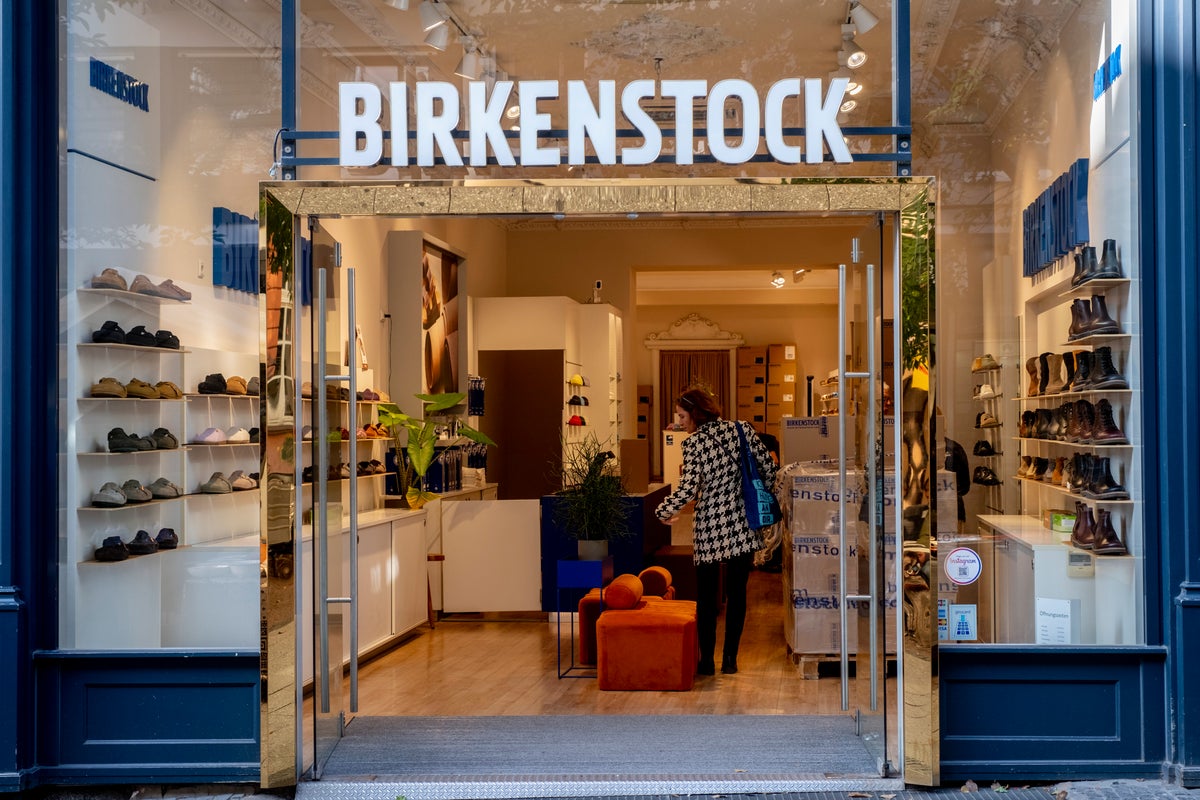
Tariffs are impacting Birkenstock’s 2026 pricing and supply-chain decisions, the company said this month (Copyright 2023 The Associated Press. All rights reserved)
Instead, the company plans to absorb the tariffs across a variety of channels. It will raise prices based on seasonal reviews and style-by-style decisions, Krolo said.
On the supply-chain side, the company will find ways to offset tariffs by improving the efficiency of manufacturing, figuring out ways to save money on shipments and making changes to the contracts it has with suppliers and vendors.
Those changes will take time to implement, Krolo said. In the meantime, the company believes its Asia-Pacific market will help temper the Trump tariff impact.
Birkenstock tried to keep costs manageable in 2025 with a global price increase this past summer and by shipping as many goods as possible from Europe before tariffs kicked in. The price increases were in the single digits, generally speaking. For example, the brand’s popular Boston clog rose from $150 in May 2025 to $155 in October 2025, where the price remains today.
However, the levies don’t seem to be hampering the company’s growth. Birkenstock opened 30 stores in 2025 and plans to roll out another 40 stores this year, Krolo said. It also plans to improve its customer outreach through various loyalty perks.
“We are working to drive an even stronger connection to our consumers through more targeted membership benefits, a loyalty program, exclusive styles, content and special events,” Krolo said.
The company may have had to face an even more strained 2026 as new tariffs were set to kick in on February 1. However, President Donald Trump backed off those tariffs this week at the World Economic Forum in Davos.