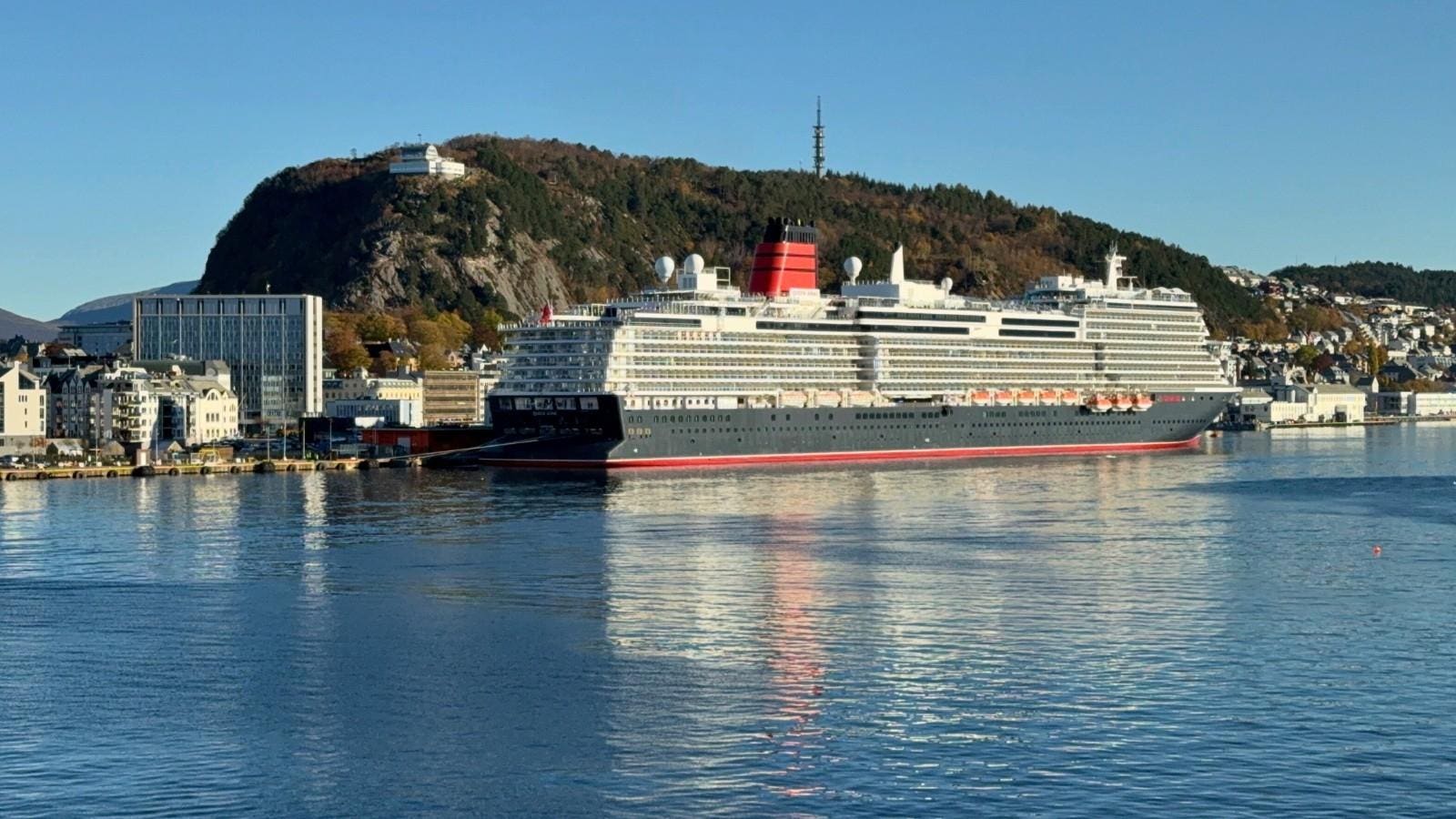
Ålesund is one of the most popular cruise ship ports in Norway.
David Nikel
According to new figures from Norway’s Coastal Administration, more than 3,900 cruise ship calls brought an estimated 1.6 million individual cruise passengers to Norway last year.
When repeat port calls are included, total cruise passenger movements reached 6.3 million, the highest figure on record. The numbers confirm that, despite mounting criticism in some destinations, demand for Norwegian cruise itineraries remains strong.
Norway Cruise Traffic Has More Than Doubled
Excluding the pandemic years of 2020 and 2021, cruise traffic to Norway has risen steadily since 2016. Compared with that year, cruise activity in 2025 has more than doubled.
The headline figure of 6.3 million passengers can be misleading at first glance. Cruise passengers are counted again each time a ship calls at a new port, meaning the same traveler may appear multiple times in the statistics.
On average, each cruise passenger visited four Norwegian ports during a single voyage.
When adjusted for this, the number of unique cruise visitors to Norway in 2025 exceeded 1.6 million. Most of these passengers began their cruise outside Norway, although a smaller number started or ended their voyage at Norwegian ports.
Germans, Britons And Americans Dominate
Cruise passengers visiting Norway continue to come overwhelmingly from a handful of key markets. German travelers made up the largest group in 2025, with approximately 753,000 passengers, followed by British passengers at 337,000 and Americans at 185,000.
The distinctive livery of German-focused cruise line AIDA is a common sight in many Norwegian cruise ports.
David Nikel
That mix reflects Norway’s strong position in the Northern European cruise market, particularly for fjord-focused itineraries departing from the U.K. and continental Europe, as well as longer transatlantic voyages and Arctic cruises.
In a press release, Norwegian Coastal Administration director Einar Vik Arset said the growth in passenger numbers “exceeded expectations,” calling the results positive for both ports and regional tourism economies.
“At the same time, large vessels with many passengers present challenges related to safety, emergency preparedness, and the environment,” he added.
Bergen Is Norway’s Busiest Cruise Port
Bergen once again topped the rankings as Norway’s most visited cruise destination, welcoming more than 680,000 cruise passengers in 2025. That figure represents an increase of more than 92,000 passengers compared with the previous year.
Bergen’s appeal cuts across key cruise markets. German visitors are drawn by the city’s Hanseatic heritage, while British and American passengers value the compact layout, cultural attractions and easy access to fjords and coastal scenery.
Combined with the capacity to handle multiple ships in a single day, those factors help explain why Bergen continues to lead Norway’s cruise statistics.
Stavanger followed closely with 638,000 passengers, while Ålesund recorded 594,000. Bergen also ranked first by number of cruise ship calls, with 346 visits, ahead of Ålesund and Stavanger.
The concentration of cruise traffic in a relatively small number of ports has become one of the central issues in Norway’s cruise debate, particularly during the peak summer season.
Skjolden is one of the fjord destinations that has experienced major cruise growth in the past 10 years.
David Nikel
Norway cruises now offer far greater variety. From northern lights sailings to midnight sun itineraries, voyages above the Arctic Circle have grown in popularity.
Cruise lines are also expanding seasons, routes, and experiences in the traditional Norwegian fjords region.
Since 2016, several new cruise destinations have also emerged and attracted significant visitor numbers. Haugesund, for example, grew from 21,000 to 401,000 cruise passengers, while Nordfjordeid rose from none to 228,000 passengers. Måløy, Skjolden and Vik also experienced major growth.
Growing Cruise Pushback In Norway
While the cruise industry highlights economic benefits, opposition to cruise tourism has grown louder in several Norwegian cities and fjord communities.
Critics point to congestion, pressure on infrastructure, air pollution and the visual impact of large vessels in historic and environmentally sensitive areas.
Since the pandemic years, parts of Western Norway including Bergen and Stavanger have all seen local protests and political debates over cruise limits, shore power requirements and passenger caps.
In some fjord destinations, cruise tourism has become a flashpoint in broader discussions about overtourism and sustainable travel.
The debate has been especially intense around Norway’s World Heritage fjords, including Geirangerfjord and Nærøyfjord. A planned ban on conventional cruise ships in these areas, originally scheduled to take effect in 2026, has now been delayed.
The postponement has drawn criticism from environmental groups, while cruise operators argue that the extra time is necessary to allow new low- and zero-emission ships to enter service.
For cruise lines planning future itineraries, Norway’s challenge will be maintaining its position as one of Europe’s most desirable cruise destinations while responding to stricter environmental expectations and increasingly vocal local opposition.
MORE FROM FORBESForbesA Norway Cruise In 2026 Is About More Than Just The FjordsBy David NikelForbesOslo Is One Of Norway’s Most DIY-Friendly Cruise PortsBy David NikelForbesThese 5 New Cruise Ships Launching In 2026 Tell A Bigger StoryBy David Nikel