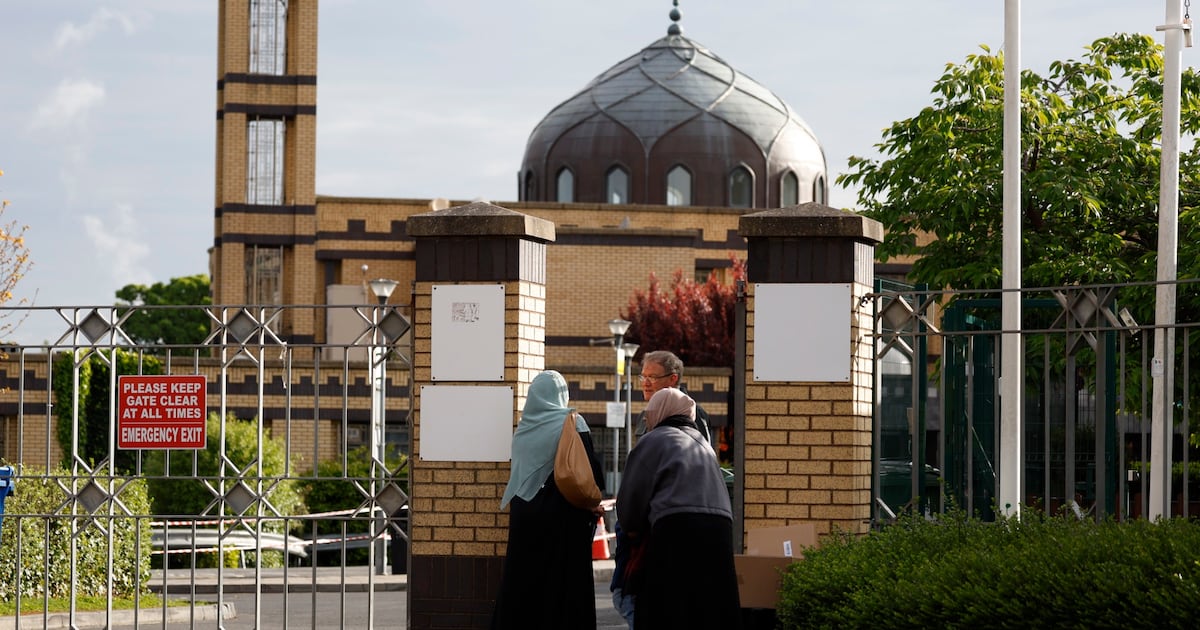
The Islamic Cultural Centre of Ireland, based in Clonskeagh, Co Dublin, is to open in time for the holy month of Ramadan, which begins on February 17th.
Ireland’s largest mosque, it closed following an internal dispute and an alleged altercation at a meeting there on April 19th last year.
The Muslim National School there, however, remained open.
The decision to close the centre was taken by the Al Maktoum Foundation, a United Arab Emirates charity that owns the centre and provides about €2.5 million a year in funding.
It had raised concerns about alleged financial irregularities at the centre as well as alleged links between some members and extremist ideologies.
Subsequent legal actions by and large ended earlier this month when the High Court ordered retired surgeon, Dr Abdel Basset El-Sayed, a director at the cultural centre since 2012, to pay legal costs incurred by other directors there in successfully defending against his claims of corporate criminality against them.
In the High Court last month Mr Justice David Nolan said Dr El-Sayed’s case was “entirely misconceived” and his allegations were baseless.
Dr El-Sayed then withdrew the proceedings, with the judge noting that, by withdrawing the case, the Meath-based physician was withdrawing the allegations made against the directors of Al Maktoum Foundation.
Dr El-Sayed withdrew the case in circumstances where his court documents did not contain a plenary summons, a key document used to start High Court proceedings.
In a notice on its website, the Islamic Cultural Centre of Ireland said it “would like to sincerely thank the community for its strong interest and continued support” over recent months.
“We are now on a path to recovery, thanks to the continued support of donors in Dubai and the community at large,” it said.
“We would also like to acknowledge and thank the various branches of the Government of the Republic of Ireland for their support in this regard.”
Meanwhile, the High Court judge hearing a dispute over the control of the company behind the cultural centre has recused himself from the remainder of the proceedings “in an abundance of caution”, after a barrister made claims of bias and sabotage against him.
Mr Justice David Nolan made the decision after Joseph Sallabi, a barrister who previously purported to act as in-house counsel for the centre’s operator, the Al Maktoum Foundation, sought the judge’s recusal from the proceedings.
On Friday, the judge read in court a letter sent to him by Mr Sallabi earlier this month, in which the barrister accused the judge of sabotaging the proceedings, and “whitewashing” alleged criminal wrongdoing on the part of several directors of the Al Maktoum Foundation.
The judge said he was “fully satisfied” that he’d done nothing wrong over the course of the proceedings. However, the judge said that “in an abundance of caution”, and seeking to avoid a “side show” in the case, he would recuse himself.
Last year, Mr Sallabi brought a case on behalf of Dr Abdel Basset El-Sayed, alleging several of the foundation’s board directors were appointed unlawfully, and seeking to have them removed.
The directors are Ahmad Tahlak, Hesham Abdulla Al Quassim, Khalifa Aldaboos, Mohamed Musabeh Dhahi and Zahid Jami. The men are resident in Dubai, but have their place of business as Roebuck Road, Clonskeagh.
Dr El-Sayed, in sworn written evidence prepared by Mr Sallabi, made allegations of fraud, theft and money laundering against the directors. Dr El-Sayed subsequently withdrew his case and the allegations, described as “baseless” by Mr Justice Nolan. The judge made an order directing Dr El-Sayed to pay legal costs incurred by the directors.
Lawyers for the five directors are also seeking an order for costs against Mr Sallabi. The directors are represented by Lyndon MacCann SC and barrister Niall Ó hÚiginn, instructed by Mason Hayes & Curran.
At Friday’s hearing, Mr Justice Nolan said the costs application would be dealt with by a different judge, after he stated he was recusing himself from the case.