When I started my career in Catholic media in 2012, I had no idea what I was doing. I was fresh out of graduate school with a focus on church history. Suddenly, I had to turn my attention to history unfolding in real time at the Vatican. There was a lot to observe and absorb. So I looked to the professionals in the Vatican press corps for insight and inspiration.
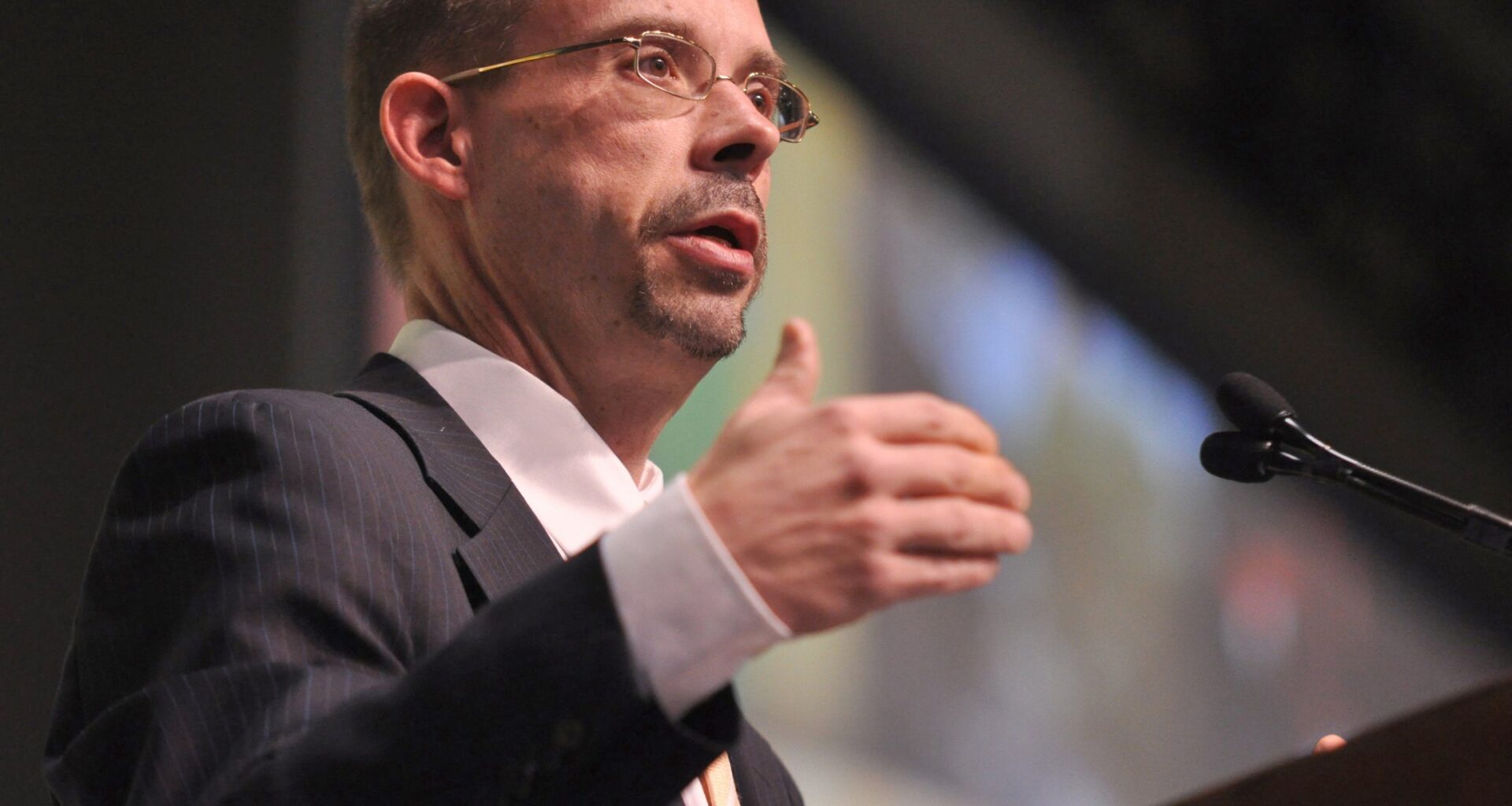
Among the English-speaking journalists, there was one person I quickly gravitated toward and considered his columns to be “must reads”: John L. Allen Jr., the legendary Vatican reporter who died this week at age 61 after a long battle with cancer.
In appreciation of John, I’d like to reflect on what made him a must-read. Here are three reasons that immediately come to mind and have continued to inspire my own work in Catholic media to this day.
First, John was accessible. His writing was simple, direct, engaging and even entertaining. But being accessible didn’t mean being shallow or dumbing down his analysis. On the contrary, he would go straight to the heart of the matter using language that a 20-something know-nothing Catholic could follow and comprehend. Throughout his career, John avoided the natural temptation in Catholic commentary (or any field, really) to write with peers or other experts in mind to feel seen and accepted. No, John would write and speak to ordinary people interested in the goings-on at the Vatican with clarity and precision. Once you read a short column by John, you, too, felt like an expert.
Second, John was nuanced. Often, the most exciting news coming out of the Vatican is controversial and conflictual. Taken to one extreme, a Catholic journalist’s obsession with drama leads to sensational, tabloid-style commentary or conspiratorial speculation. At the other extreme, a Catholic journalist can cozy up to the institutional church and, in an attempt to maintain relationships and trust with hierarchs, become a mouthpiece for the institution over object analysis, thus losing credibility among a broader audience. Generally speaking, John avoided both temptations. He would dive straight into the drama and, in short order, present the various sides to a story. After reading John, you wouldn’t know exactly where he stood on the question—a testament to his capacity for nuance and understanding of the proper role of a Catholic reporter.
Third, John was passionate. Even more engaging than reading John was watching John. As a Vatican analyst for CNN, he was gold. Along with his clarity, nuance and encyclopedic knowledge of the Vatican, he brought personal excitement and energy to every interview. I saw this firsthand during the historic 2013 resignation of Pope Benedict XVI and the election of Pope Francis. We were both in Rome working with the secular press, and it wasn’t easy. Oftentimes, we would bump into each other at 12 a.m. when he was doing live hits for primetime back in the United States. And there were many difficult questions to answer, from the Vatileaks scandal to issues of clergy sex abuse. John’s enthusiasm for commentating never waned.
As a Catholic, he didn’t feel the need to downplay or avoid challenging questions. He always had something insightful and truthful to say, without hesitation or defensiveness. It sounds paradoxical, but it seemed that his passion sprang from a place of deeper tranquility, as if, despite the difficulty or complexity of a story, he knew that the risen Christ was at work in the church and all would be well. To my mind—and I don’t say this lightly—his media commentary during the 2013 papal transition made him the most effective evangelist for Catholicism in that historic moment.
Personally, I got to work with John on a few occasions. During the 2013 papal transition, I pitched him the idea of doing a video series on the “papabili,” the cardinal frontrunners to succeed Benedict. The goal was simple: channel John’s clear, nuanced and passionate commentary for YouTube and for a potentially huge audience to see. We were only able to pull off six or seven episodes due to time constraints, and, admittedly, we overlooked Cardinal Jorge Bergoglio! We also didn’t script any of it. I came with very open-ended questions, and he delivered.
I’m proud to say that one of the short videos went viral: Cardinal Luis Antonio Tagle. Anyone familiar with Cardinal Tagle understands why a video about his papal candidacy would have wide appeal. As John said with a smile on his face and a twinkle in his eye, “If Cardinal Tagle walks out on that balcony as the next pope, I think the day-one headline is: ‘The Catholic Church has a rockstar!’” But what endures in the videos more than a decade later is what made John so special: You could toss him any question about the Vatican or key players in the Catholic Church, and, with ease, insight and unrivaled enthusiasm, he’d hit it out of the park.
Thank you, John, for being a “rockstar” of the Vatican press corps. Rest in peace.
Related