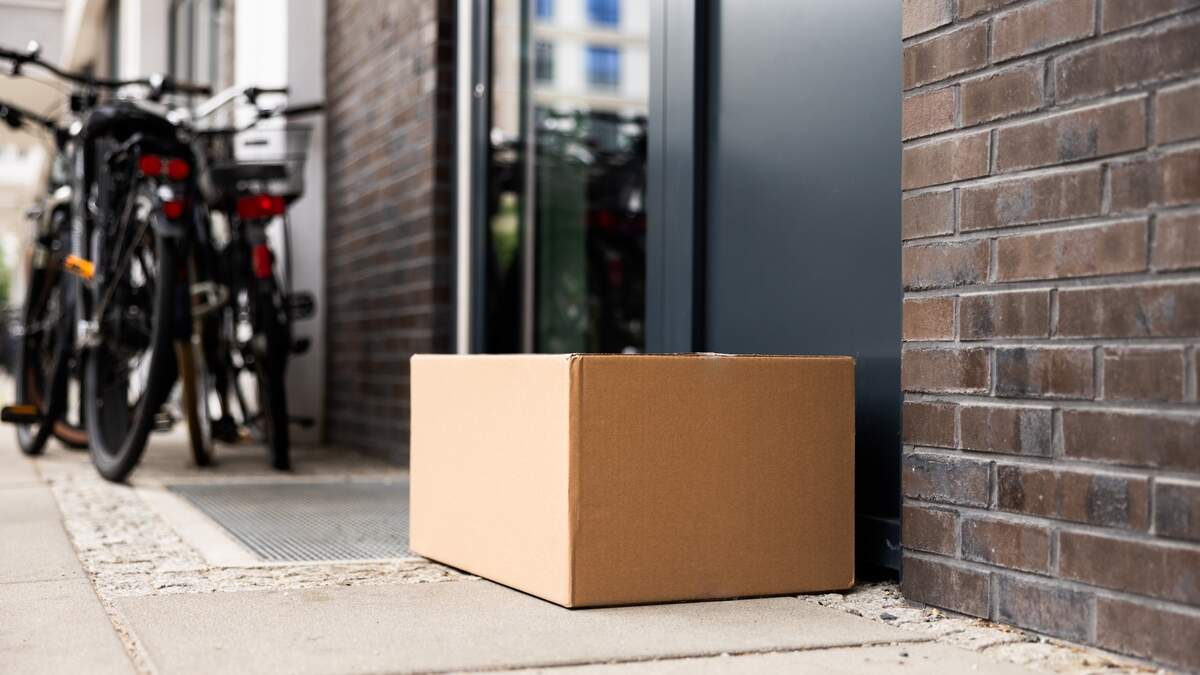
Leaving a parcel on the doorstep if the recipient is not at home has become an increasingly common practice in Luxembourg, but it is not legally valid without clear and explicit authorisation from customers.
The lobby group for consumers in Luxembourg, the Union luxembourgeoise des consommateurs (ULC), told Contacto that a courier cannot leave a parcel on the doorstep without the consumer’s prior agreement.
This agreement must be unequivocal, either in writing, through an option chosen at the time of purchase or through an express instruction given to the seller or carrier. In the absence of such an agreement, the delivery is considered non-compliant and, legally, the consumer is not considered to have received the goods, a ULC spokesperson said.
In other words, the mere fact that the package is left at the door does not mean that delivery has been completed. Therefore the seller remains responsible for the order until the consumer takes actual and real possession of the goods, according to Luxembourg’s Consumer Code, the ULC said.
Another key point concerns the so-called “proof of delivery.” A photograph of the package at the door, frequently used by carriers, does not have sufficient legal value, the ULC said, adding that the image only demonstrates that the object was in that location at a specific time, but does not prove that the consumer received it.
In legal terms, delivery requires an action from the consumer, such as hand delivery, a signature, or a prior agreement.
The consumer rights organisation stressed that if a package is stolen or disappears after being left at the door without authorisation, the seller remains responsible for the lost parcel.
In such cases, the delivery is considered legally non-existent, and the seller is obliged to reimburse the consumer or resend the merchandise, subsequently resolving the situation with the carrier, who is considered their subcontractor.
When an order appears as “delivered” on an online tracking platform but has never been received, the consumer should contact the seller directly, ideally within 48 to 72 hours, to request a solution, the ULC said.
If there is no response or the request is refused, it is recommended to send a formal letter, reminding the seller of their legal obligations and setting a deadline for action.
If the dispute remains unresolved, customers should consider resorting to consumer mediation, referring the case to the ULC or, as a final step, the courts, the lobby group said.
In general, consumers are urged to avoid unsigned deliveries for valuables, to deactivate automatic “safe deposit” options, and to favour collection points for packages. It is also important to keep all communication records relating to the parcel, the ULC said.
(This article was originally published by Contacto. Machine translated using AI, with editing and adaptation by John Monaghan.)