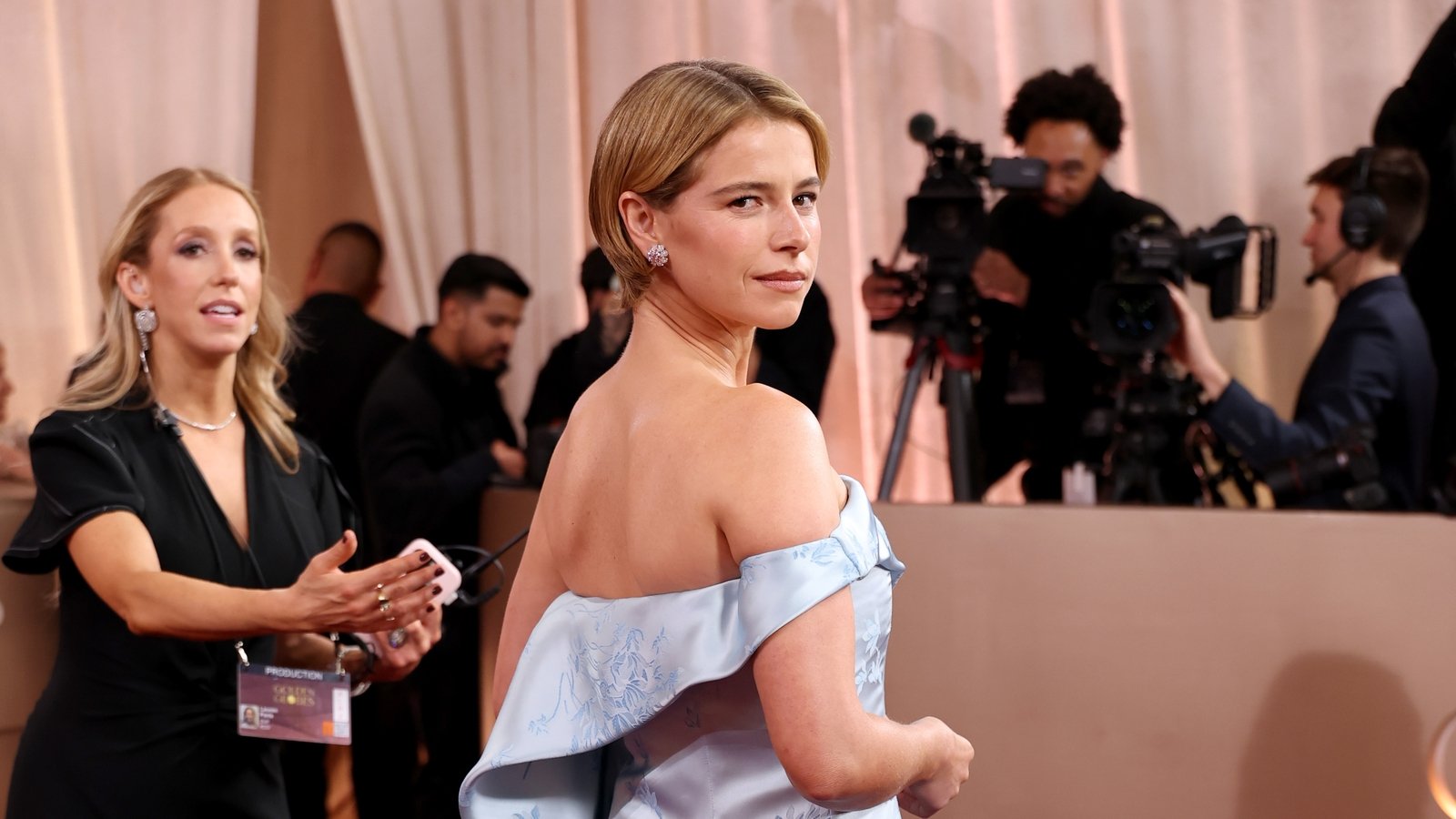
Ireland struck Oscar gold this week, with six nominees proving the country’s film success is anything but accidental.
Two Irish film studios – Element Pictures and Wild Atlantic Pictures – saw their respective movies Bugonia and Blue Moon nominated.
Louise Ryan of Screen Ireland, the public body with the remit of supporting the Irish film industry, said the industry’s success “doesn’t happen by accident”.
“What we’re seeing this week is the results of the long-term sustained government investment in the industry over 30 years,” Ms Ryan said.
She added: “We’ve created an environment where Irish filmmakers, Irish actors, Irish crew are getting the opportunity to hone their artistic craft and to go from strength to strength.”
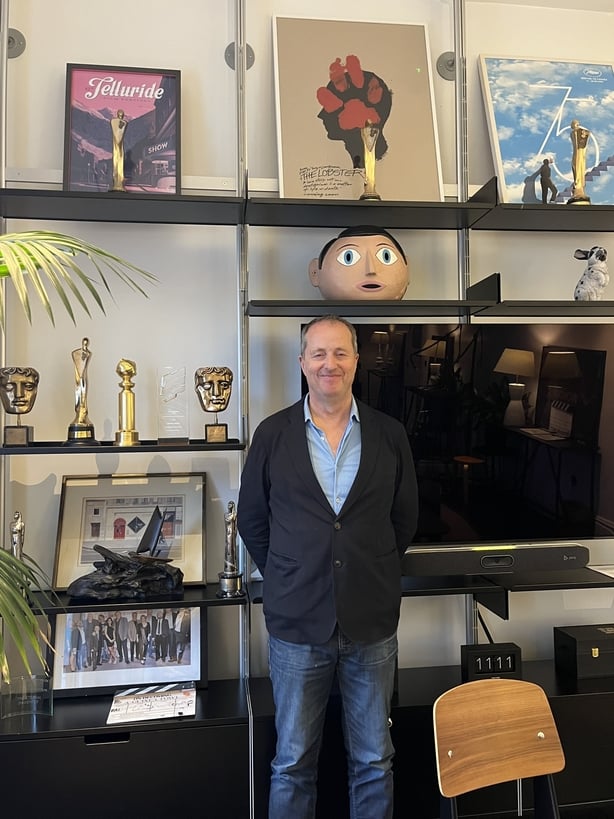
Andrew Lowe of Element Pictures says investing in talent has boosted productions in Ireland
Andrew Lowe of Element Pictures received his second Oscar nomination this week for Bugonia. It was the 30th Academy Award nomination for Element Pictures.
“Over the last 30 years, there’s been lots of waves of change in the industry,” Mr Lowe told This Week on RTÉ Radio 1.
He mentioned that the investment in talent has made a huge difference to getting productions made here but also internationally, countries are now watching what comes out of Ireland.
“One of the things that’s really changed Is the confidence with which Irish filmmakers approach their work now,” Mr Lowe said.
“There was a time when getting something made was a huge achievement in itself.
“Now, the culture is much more ambitious than that.
“It’s not just good enough to get it made, but you want it to enjoy success and both commercially with audiences.
“That’s a great legacy of all the investment that’s been made over that time.”
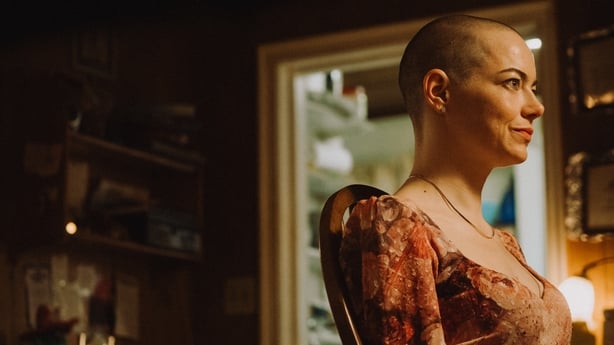
Emma Stone in Bugonia
Macdara Kelleher, chief executive of Wild Atlantic Pictures has been making films for 20 years.
His company’s production Blue Moon has been nominated for two Oscars.
Like Andrew Lowe, Mr Kelleher has also observed a massive increase in film talent.
“I just think it’s quadrupled,” he said.
“On Blue Moon, all the creative talent behind the camera, every single person is Irish and operating at the highest level, and in front of the camera there’s Andrew Scott.
“Films like An Cailín Ciúin or Kneecap going out into the world, which are smaller films, but it’s just had an amazing impact where people are, go ‘Oh, Ireland is a hub for talent.’
“And same goes for directing and writing.”
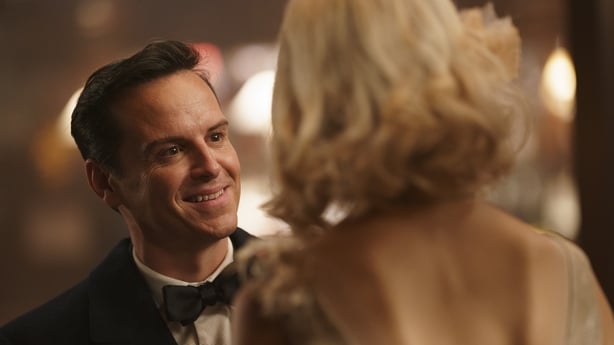
Andrew Scott plays composer Richard Rodgers in Blue Moon
Mr Kelleher stresses that he doesn’t think this would exist without the support and funding available in the country.
Tax Incentives
There are strong tax incentives for films to be produced in Ireland.
A 32% tax credit for all scripted productions rising to 40% if the total budget of the film or tv show is less than €20 million.
A new tax incentive was introduced last year for unscripted productions.
As our nearest neighbours, the UK is a big competitor for international productions, but Mr Lowe said the updated tax credit (introduced in Budget 2024) has “levelled the playing field”.
He added the additional tax credit for smaller-budget films has made a huge difference (introduced in Budget 2025).
“We are absolutely benefiting from it,” he said.
“We’re about to start shooting a film next month here [in Ireland], which frankly wouldn’t be getting made if it wasn’t for the availability of that incentive.”
Wild Atlantic Pictures’ Blue Moon was made almost entirely in Ireland and supported by Section 481 tax relief.
He added that financial supports are really important, not just the Section 481 tax credit but also supports for Irish films.
Wild Atlantic Productions is also behind Saipan which received funding through Screen Ireland.
“The film wouldn’t have been made without that support,” he said.
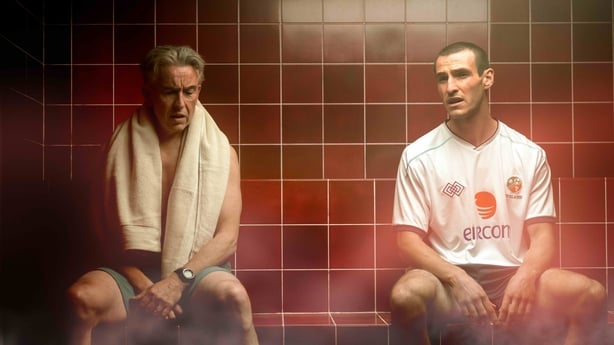
Steve Coogan as Mick McCarthy and Éanna Hardwicke as Roy Keane in Saipan
Although Wild Atlantic Pictures’ Saipan missed out on the greater tax incentive for lower budget films, Mr Kelleher said the company would be availing of it in the future.
Studio Space
Elaine Geraghty, managing director of Ardmore Studios in Wicklow and Troy Studios in Limerick agrees that the tax incentives in Ireland have made a big difference.
There are currently three productions in Ardmore Studios with expectations for a busy year from February until at least the middle of the summer.
“We have generations of really highly qualified crew on the doorstep. We have the fantastic infrastructure. We are 20 minutes from the city centre of Dublin,” Ms Geraghty added that the studio also gets returning productions.
“I do think when we talk about Irish production, it’s not just in Bray, it’s not just in Dublin,” she added.
“You’ve got to think of hubs like Cork, Galway, the Midwest, where Limerick is, and see the amount of talent that’s out there and make sure that we spread it evenly.”
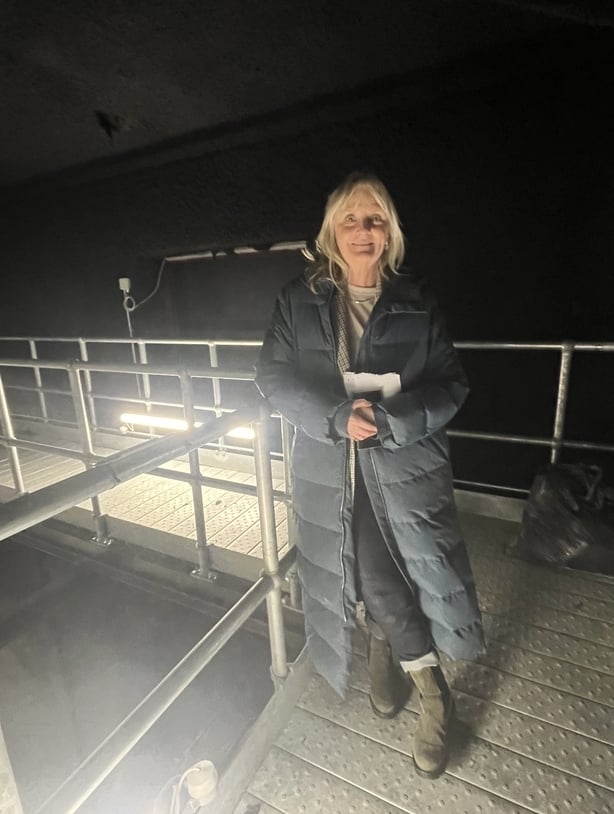
Elaine Geraghty, MD of Ardmore Studios (Wicklow) and Troy Studios (Limerick), says Ireland’s tax incentives have been a game-changer
Mr Lowe began working in films in the late 90s and established Element Pictures with Ed Guiney in 2001. The company began by making films including the early works of Lenny Abrahamson but as it is has gotten bigger, they’ve become more international.
Element Pictures employs 44 people between Ireland and the UK.
Poor Things, their most successful film, was shot in Hungary.
Speaking to RTÉ’s This Week from his offices on O’Connell Street in Dublin, Mr Lowe said part of the reason for that was because there wasn’t sufficient stage space available in Ireland for the production at the time.
There are six studios in Ireland with five more in development, however Troy Studios in Limerick currently doesn’t have a production on site.
In February, season 2 of the Wayfinders will return to filming there.
Mr Lowe said the additional studio space would be used if it could happen.
“I think if you have the stage space, then it creates its own momentum and brings more activity to the country. “
International Productions coming to Ireland
David McLoughlin is a producer with Metropolitan Pictures. The company has worked on The Banshees of Inisherin, Disney’s Disenchanted and Netflix’s Wednesday.
Mr McLoughlin said Ireland has a good international reputation now as a place to make movies.
“We have excellent crew, we have great locations, we have good studio facilities, the tax incentive is obviously a big attraction as well.”
“It’s a very competitive international market,” he added.
“There are tax incentives in virtually every international country around the world.”
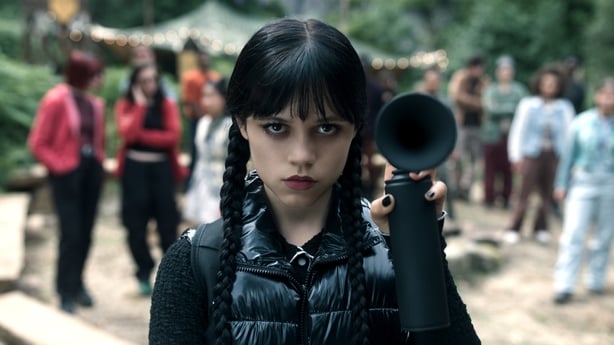
Jenna Ortega played the lead role of Wednesday Addams in the Netflix series Wednesday
Mr McLoughlin said the industry is restricted in terms of number of crew to work on productions, particularly at certain times of the year.
Mr McLoughlin said he’d been working in the Irish film industry since “before there were mobile phones”.
“When I started there was only a handful of projects, both film and TV, that would have happened,” he said.
He estimates 10 productions would have been a good year.
“Now you’re talking close to 50 projects every year shooting in Ireland, both indigenous and also international.”
According to figures from Screen Ireland, the Irish screen industry supports nearly 16,000 jobs.
In 2024, €430 million was spent in the Irish economy as a result of Irish screen production – an increase of one-third from 2023.
In the past four years, projects supported by Screen Ireland have garnered a total of 790 awards and nominations.
“I’m kind of sick of hearing ‘We punch above our weight here in Ireland'”, Ms Geraghty said.
“We have to stop saying that.
“We’re respected around the world in terms of crew and filmmaking and now unscripted shows and that’s only going to get bigger.
“So, let’s just accept that we’re good at what we do and be proud of it.”
Report: Eithne Dodd