Evangelical Christians like myself want secure borders and orderly immigration. I also believe that the U.S. can and should continue to be a haven for carefully vetted, lawfully admitted refugees.
Paul Calvin
| Opinion contributor


ICE agent ‘looking for kid’ walks into restaurant with gun drawn
An ICE agent walked into a Thai restaurant in Minnesota with his gun drawn. USA TODAY reached out to DHS for a statement.
On a characteristically cold Minnesota night last January, I joined a small crowd from a local church at the international arrivals door of the Minneapolis-St Paul International Airport. What we lacked in common ancestry and background was more than made up for in our shared Christian faith and excited anticipation.
After 15 years in a refugee camp in Thailand, and countless interviews, forms and red tape, their new pastor, along with his wife and children, was finally arriving to make a new home in Minnesota.
Little could I imagine that a year later, I’d find myself sitting in this same pastor’s living room, discussing whether or not seemingly indiscriminate immigration enforcement made it unwise for him to meet his children at the bus stop.
US should provide a haven for refugees
About two weeks ago, I began hearing troubling reports of refugee families – including members of the Karen ethnic minority from Myanmar – who were being taken from their homes across the Twin Cities.
Families that our church had helped to resettle, many of whom first fled their homeland years or even decades ago because of religious persecution, were now taking shelter in their homes, afraid to go to church, to school or to work.
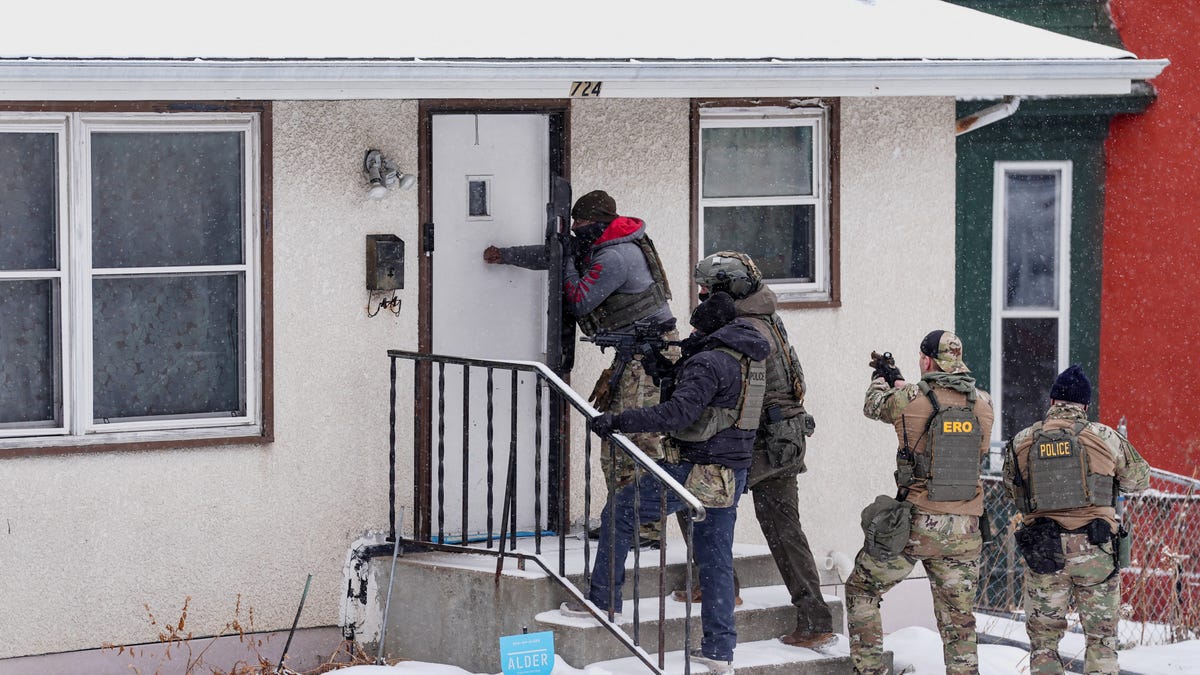
The reports being shared by our refugee friends were almost too shocking to believe. They told stories of Immigration and Customs Enforcement agents showing up at the homes of lawfully present and documented refugees, asking to be let in without clear explanations or adequate translation.
In other cases, individuals had been detained while leaving for work or school, and then the agents would come later to their homes for their spouses and children. Within a day or two, most had been transferred out of state, usually to Texas.
Heavy-handed immigration enforcement did not just begin last weekend, of course, but what is new is that refugees are being specifically targeted.
Refugees represent a special protected class of immigrants
Under U.S. law, refugees are lawfully present individuals who were invited by our federal government and arrived on flights coordinated by our federal government after an extensive process described by the Heritage Foundation as involving “more vetting than any other immigrants to the U.S.”
While Somali refugees make up about 35% of refugees resettled to Minnesota in recent years, the majority of refugees resettled to Minnesota have historically come from other countries.
Most of those with whom our church is closest are members of the Karen ethnic minority group from Myanmar (formerly Burma), which has been the top country of origin for refugees resettled to the United States for many years.
Most Karen resettled to our country seem to be Christians, particularly Baptists or Anglicans, and their Christian faith was often a primary factor in the persecution that forced them to flee as refugees. The brutal military regime that controls Burma harshly persecutes Christians and other religious minorities, such as the Muslim Rohingya.
Open Doors, the persecuted church watchdog group, recently ranked Myanmar among the 15 countries globally where Christians face “extreme” persecution, alongside countries like North Korea, Nigeria, Iran and Afghanistan.
Christian hospitality should be extended to all people, and over the years, our congregation has participated in the resettlement of Muslims from Syria, as well as Christians from Myanmar.
But it’s a fact that most resettled refugees nationally are fellow Christians, and it’s been formative and humbling to welcome our Karen brothers and sisters who have suffered so profoundly for their faith in Jesus.
They have so much to teach American Christians about discipleship. However, shockingly, now Karen refugees are placed under duress once again, at the hands of the same U.S. government that first facilitated their resettlement.
In November, the federal government announced its unprecedented intention to re-interview each refugee resettled by the prior administration, roughly 230,000 individuals in total.
Most might reasonably have expected to receive a letter by mail with a summons to appear for an interview at a local office. Coercion and transportation to another state to conduct interviews in secrecy more resemble the tactics of the authoritarian governments from which they fled, not the actions of a free republic.
The 5,600 refugees in Minnesota who do not yet have their “green cards” are the first targets in what U.S. Citizenship and Immigration Services has dubbed “Operation PARRIS.”
Opinion alerts: Get columns from your favorite columnists + expert analysis on top issues, delivered straight to your device through the USA TODAY app. Don’t have the app? Download it for free from your app store.
These relatively recently arrived refugees do not have their green cards – technically, lawful permanent resident status – because the law does not allow them to receive green cards until one year after arrival, even though they are lawfully present from the moment they arrive.
Many, if not most, of those now detained had applied for their green cards one year after arrival, as instructed, but the Department of Homeland Security halted processing on these refugees’ green cards last fall.
Per requirements, the refugees have also been updating their addresses with the Department of Homeland Security as required, which is apparently how ICE knows precisely where to find them.
Evangelical Christians should support refugees
Like other Americans, evangelical Christians like myself want secure borders and orderly immigration processes. I also believe that the United States can and should continue to be a haven for carefully vetted, lawfully admitted refugees who contribute to the peace and prosperity of our nation.
Of course, those convicted of violent crimes should be detained and deported, but, nationally, just 5% of those detained by ICE have been convicted of violent crimes. How then does the kind of chaotic and trust-eroding immigration enforcement that we’re experiencing in Minnesota, especially the targeting of refugees, promote good order and security?
I invite fellow evangelicals to join me in pleading with our government to halt this unjust policy, to ensure that refugees already detained are safely returned to their homes in Minnesota, and to insist that future immigration enforcement focuses on genuine threats to public safety, not on lawfully present refugees like my friends who fled religious persecution.
The Rev. Paul Calvin is the rector of the Church of the Redeemer, an Anglican congregation in St. Paul, Minnesota.