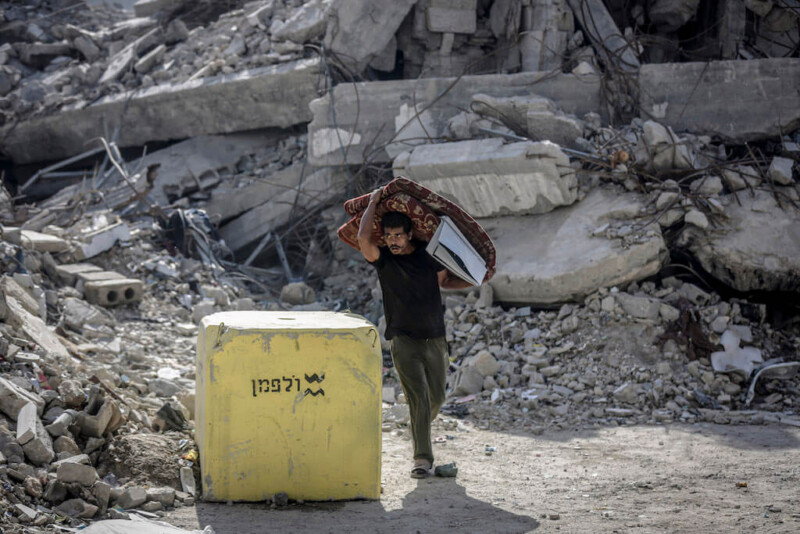
On the ground, however, the yellow line is often invisible. In many areas, there are no signs or clear markings. Residents rely instead on sound, memory and instinct to determine where danger begins.
“A street that felt safe yesterday can be deadly today,” said one aid worker in central Gaza, speaking on condition of anonymity. “People pack up and flee even if their homes are still standing, because the rules change overnight.”
The cumulative toll has been immense. Israel’s war on Gaza has destroyed or damaged more than 80 percent of buildings in the enclave, home to around 2.3 million people. A UN official said last week that clearing more than 60 million tons of rubble could take over seven years.
Most of Gaza’s population has been displaced at least once, with many forced to move multiple times. Families now live in tents or bombed-out buildings, often close to military zones.
Living under these conditions has had severe psychological consequences. Mental health professionals working with the World Health Organization and UNICEF report widespread anxiety, insomnia and trauma, particularly among children.
“Children have learned new maps of safety,” said a Gaza-based psychologist working with an international NGO. “They know which streets are forbidden, how to react to drones, when to run. That kind of normalization of danger leaves deep scars.”