The previous government had sought to overhaul Luxembourg’s tax system, but it is the CSV-DP coalition that is now pushing the reform through. From 1 January 2028, the system will move to a single tax bracket, with one exception: couples who married before that date will be allowed to remain in tax class 2 for 25 years.
The government has argued that the reform is designed so that “nobody loses out”, a point underlined by finance minister Gilles Roth earlier this month.
However, what the CSV and DP have presented as a socially balanced reform could still have legal implications, according to Guy Heintz, the former head of Luxembourg’s ACD tax administration. He has also questioned the lack of clearly defined counter-financing for the changes.
In an interview with The Luxemburger Wort, Heintz outlined alternative options the government could have pursued and said he believes a wealth tax could return as part of future efforts to rebalance public finances.
From 2027, the tax administration is supposed to inform people about the upcoming individualisation of the tax system. Do you think it will manage this well? The CNAP is also reportedly having problems implementing the pension reform.
Politicians want to implement this reform, so you have to live with that. If it’s not impossible, then it will be done by the administration. The staffing ratio has been increased over the last few years. A lot has been done in the area of digitalisation. These include digital and pre-filled tax returns.
Will the single tax class mean more or less work for the administration in organisational terms?
The administration is familiar with this. It was already possible to be taxed separately before. However, not many people made use of it. It was not always clear which office was responsible for the annual equalisation of income tax. If you didn’t fulfil certain conditions, another office was responsible. This problem will be solved with the 2028 reform.
It will simplify things for the tax administration and also for people. Previously, some people didn’t know which office to contact if they didn’t receive a tax reduction.
Couples are to have a transitional period of 25 years in tax class 2 from 2028. Why is such a long transition period needed?
If a government were to decide overnight that there would be no transition period, many people would suddenly pay more tax. However, these are often people who need to be able to plan ahead, for example because they have to pay off a loan. They cannot simply change their plans from one day to the next. In this sense, the transitional period is useful. It is very important, as promised, to provide the necessary explanations about the voluntary transition period.
But it is controversial.
It is a question of tax justice and equality before the law. Anyone who gets married on 2 January 2028 will no longer be able to benefit from the deadline, but others will. However, there is the so-called ‘principle of the protection of legitimate expectations’: citizens have relied on the fact that a certain legal provision would continue to apply.
Anyone who marries after 2028 could lodge an appeal. If the question then arises as to whether the time limit is constitutional, a preliminary ruling may be issued by the Constitutional Court. Either the deadline will then be confirmed, or the outcome will be that everyone must benefit from the deadline.
Could the length of the transition period also become a problem?
I wonder what the Council of State will say about the time limit. You could ask why the transition period is 25 years and not 20 years, for example. It would be easier to argue if this period were not limited in time.
Did the government simply want to avoid offending anyone with tax increases by setting the deadline so as not to make itself unpopular?
It is also a political decision to avoid having to tell too many people that they will have to pay more tax from today.
While in France it is compulsory and in Germany optional for married couples to be assessed jointly, in Belgium there is a so-called ‘Quotient conjugal’, whereby a certain amount is notionally allocated to a partner with no or low income. A similar provision should be enshrined in the law in order to take account of the principles of economic capacity under tax law and the maintenance obligation under civil law in favour of persons who marry or enter into a registered partnership after 1 January 2028.
This means that tax justice will continue to be observed in future in cases where one of the partners has no or a low income, including in cases of child-rearing, unemployment, illness or an accident.
You spoke earlier about tax justice – how would you define it?
That everyone in the same situation is taxed equally. But you have to be nuanced here. If you look at the horizontal level, that would mean that everyone who has an income is taxed equally. That bothers me. It’s not true that a widower, a married couple or divorcees with children are in the same situation. What plays more of a role for me is the vertical level: the more you earn, the more you should be taxed. So there needs to be a discussion about how high taxes should be.
Then there are tax breaks, for example, such as the new ‘Abattement petite enfance’ [tax credit for young children]. That’s one of those things that you can be in favour of. But here again, the higher salaries benefit more from such a tax deduction.
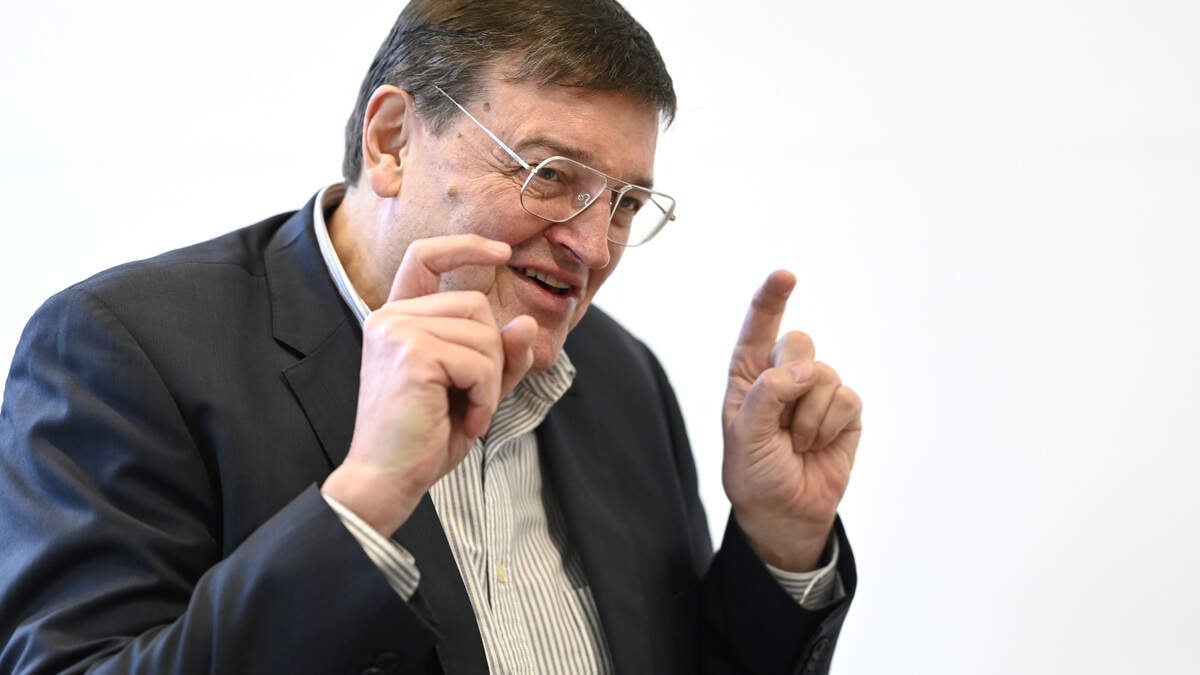
Are modifications to tax classes a social reform or a windfall for citizens? A bit of both, according to Guy Heintz © Photo credit: Chris Karaba
Another point of criticism is the financing. According to the government, the reform will cost €850 million to €950 million per year. The opposition speaks of a lack of counter-financing. Who will pay for the reform?
One hears the argument that the non-adjustment of the barème [tax scale] is indirect counter-financing. The adjustment was not even made in some years, it is not obligatory. In my opinion, this is therefore not real counter-financing. In addition, we generally don’t really know how the economy is developing; employment is no longer increasing as it used to. At the same time, spending is increasing, for example on defence. This makes financing structurally more difficult.
At the moment, some people are calling for capital to be taxed more heavily or for a wealth tax to be introduced. If you were to go in this direction, you could say that the reform would be partly financed by other income, which would perhaps make the tax system fairer. However, the government has already ruled this out for this legislative period. In any case, the tax reform is more likely to take place in the next legislative period.
What additional sources of funding would make sense in your view?
Yes, to introduce a wealth tax again. The other idea would be to tax income from capital more heavily, i.e. income from funds, profits from the sale of shares or dividends. If you hold them for more than six months, they are not taxed in many cases; dividends on shares are only taxed at 20%. More could be done.
With regard to wealth tax, it is often said that it didn’t bring in much anyway when it was still levied.
It was abolished in 2005 when the withholding tax on interest was introduced. At that time, it really didn’t bring in much. On the one hand, because properties were taxed at a unit value that was quite minimal. A building with a value of one million euros was then taxed at €2,000.
On the other hand, due to banking secrecy, the data on savings accounts or funds was not always recorded by the tax authorities.
Today, Luxembourg informs foreign authorities if non-residents have assets here; conversely, Luxembourg residents also inform if they have assets abroad. Only internally in Luxembourg does banking secrecy still exist.
Brief bio
Guy Heintz worked for the tax administration in Luxembourg for almost 40 years, where his career began in 1977. He was the director of the ACD tax service from 2006 to 2016.
Would a reform of property tax make it easier to determine how much individual properties are worth?
Yes, a property tax reform would make it easier to determine what the actual value is. In France, for example, a property tax is levied on real estate. The owners themselves have to state what they think their property is worth. However, if this information is completely unrealistic, they will be fined if they have deliberately underestimated it.
Do you think we will see the return of property tax? There seems to be little political support for it.
If the financial situation gets significantly worse, that is one of the options, even if the current government would be against it.
And an extension of inheritance tax?
That would be even more difficult. That’s an emotional taboo because many people say: ‘I’ve saved up, that’s for my children.’ A wealth tax is often perceived as less ‘psychologically’ burdensome than an inheritance tax – but neither is easy.
There are three main categories in tax philosophy: Taxes on income, on consumption such as VAT and on capital. In the past, the focus was much more on capital than on land ownership; today, the focus is much more on labour. This changed in the reform after the Second World War; previously the tax rates on labour income were much lower.
VAT and wage tax are easy to collect – companies and employers pay them. Capital taxes are administratively more demanding because they are more dependent on declarations and checks.
The future transition period of 25 years for couples could lead to legal challenges, says Guy Heintz © Photo credit: Chris Karaba
Ideas such as an AI or robot tax are even being discussed. Is this a feasible option from the tax administration’s point of view?
I haven’t looked into this in detail. If it comes to that, then it would probably be more about corporate taxation: in other words, about the profits of companies that achieve higher profits with fewer workers thanks to AI or automation.
What would bring in more? Such new taxes or a higher top tax rate?
The top tax rate is a matter of fairness if you say that those who earn more can pay a few percent more. On the other hand, it doesn’t help the budget that much and it also makes it more difficult to attract qualified people from abroad to Luxembourg.
(This interview was originally published by the Luxemburger Wort. Translation and editing by Kabir Agarwal).