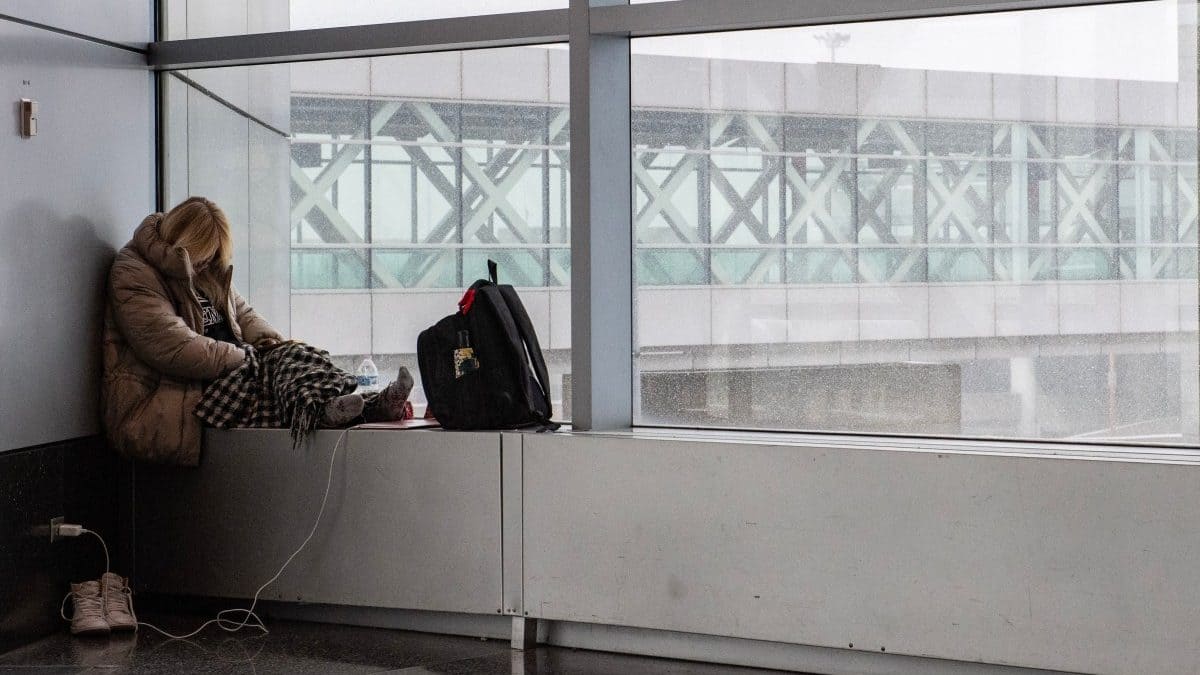
A massive US winter storm and escalating Middle East conflict have grounded thousands of flights, leaving Indian travellers stranded as airlines reroute or cancel services to avoid hazardous weather and restricted airspace
If you’re planning a trip to the West this week, you might want to pack an extra dose of patience alongside your passport. Travellers are currently facing a “double whammy” of disruptions as a massive winter storm in the US and escalating geopolitical tensions in the Middle East collide, throwing flight schedules into chaos.
The cold front: US travel freeze
Over the weekend, a “catastrophic” winter storm—the likes of which hasn’t been seen in years—swept across the United States. Spanning nearly 2,000 miles from Texas to New England, the storm has forced the cancellation of over 11,000 flights.
Major hubs like New York’s LaGuardia and Washington’s Reagan National have been crippled by heavy snow and ice. For Indian travellers, the impact is direct: Air India was forced to cancel its services to New York and Newark on Sunday and Monday. Aviation experts are calling this the most significant travel disruption since the pandemic, and with subzero temperatures lingering, it may take days for airlines to dig themselves out.
🇺🇸 A massive winter storm heads towards the northeast United States after sweeping across much of the country, threatening tens of millions of Americans with blackouts, transportation chaos and bone-chilling cold.
➡️ https://t.co/wLHApcwF5t pic.twitter.com/dghgD1su4X
— AFP News Agency (@AFP) January 25, 2026The heat: Geopolitics and airspace risks
While the weather freezes the West, geopolitical heat is rising in the East. Heightened tensions between the
US and Iran have made the skies over the Middle East a high-risk zone.
Following safety advisories regarding Iranian airspace, several Indian carriers have adjusted their routes.
IndiGo has officially cancelled flights to Tbilisi, Almaty, Tashkent, and Baku until at least January 28. Air India is rerouting Europe-bound flights to avoid Iran entirely, often flying over Iraq instead. Even flights that are still operating, such as those to Central Asia, are being forced to make “technical stops” in places like Doha for refueling because the longer, indirect routes consume more fuel.
End of Article