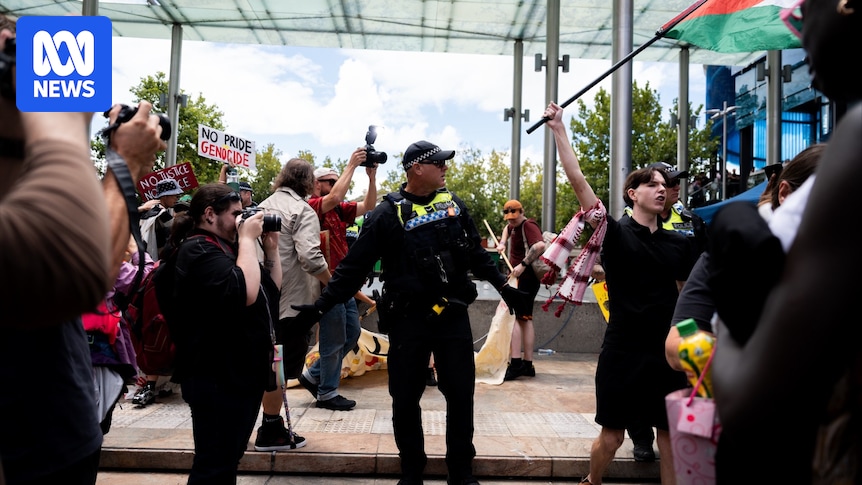
Police are investigating whether a device thrown into an Invasion Day rally crowd in Perth contained explosives.
About 300 people had gathered for the event at Forrest Place mall in the heart of Perth’s CBD around midday, local time.
WA Police Commissioner Col Blanch said officers arrested a 31-year-old man alleged to have thrown the device into the crowd around 1pm.
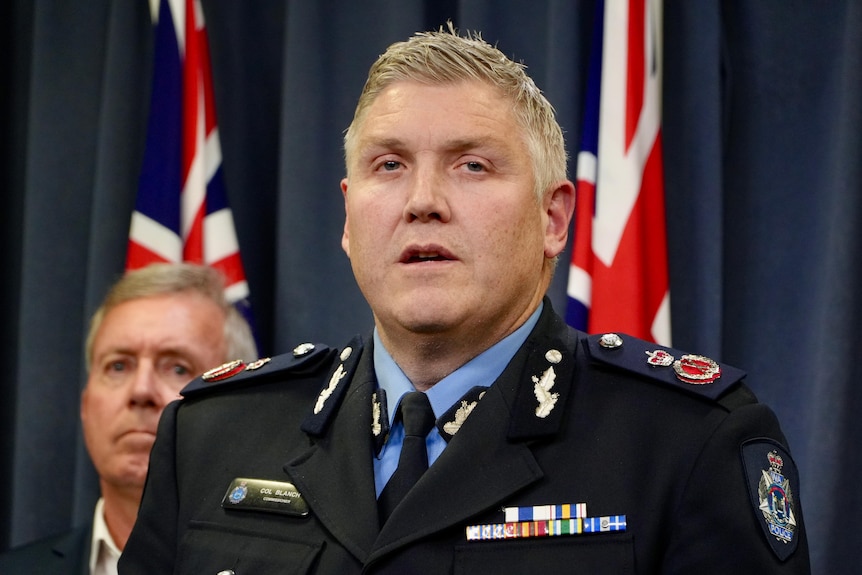
Col Blanch says police are assessing whether the device contained explosive material. (ABC News: Courtney Withers)
The Commissioner said the device found in front of the stage contained “ball bearings, contained screws and those items were wrapped around an unknown liquid in a glass container”.
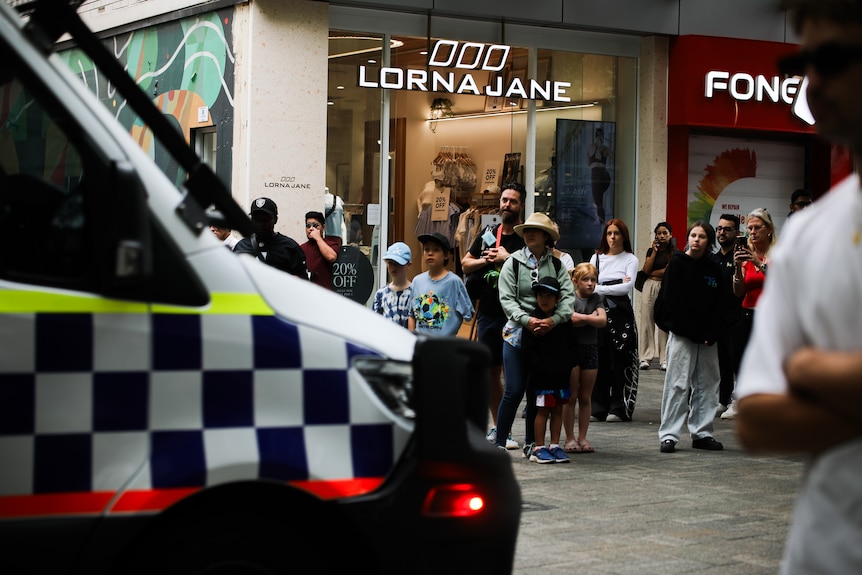
Public holiday shoppers in the city are kept back as police flood the area. (ABC News: Keane Bourke)
“Forensics are currently doing what they need to do identify what that liquid is,” he said, indicating an answer was likely by the end of the day or Tuesday.
Mr Blanch described it as a “very rudimentary device, probably the size of a medium coffee cup”.
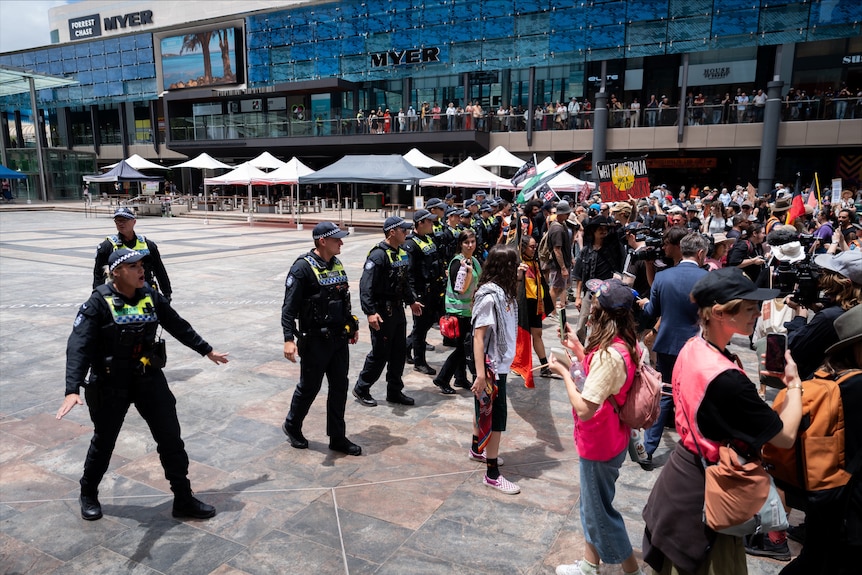
One person is in custody after reports of a threat targeting the Invasion Day rally underway in Perth’s CBD. (ABC News: Cason Ho)
He said the man’s house in the northern Perth suburb of Warwick is being searched while he is being interviewed, but no charges had been laid.
“We do not believe there is any ongoing threat to the community, particularly through the night’s events of Australia Day,” he said.
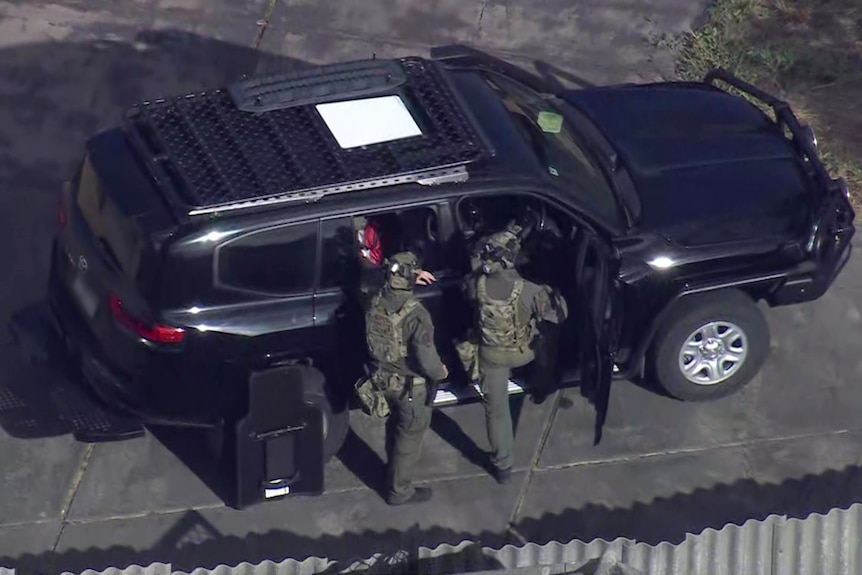
Tactical police are outside the man’s house in Warwick. (ABC News)
Both Commissioner Blanch and Premier Roger Cook thanked the event’s organisers and police attending the event for their help in evacuating the crowd.
The Commissioner said it was not yet clear what the man’s motivations were but it did appear he was acting alone.
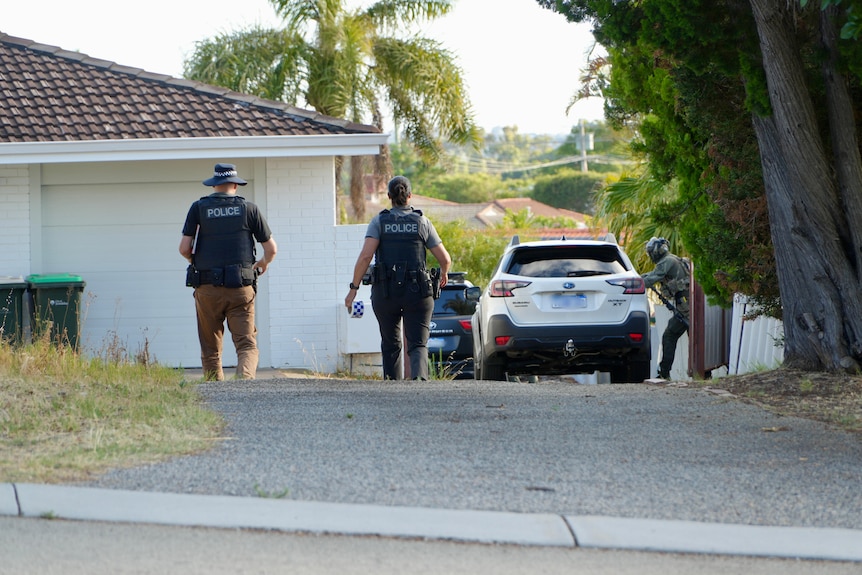
Officers have established a crime scene at the house in Warwick. (ABC News: Courtney Withers)
“That is in the mind of that person who threw that device, so it’s too early to tell,” he said.
Mr Cook described the event as “completely unacceptable”.
Loading…
“And how we must also recommit ourselves to making sure that we maintain a peaceful and safe community, doing everything we can.
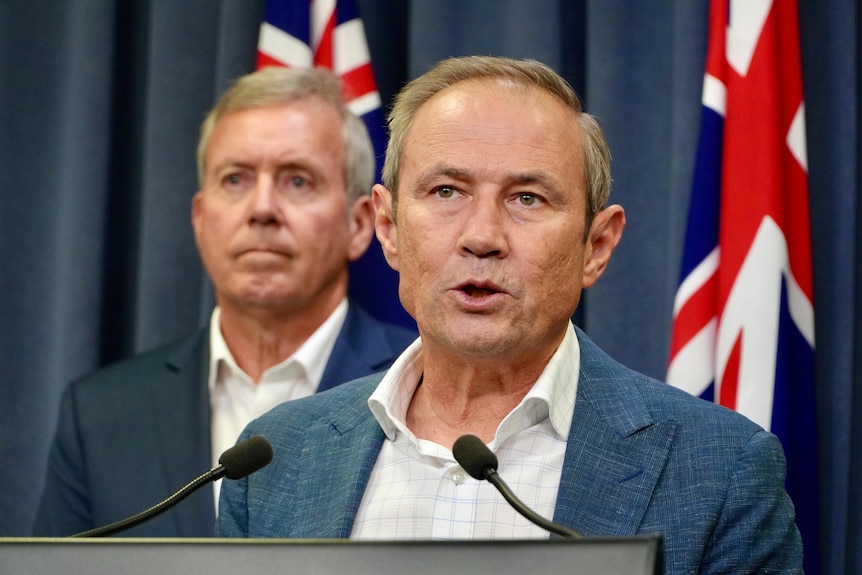
Roger Cook said what happened at the event was “un-Australian”. (ABC News: Courtney Withers)
“And that includes reminding ourselves on a day like today that this is about unity: it’s about strength, not about division, not about hate.”
CBD mall evacuated
Rallies in Perth, or Boorloo, were the last in the nation to kick off, with about 300 people gathering in the CBD.
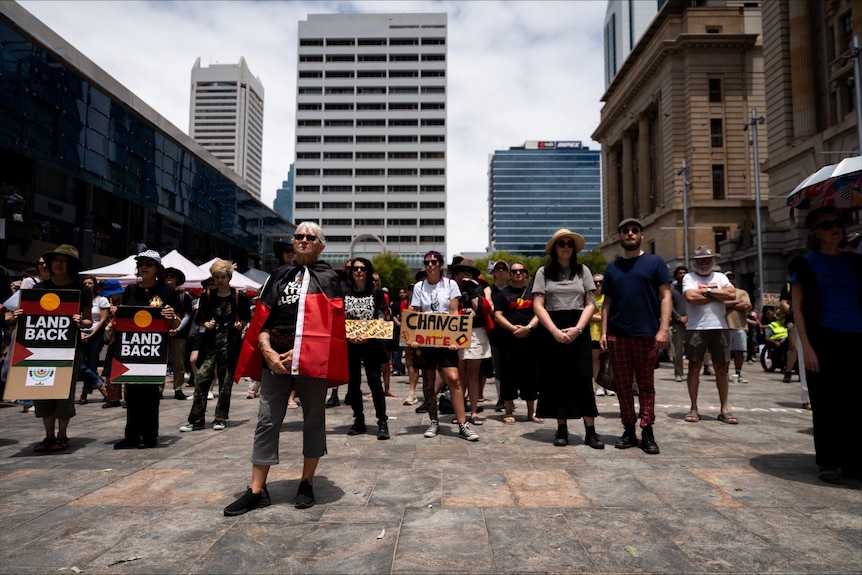
About 300 people gathered at an Invasion Day rally in Perth’s CBD. (ABC News: Cason Ho)
But speeches were cut short about at 1pm local time when police approached the stage to alert organisers about the potential threat.
Police told the crowd there was a “risk to safety” but did not elaborate on the details.
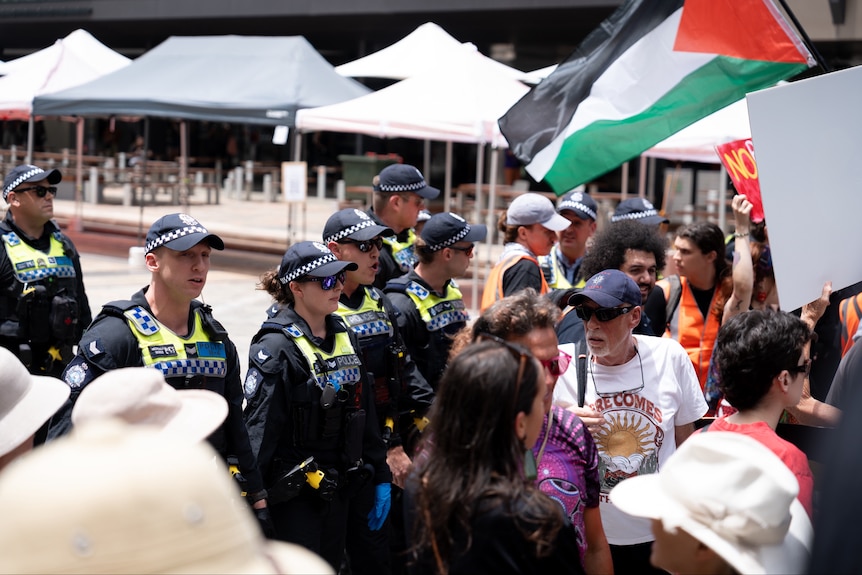
Speeches were cut short when police approached the stage to alert organisers about a potential threat. (ABC News: Cason Ho)
The crowd was slowly pushed away from the stage by a line of uniformed officers.
Police sent significant resources to the scene and established an exclusion zone that remained in place for hours.
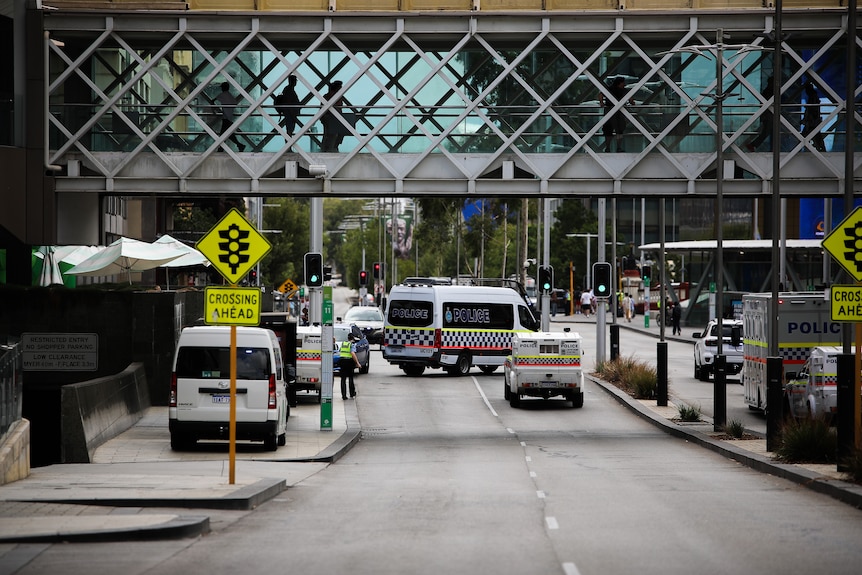
Roads in the CBD have been closed as part of the exclusion zone.
(ABC News: Keane Bourke)
Earlier, prominent First Nations leaders gave impassioned speeches to the crowd, including Noongar Elder Hedley Hayward.
“Today we stand together, united, and we will not be silenced,” he said.
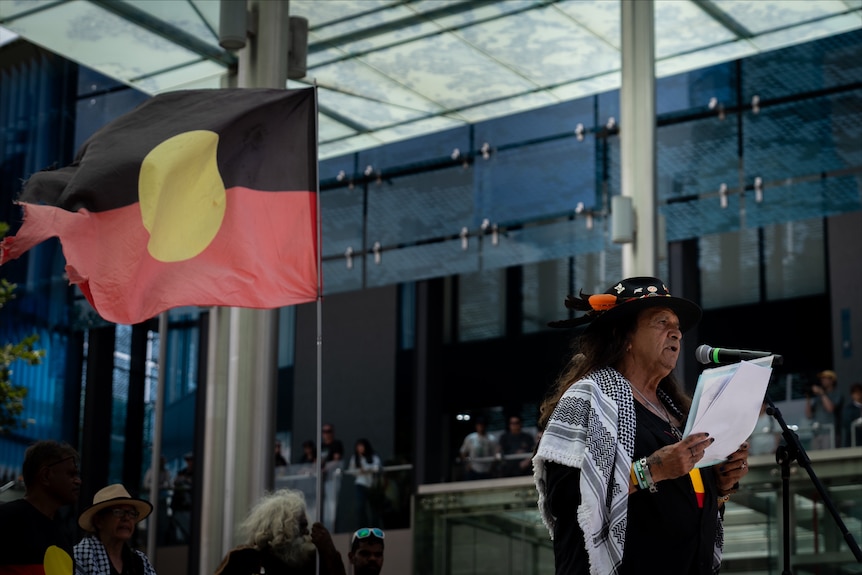
Noongar Elder Hedley Hayward addresses the crowd before the area was evacuated. (ABC News: Cason Ho)
“Not when our people are dying in custody. Not when our people are being taken and locked away.”
The crowd chanted in response: “Shame”.
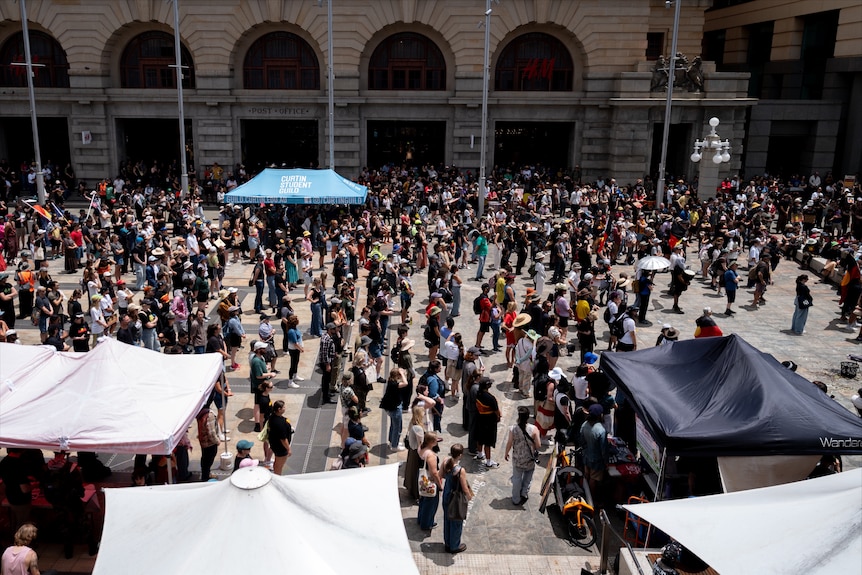
The Perth rally was one of the last in the nation to kick off. (ABC News: Cason Ho)
“Not when our elders are denied support. Not when our families are pushed into homelessness,” Mr Hayward said.
“Shame,” the crowd chanted.
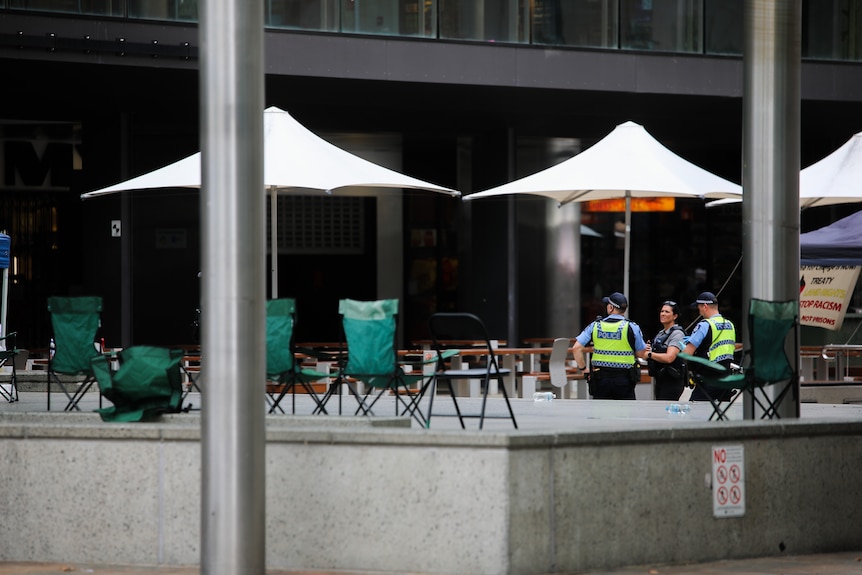
Forrest Place in Perth is empty after the Invasion Day rally moved elsewhere. (ABC News: Keane Bourke)
Look back at how ABC readers and other Australians responded to this live
moment.
Premier Cook has come back to the podium to say today is about unity and strength, but not division or hate.
“Many of us today have been had the opportunity to attend citizenship ceremonies, Australia Day barbecues, other events to celebrate what a great country this is and how lucky we are to live here,” he says.
“So when you have this sort of event take place, it really reminds you of how fragile the peace and safety that we all enjoy really is, and how we must also recommit ourselves to making sure that we maintain a peaceful and safe community.
“And that includes reminding ourselves of a day like today.”
4h agoMon 26 Jan 2026 at 8:53am
Thorough and full investigation underway
4h agoMon 26 Jan 2026 at 8:49am
‘Potential mass casualty event’
Show more
Australia’s official national day commemorates the landing of the First Fleet and raising of the Union Jack at Sydney Cove in 1788.
However, January 26 has long been a day of pain and reckoning for First Nations communities, with the first Day of Mourning held in 1938.
Crowds braved extreme heat to show support for the Indigenous community at events all over Australia.
Click below to see the events that have been held in other cities:
Sydney
Ned Jampijinpa Hargraves addressed the Invasion Day rally in Sydney.
The Warlpiri elder, from the NT’s Yuendumu community, spoke of his grandson’s death in custody in Alice Springs last year.
Kumanjayi White died after being restrained by police in the town’s Coles supermarket.
“My grandson — my jaja — has been strangled for one Coca-Cola,” he said.
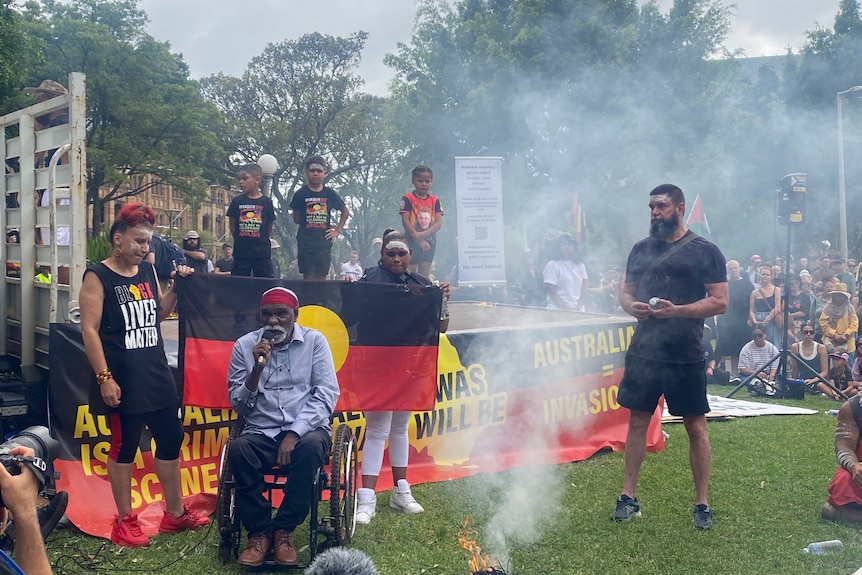
Uncle Ned Jampijinpa Hargraves spoke of his grandson Kumanjayi White’s death in custody. (ABC News: Nakari Thorpe)
“He didn’t deserve to lose his life over one coke. We are losing too much of our loved ones. Not only that, our land has been taken away.”
He thanked the large crowd before breaking into song, asking them to sing along with him.
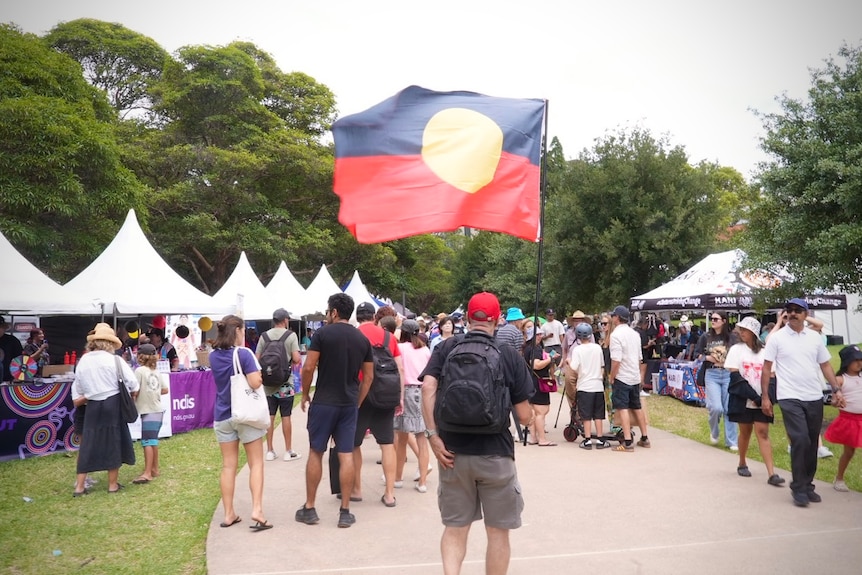
Organisers describe Yabun festival in Sydney’s Victoria Park as one of the most significant First Nations gatherings on the national calendar. (ABC News: Tahnee Jash)
Crowds have gathered at Victoria Park on Gadigal land for the Yabun festival, described by organisers as one of the most significant First Nations gatherings on the national calendar.
Yolngu musician Baker Boy said this year’s line up showed the depth of Indigenous talent, with artists like Emma Donovan, Binda Warren and Budjerah.
“It’s such a beautiful [one] for me. I feel so blessed to be coming back to do Yabun,” he said. “You see like all these incredible, talented mob out here just doing amazing work.”
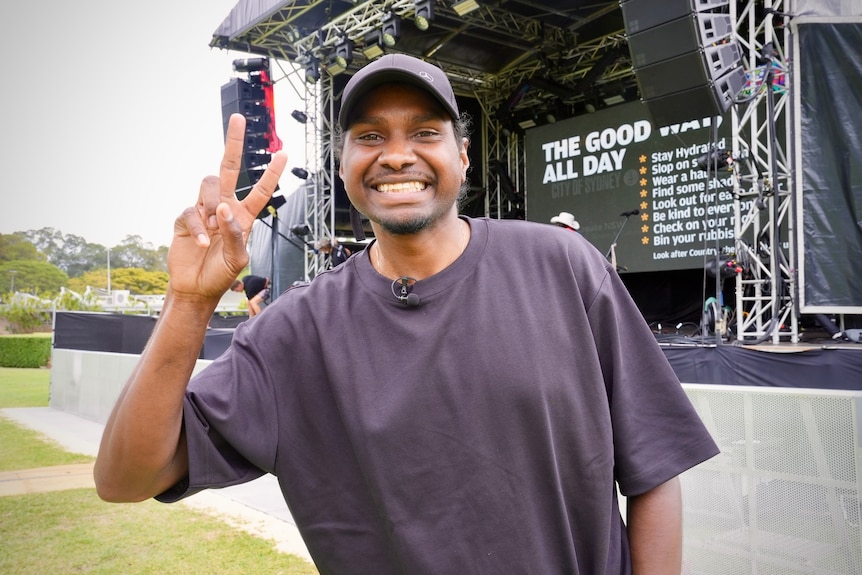
Baker Boy says he feels “so blessed” to be able to return to the Yabun festival. (ABC News: Scott Preston)
He said the meaning of the day for him had changed over time.
“Definitely January 26th and Survival Day, for me growing up in Arnhem Land, I never really understood what it meant until coming down and exploring New South Wales and Victoria as a young teenager, and then fully starting to understand it and diving into it.”
He would like to see the day formally acknowledged as a Day of Mourning for First Peoples.
“I think that it’s very important because it is a very dark history and people should definitely recognise it and acknowledge it.”
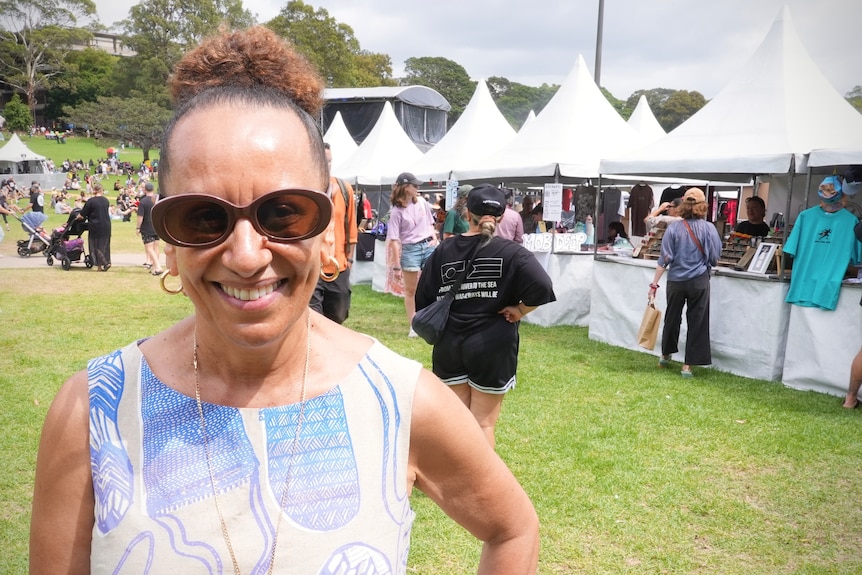
Paula Maling says it’s important to celebrate “culture and survival” on January 26. (ABC News: Scott Preston)
Festival organiser Paula Maling said the festival was a place for First Nations people to draw strength on what could be a difficult day.
“We need to be brought together, especially on a day like this. It’s no good to be at home and scrolling social media or looking on the news,” she said.
“I think, even if it’s only five minutes, come here and experience being together with everybody, Indigenous and non-Indigenous, celebrating culture and survival.”
Melbourne
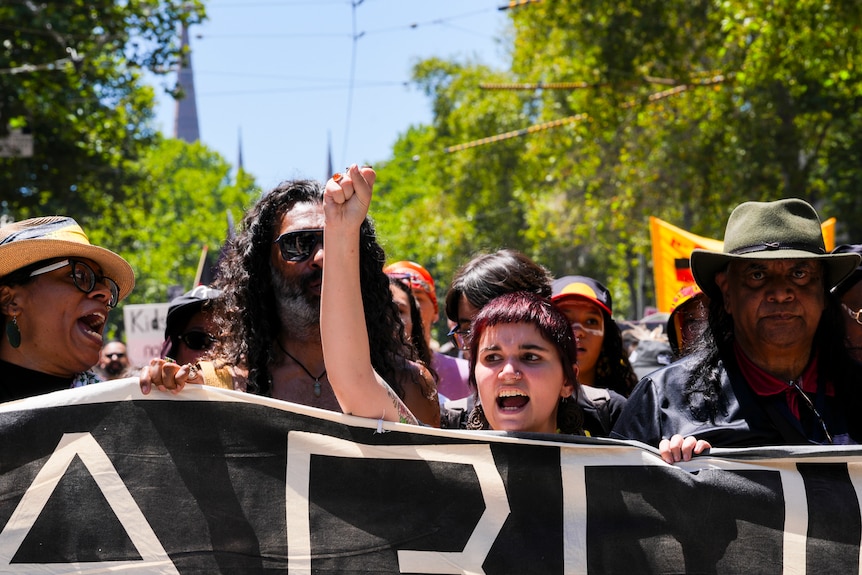
A heavy police presence was at the protests in Melbourne. (ABC News: Danielle Bonica)
It’s estimated over 1,000 people attended a dawn mourning service at Camp Sovereignty in Melbourne’s CBD this morning.
The service was conducted by Woiwurrung and Boon Wurrung leaders and included speeches, traditional dances, songs in language, and the reading of historical accounts of massacres against Aboriginal people.
Organisers are calling for January 26 to be a day for truth-telling and sharing culture, but not a day for celebration.
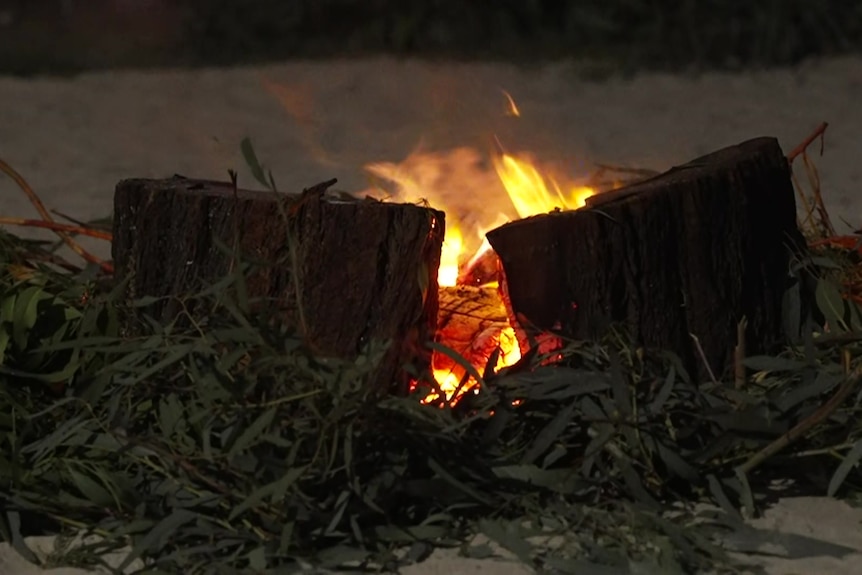
Invasion Day events began in Melbourne with a dawn service at Camp Sovereignty. (ABC News: Larissa Ham)
Performing a Welcome to Country, Yalukit Willam man of the Boonwurrung, Jaeden Williams, said: “For our people, this is a day of deep mourning and remembering.”
But he said the day was not just about grief.
“It is about survival and resilience. It is remembering that another way of living has always existed here — a way grounded in love, in awe, in wonder and in belonging.”
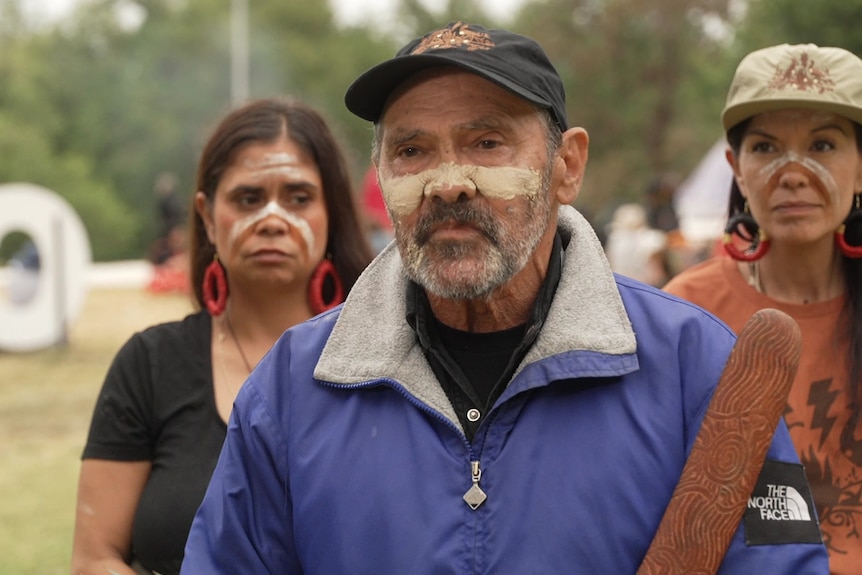
Uncle Robbie Thorpe co-founded Camp Sovereignty and says January 26 is a “day of mourning”. (ABC News)
Camp Sovereignty co-founder and First Nations elder Uncle Robbie Thorpe said today was a “day of mourning for Aboriginal people”.
“We took the brunt of colonialism, these southern places,” he said.
“It’s really significant that our culture is seen to be alive, as evidenced by today that this is a site that we can actually use and we want to do that more often. We want to spread this fire.”
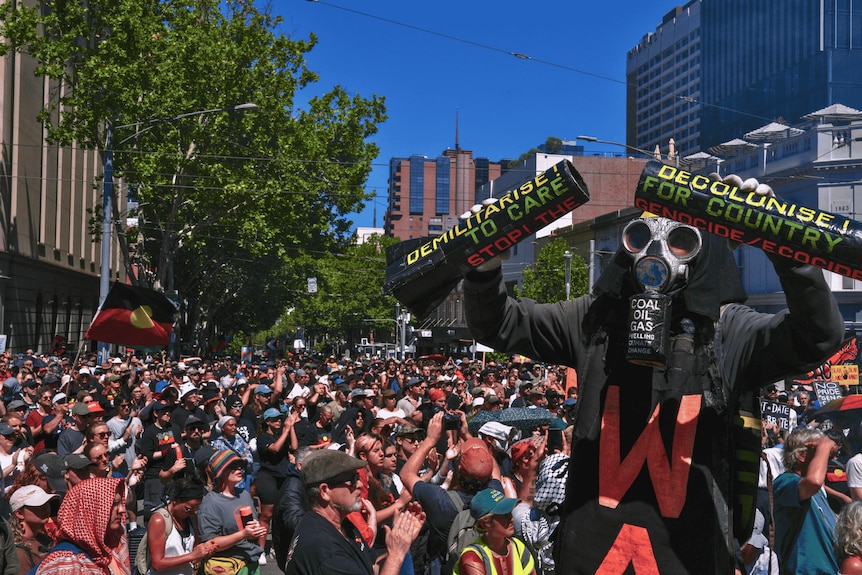
Thousands gathered in Melbourne for the rally. (ABC News: Danielle Bonica)
It is estimated about 17,000 people also gathered on the steps of parliament in Melbourne for an Invasion Day rally.
Speakers called for January 26 to be marked as a Day of Mourning for Aboriginal and Torres Strait Islander people, rather than a national celebration.
The call for January 26 to become a day of mourning first came 88 years ago.
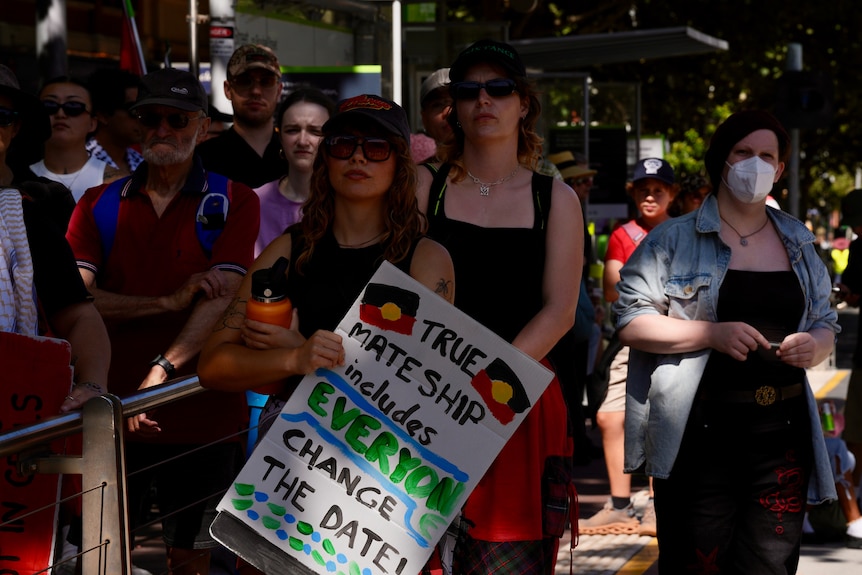
Crowds have gathered to hear speakers outside parliament in Melbourne. (ABC News: Danielle Bonica)
There have also been calls for truth-telling, action on deaths in custody, and protection of country.
Millie Ingram read a statement on behalf of Uncle Mark Brown, who was booed while giving a welcome to country at an Anzac Day service last year.
In the statement, Uncle Mark wrote that the community wanted more than just a change of date.
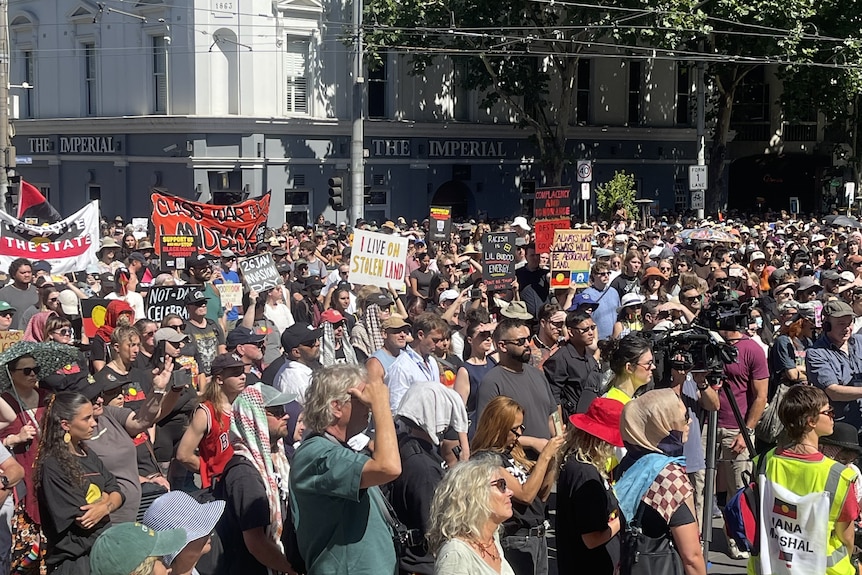
Uncle Mark Brown wrote that changing the date won’t fix injustice. (ABC News: Dana Morse)
“Colonisation is not over. It’s just changed its clothes. It lives in the deaths in custodies. It lives in children being removed from families at higher rates than the Stolen Generations,” Ms Ingram read on behalf of Uncle Mark.
A heavy police presence is expected in the CBD today, with a March for Australia rally also planned later in the day.
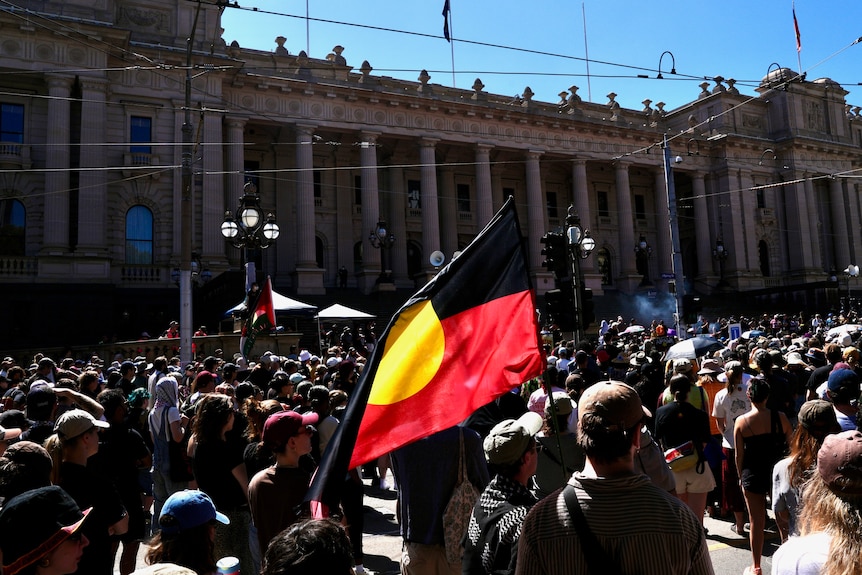
Large crowds have turned out at Invasion Day rallies across the country. (ABC News: Danielle Bonica)
Brisbane
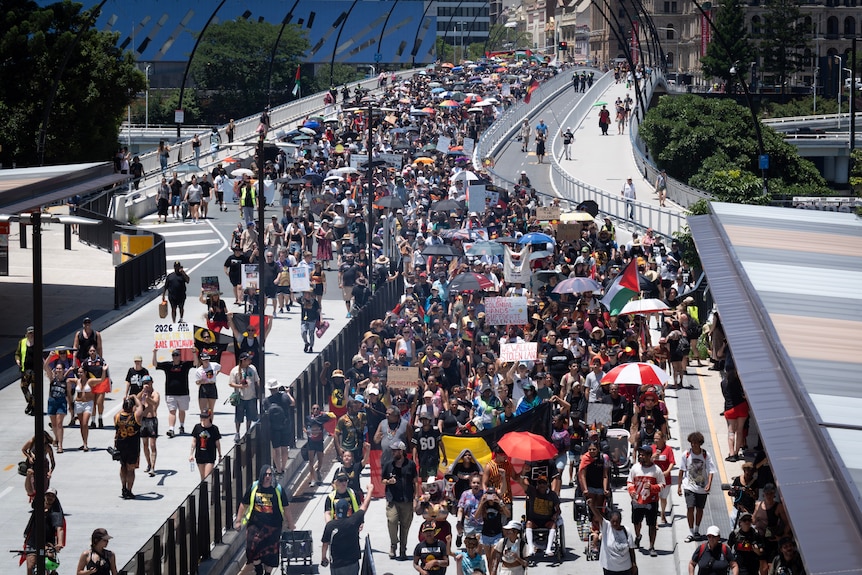
About 2,000 people marched in Brisbane as part of the Invasion Day rally. (ABC News: Will Murray)
About 2,000 people turned out for the annual Invasion Day rally in Brisbane, gathering in Queens Gardens in the CBD before marching across the river to Musgrave Park. The park is a place of cultural, social and spiritual significance to local Aboriginal and Torres Strait Islander people.
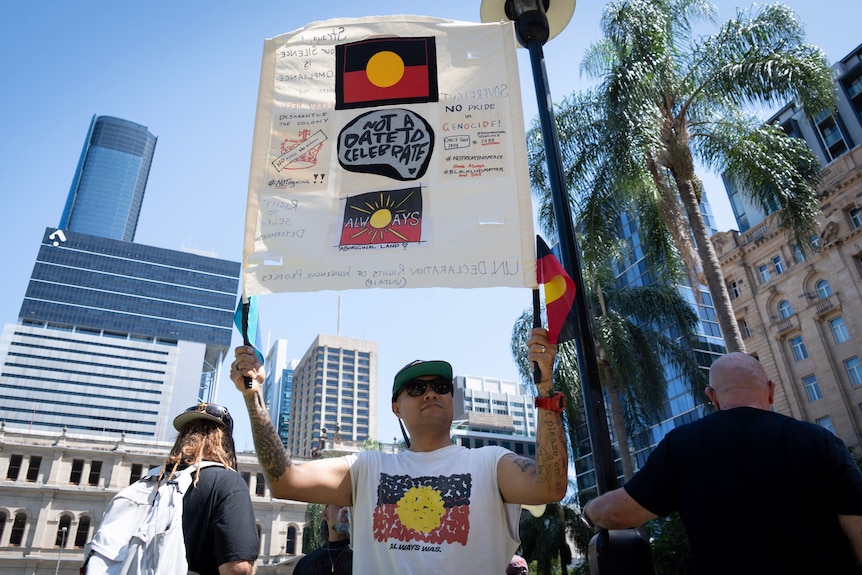
Benjamin Franco says it is improtant to march at the Invasion Day rally in Brisbane to be a role model to his young children. (ABC News: Will Murray)
Benjamin Franco said he felt it was important to march, not only to show his support for the cause, but to be a role model to his young children.
“Less talk more action. I don’t want to be lying to my children,” he said.
“Silence is compliance, and we need to act on what we believe and think.”
Loading…
Calvin Bobongie hoped the day would come that he would be able to celebrate Australia Day, once it is moved from January 26.
“I think we’ll keep on turning up until something happens and then we can move on in a positive way,” he said.
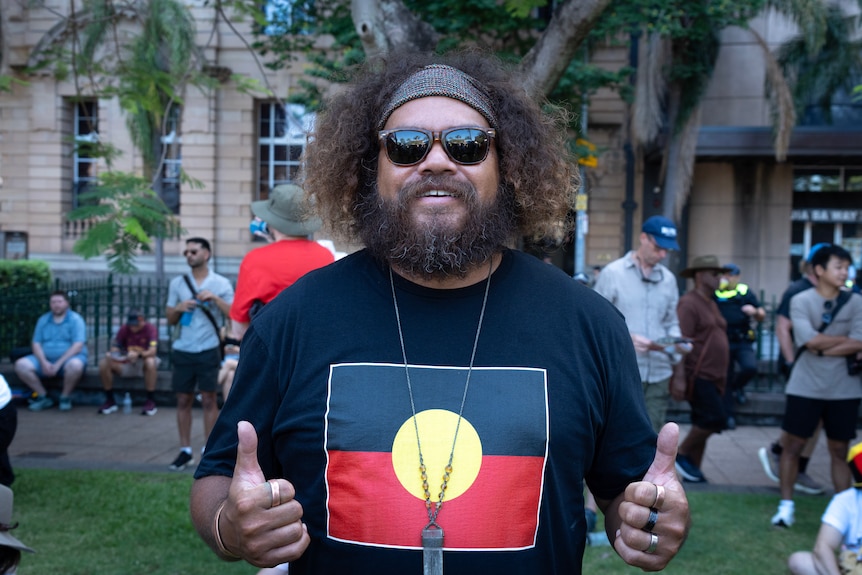
Calvin Bobongie hopes one day he can celebrate Australia Day, when it is moved from January 26. (ABC News: Will Murray)
Sue and Peter Howell from the Gold Coast travel up the highway to the Invasion Day rally every year.
Despite the heat, they were determined to show their support.
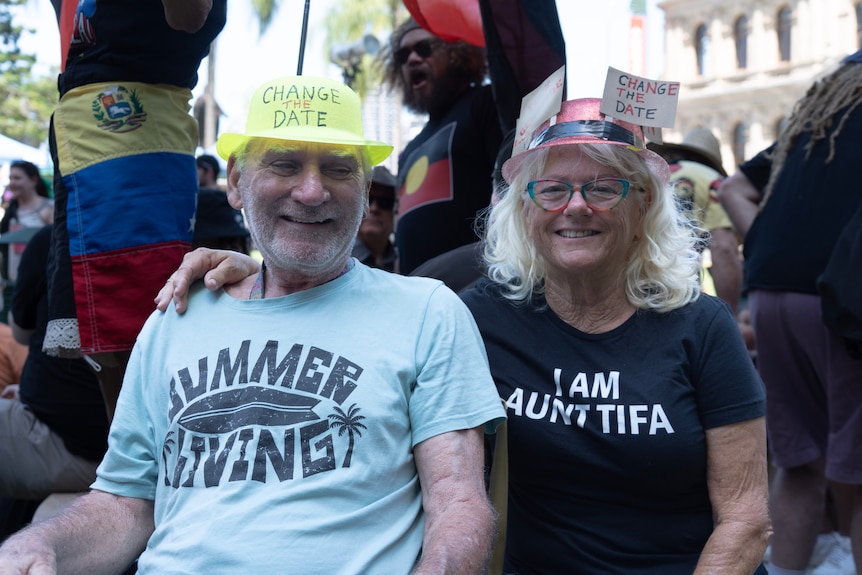
Peter and Sue Howell travelled from the Gold Coast to attend the Invasion Day rally in Brisbane. (ABC News: Will Murray)
“We’re just hoping we can listen to Indigenous people about the date that they would like, to have that, we could all celebrate together as one nation,” Sue said.
Ms Howell said she was concerned the change the date movement was not front of mind for a lot of people and had taken a “back seat”.
“There is so much going on in the world, that I can see why,” she said.
“But I think it’s something that’s really important to all of us Australians that we just get the right date.”
Adelaide
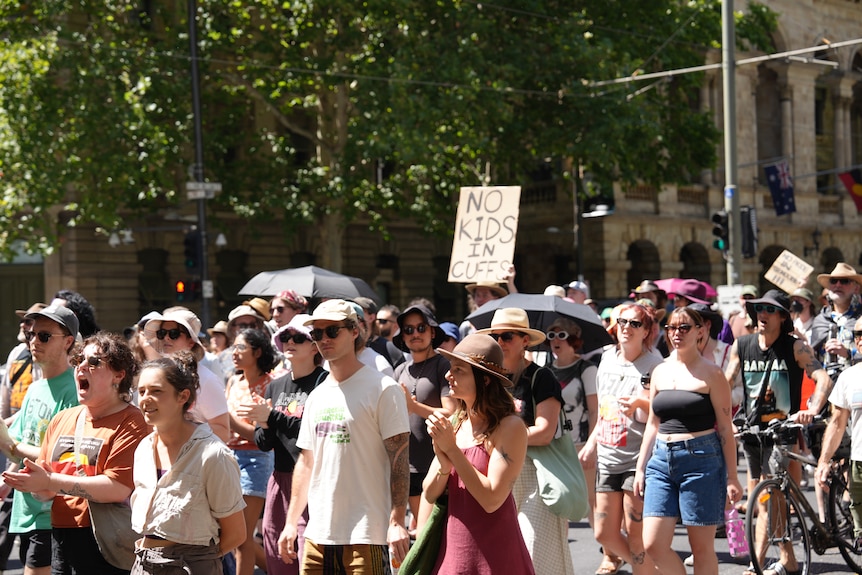
Thousands of people have marched through Adelaide as part of the annual Survival Day rally. (ABC News: Sophie Landau)
Thousands of protesters have gathered in the searing heat in Adelaide to march in force through the CBD for the annual Survival Day rally.
The event marks January 26 as a day of mourning, with calls to change the date of Australia’s national celebration.
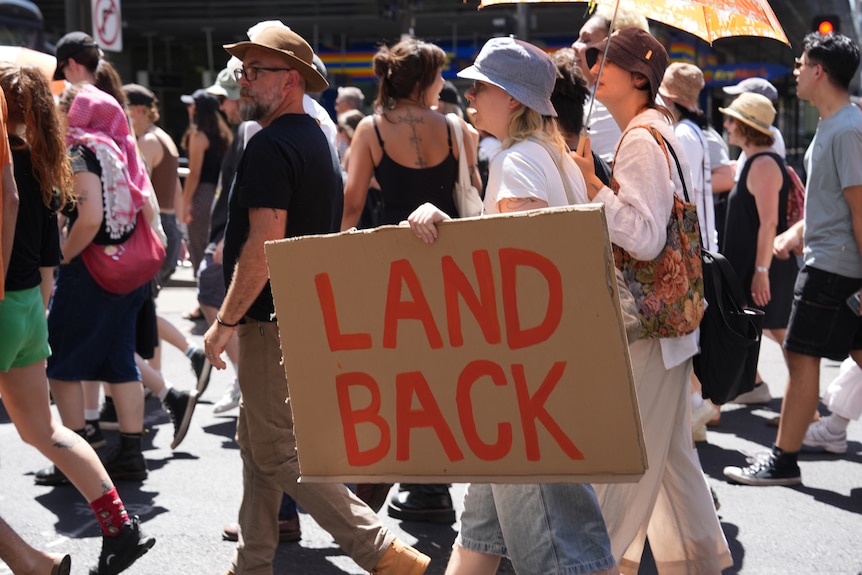
Attendees at Adelaide’s Survival Day march called for Australia Day’s date to be changed. (ABC News: Sophie Landau)
Uncle Bonny Gibson said it was important to recognise what his people had lost.
“We don’t always acknowledge the stuff that’s been taken away from Aboriginal people. You know, loss of language, loss of country, loss of identity,” he said.
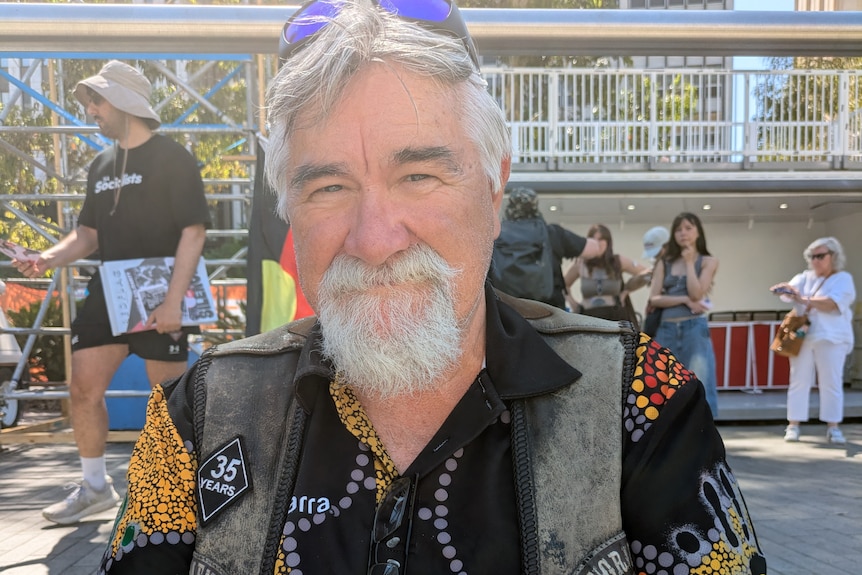
Uncle Bonny Gibson at the Survival Day rally in Adelaide. (ABC News: Aiden McNamara)
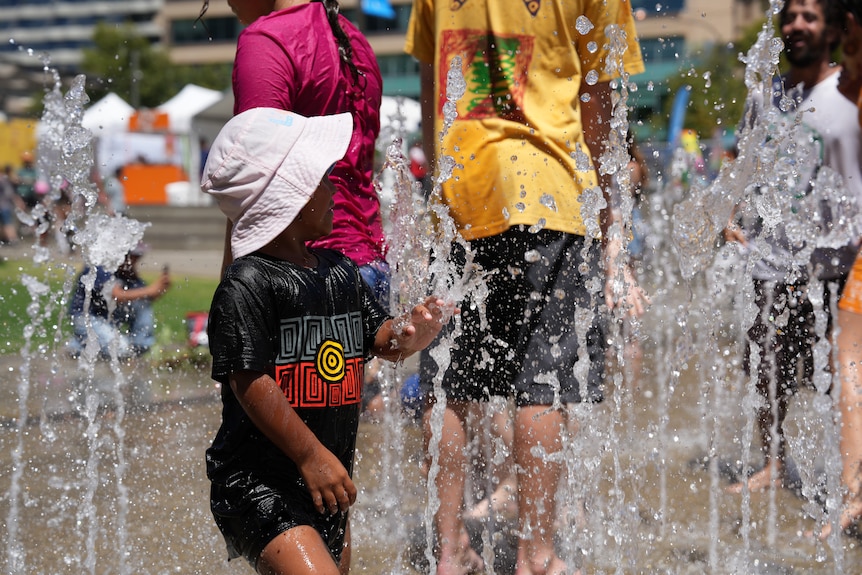
Keeping cool was key at the Adelaide rally as thousands turned out to march in the heat. (ABC News: Sophie Landau)
Keira Holberton said she would come out to “march for my people”.
“We’re here because the day needs to be completely changed or either abolished completely,” Ms Holberton said.
“Why are we celebrating the death of First Nations people in this country?”
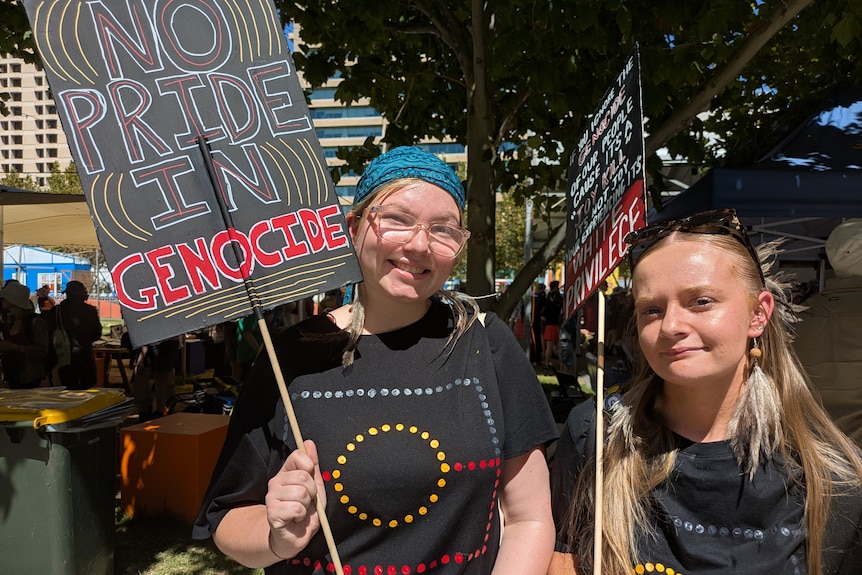
Keira Holberton and Charlize Little at the Survival Day, Invasion Day rally in Adelaide. (ABC News: Aiden McNamara)
Canberra
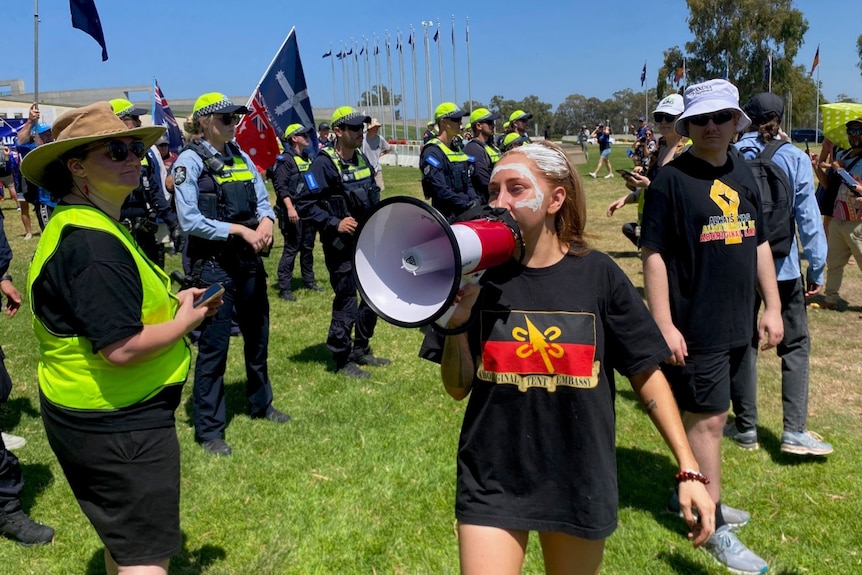
A protestor shouts into a megaphone at the Invasion Day rally in Canberra. (ABC News: Harry Frost)
Hundreds of Invasion Day demonstrators protested outside Parliament House in Canberra as part of their planned rally.
Chanting “Always was, always will be”, they surrounded a much smaller group of a few dozen March for Australia demonstrators before police moved in to create a barrier between the two groups.
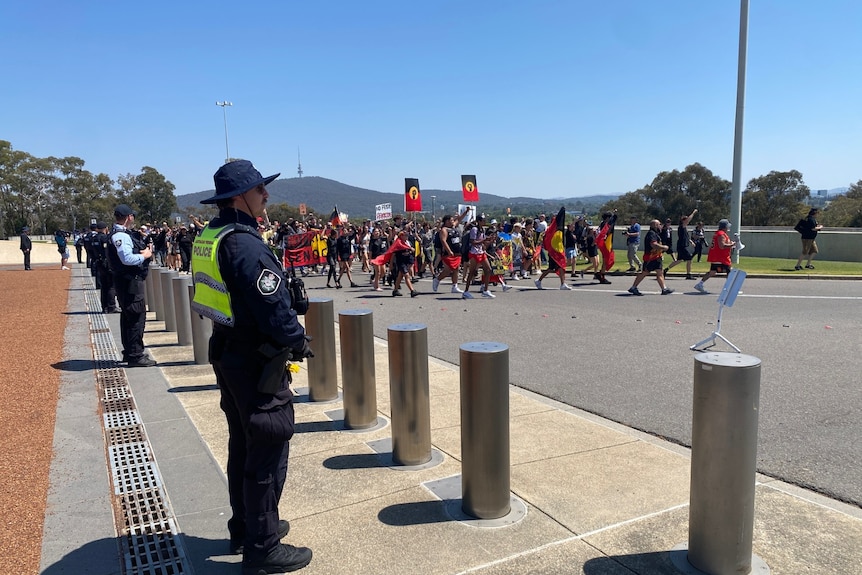
Hundreds of people have marched in Canberra for Invasion Day protests. (ABC News: Harry Frost)
Both groups of demonstrators have now moved on, with the Sovereignty Day group walking down to the Aboriginal Tent Embassy, on the lawns of Old Parliament House.
There is a large police presence outside Parliament House today, and ACT Policing said more officers than usual had been rostered on to help manage the crowds marching through Civic and the Parliamentary Triangle.
A police spokesperson said they had “responded to one incident and a 37-year-old man was arrested with further enquiries pending”.
“The crowd was generally well behaved,” the spokesperson said.
HobartLoading…
On the lawn at Parliament House in Hobart, attendees at an Invasion Day rally were asked to turn their back on parliament and raise their fists, before chanting, “We won’t stop, we won’t go away, we won’t celebrate Invasion Day.”
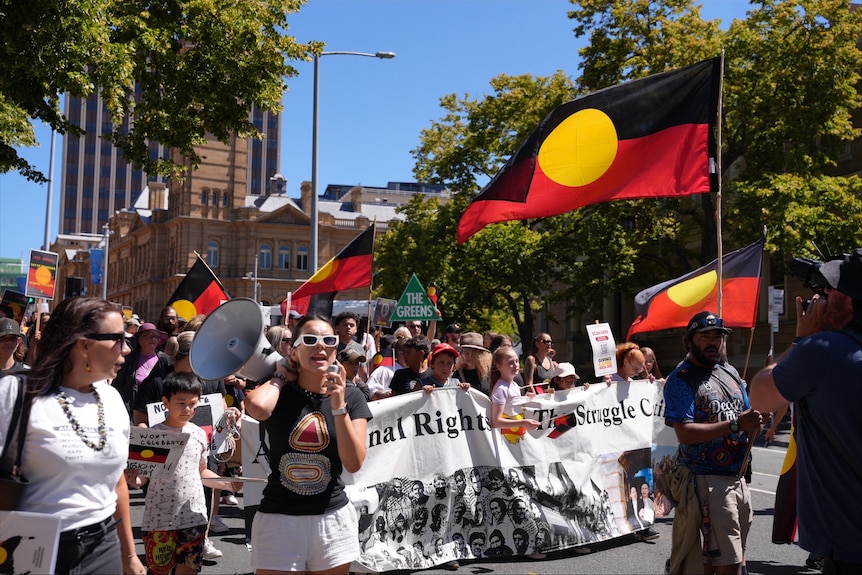
An Invasion Day rally in Hobart, with large crowds gathering across the country. (ABC News: Sophie Jaggers)
One attendee, Wajan, said, “I really believe in addressing that history and trauma and having an open dialogue.
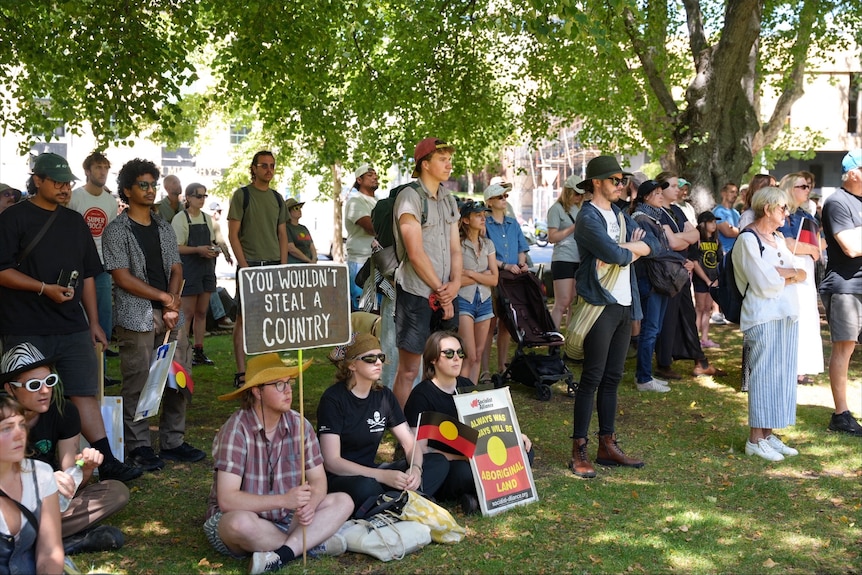
In Hobart attendees chanted, “We won’t go away, we won’t celebrate Invasion Day.” (ABC News: Sophie Jaggers)
Another speaker, Lucy, said she attended “in solidarity with the Palawa people and the people of Australia”.
“To recognise that this is not a day for celebrating, it’s a day to make sure that we respect what happened and what is still happening to Aboriginal people.”
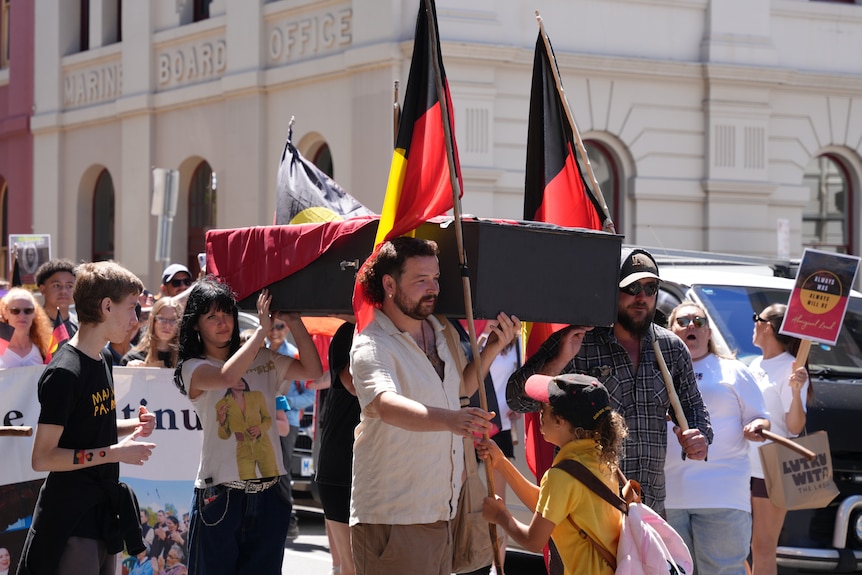
Cody Gangell-Smith told the crowd in Hobart to “choose truth”. (ABC News: Sophie Jaggers)
Palawa man Cody Gangell-Smith implored the crowd to “choose truth, justice, and shared responsibility” going forward.
“Australians are being told that Aboriginal people telling the truth about history, seeking justice for past and ongoing harm, and asking for freedom from oppressive systems are doing so out of hatred,” Mr Gangell-Smith said.
“This is entirely false. What we are asking for is your help to decolonise this country.
“Decolonisation is not about blame. It is about building a future that is honest, fair, and safe for everyone who calls this place home.”
Darwin
Hundreds of demonstrators gathered on the banks of Rapid Creek in Darwin’s north in a picnic protest against Australia Day.
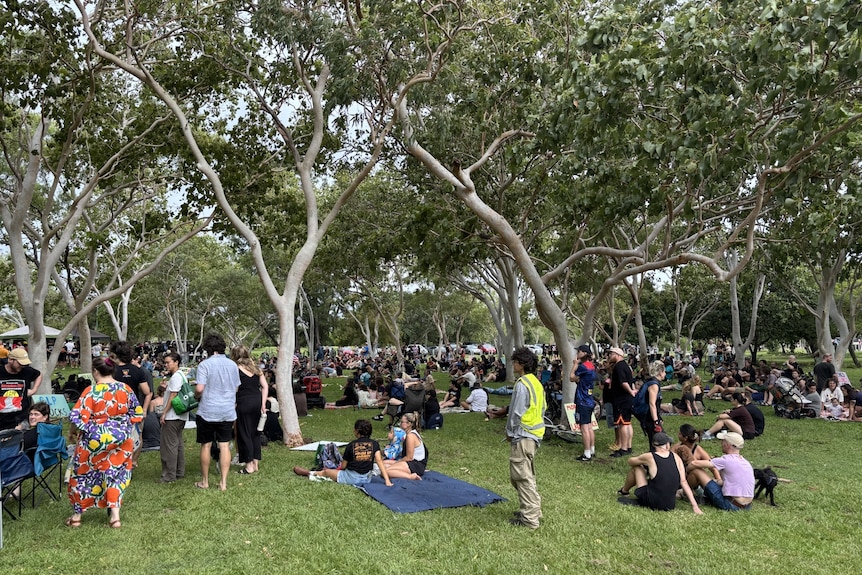
People assembled on the banks of Rapid Creek in Darwin to protest against Australia Day. (ABC News: Tilda Colling)
The event, organised by advocacy group Justice Not Jails, focused on survival.
But First Nations leaders also spoke out about conditions facing Aboriginal youth in the Northern Territory, including in the justice space, following a crime crackdown by the NT government.
Others responded to the nomination of former NT Cattlemen’s Association president David Connolly as the territory’s next Administrator.
There were calls for Mr Connolly’s appointment to be rescinded after his historical social media posts were labelled “racist” by the Northern Land Council.
Aboriginal Housing NT chief executive, Leeanne Caton, used the opportunity to shine a light on poor conditions in remote housing, citing recent coronial inquest findings into the deaths of children.
“My spirit is starting to feel broken in the Northern Territory, with the intensive racism and hate speech happening in this country.”
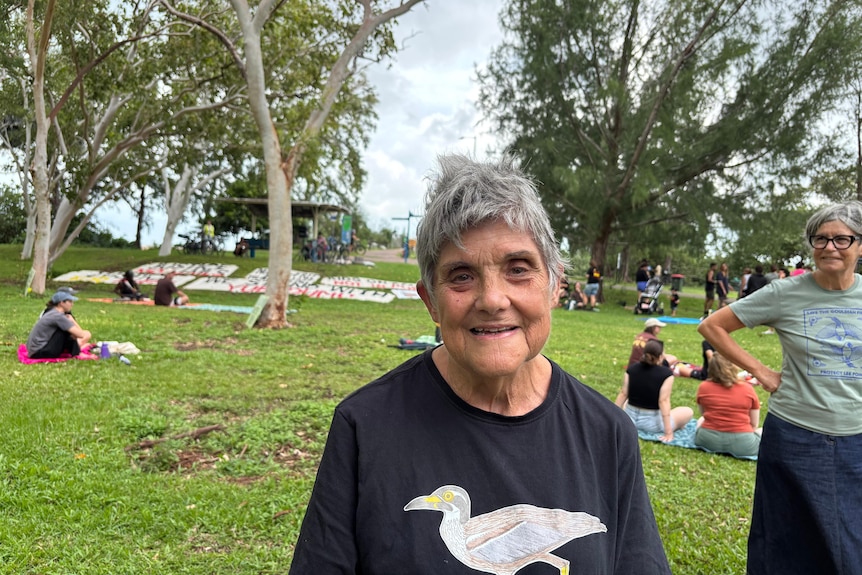
Mel Hazard says Australia Day is about acknowledging the hurt caused by colonisation. (ABC News: Mel Hazard)
Attendee Mel Hazard said the day was about acknowledging the hurt that colonisation had caused for Indigenous Australians.
“It’s just recognising that there were people here before, and we need to recognise Aboriginal people.