

Listen to this article
Estimated 4 minutes
The audio version of this article is generated by AI-based technology. Mispronunciations can occur. We are working with our partners to continually review and improve the results.
Doctors in Manitoba are spending nearly 10 hours per week on unnecessary paperwork, and a new report suggests removing red tape could free up the equivalent of 326 physicians across the province.
Doctors across Canada are collectively spending 20 million hours doing unnecessary paperwork and administrative tasks annually — the equivalent of 199 hours for individual doctors each year — according to findings from a national survey released Monday.
Physicians in Manitoba spend about 9.7 hours per week on administrative tasks, which is higher than the national average of 9.1 hours weekly, according to the report from the Canadian Medical Association and the Canadian Federation of Independent Businesses.
Cutting that unnecessary paperwork time would free up the equivalent of 326 full-time doctors in Manitoba, the report says.
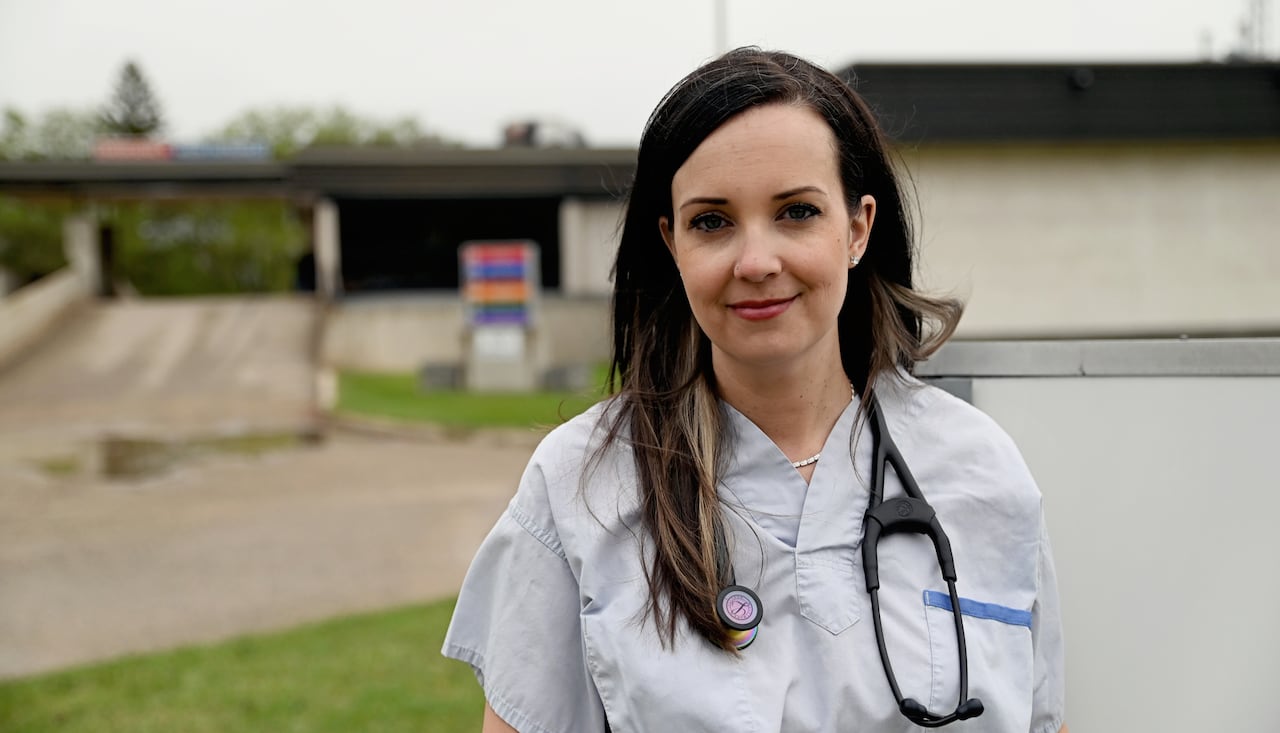
Doctors Manitoba president Dr. Nichelle Desilets says cutting unnecessary paperwork won’t solve the province’s physician shortage altogether, but it will help retain existing doctors. (Submitted by Doctors Manitoba)
Doctors Manitoba president Nichelle Desilets said the numbers are a modest improvement from previous years. A 2023 survey from the industry group estimated doctors spend about 10.1 hours per week on administrative tasks that year, a Monday news release said.
Doctors Manitoba said that shows progress, but there’s still more work to be done.
“This report highlights that the physicians identified that the potential hours regained in their workday could be used into various things,” she said, adding survey respondents said they could spend that time on existing patients or take on new ones.
On Monday, Doctors Manitoba made five recommendations to help slash paperwork: improving processes for referrals and diagnostic requests, simplifying forms, adopting artificial intelligence scribes for charting, streamlining electronic records systems and eliminating sick notes.
While the province has indicated plans to eliminate sick notes for short-term work absences, Desilets said the main “pebble in the shoe” for Manitoba physicians, according to the survey, is the time it takes to make referrals and order diagnostic tests.
She said the lengthy referral and request process causes “more distress with respect to [doctors’] ability to provide better care” to patients.
Introducing “truly interoperable” electronic records — meaning health information can move quickly from one electronic records system to another — would also reduce the administrative burden, Desilets said.
“Interoperability of electronic medical records, that is something that would have a very large impact and it would touch many different levels of the health-care system,” she said, adding she feels “reasonably confident that Manitoba is trying to move in that direction.”
But removing paperwork “would not get rid of our physician shortage altogether,” she said. Still, it is an “important part of improving access for patients and, furthermore, an important part of retaining the physicians that we worked really hard to recruit,” she said.
Manitoba is still about 246 physicians short from the national average, Desilets said, despite a record number of net new physicians registered to practice in the province.
She said reducing paperwork and raising the number of doctors to the national average would do a lot to increase health-care access in the province — and “Manitobans would notice,” Desilets said.
Health Minister Uzoma Asagwara said “physicians should be spending their time caring for patients, not buried in paperwork,” in a statement to CBC News on Monday.
They said the province is “already advancing work” in each of the five areas identified by Doctors Manitoba, including eliminating sick notes, streamlining forms and referrals, and improving digital health systems.
“We will continue to work with physicians to rebuild Manitoba’s health system so that physicians can deliver the care all Manitobans deserve,” Asagwara said.