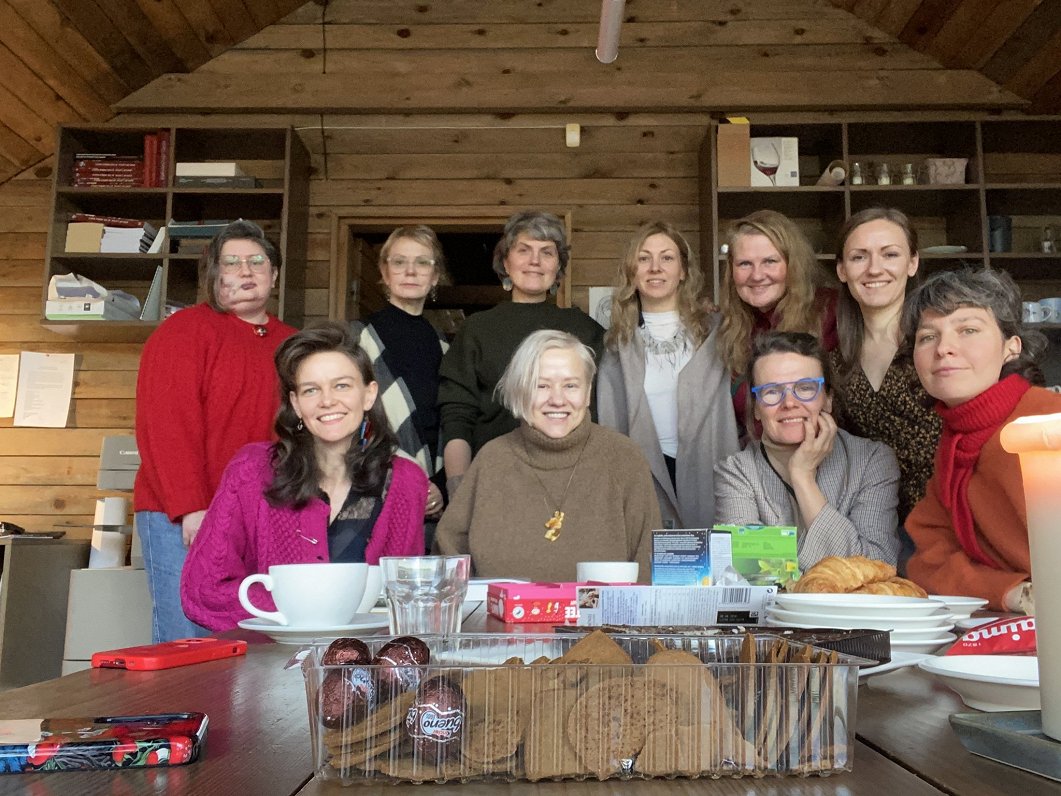
On February 5 at 7 p.m., readings will be held at the Istaba gallery to announce the establishment of the Latvian Women Writers’ Union, said the organisation.
According to the members, the organisation’s goal will be to promote the visibility, professional development, and solidarity of women writers, including non-binary and transgender persons, with a particular focus on diversity of voices, inclusion, specific experiences, and solidarity. visibility, professional development, and solidarity, with a special focus on diversity of voices, inclusion, specific experiences, and challenges in the cultural and social spheres.
Dace Rukšāne, Elizabete Lukšo-Ražinska, Jana Kukaine, Jana Egle, Kristīne Želve, Ligija Purinaša, and Marija Luīze Meļķe will participate in the readings. Inga Gaile will host the event. Inga Žolude, the initiator of the Latvian Women Writers’ Association, will give a speech at the event. Admission to the event is free of charge.
In a statement to the media, the members of the writers’ association note: “Although issues of equality, equity, and human rights are increasingly being addressed in democratic societies in the 21st century, gender inequality in the fields of culture and literature still exists both globally and in Latvia. Women, as well as non-binary and transgender persons, face structural, social, cultural, and economic barriers that limit their access to resources, professional opportunities, support networks, and visibility.
“These barriers are often indirect, institutionalised, and difficult to measure, but they have a significant impact on women writers’ professional development and participation in cultural processes. In addition to structural factors, women writers often encounter discrimination and disparaging attitudes on an individual level. This can manifest itself in the need to constantly prove their professional competence, the legitimacy of their thematic choices, or the “universal significance” of their work, while the experiences of male writers are often considered universal and general. The works of female writers are more often categorised as “niche works,” “characteristic of women’s experiences,” and “specific,” thus limiting their perception and influence in the literary field.”
The founders of the association add that marginalised and vulnerable groups are particularly vulnerable in this system—young authors, authors in the regions, authors with caregiving responsibilities, authors with disabilities, authors belonging to the LGBT+ community, as well as non-binary and transgender persons.
Select text and press Ctrl+Enter to send a suggested correction to the editor
Select text and press Report a mistake to send a suggested correction to the editor
Tell us about a mistake