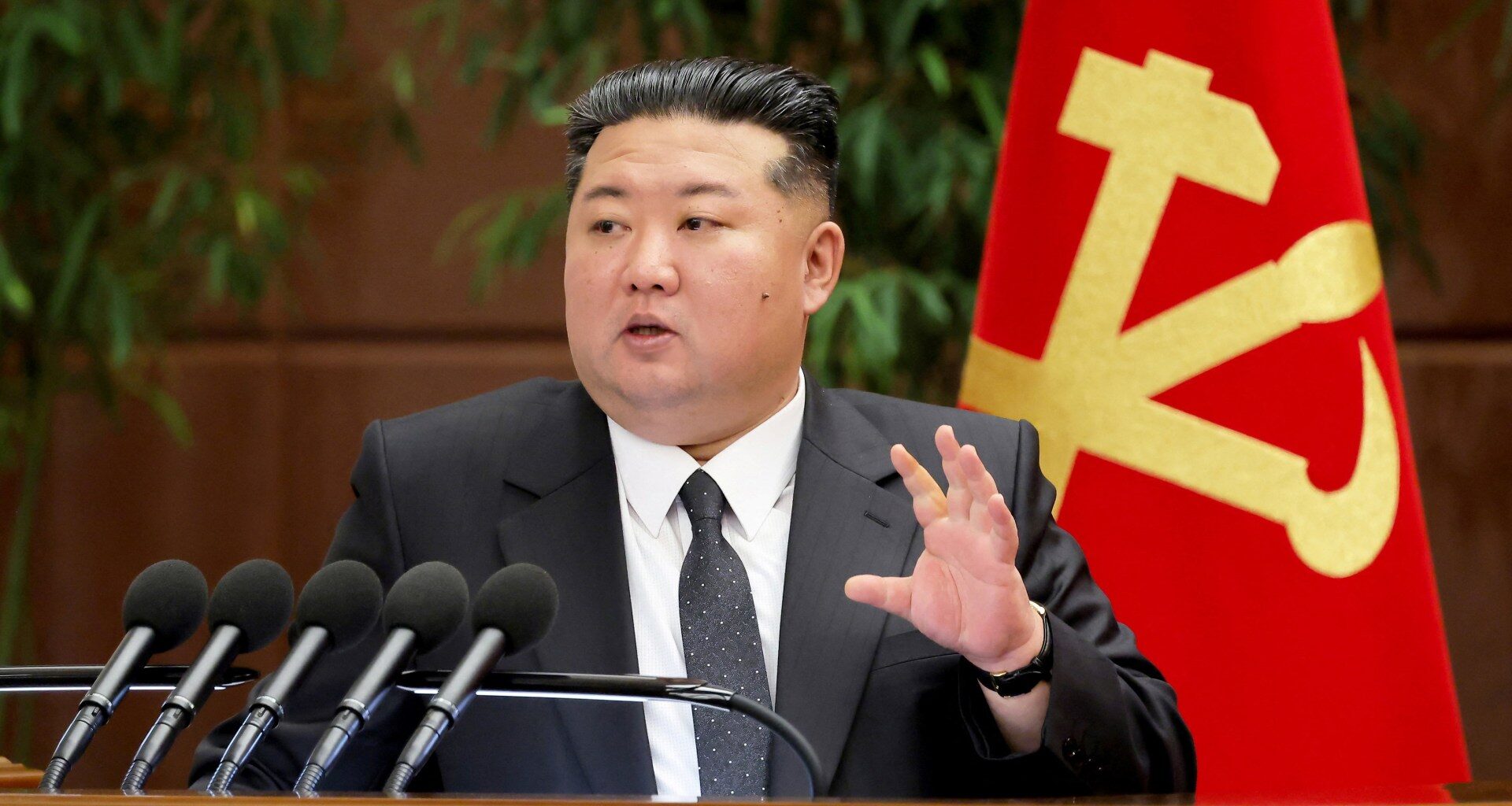
The launches are the second this month after Pyongyang says it tested hypersonic missiles three weeks ago.
North Korea has launched suspected ballistic missiles into the sea, Seoul and Tokyo say, in what appears to be a weapons test before a major political congress in the country.
The launches on Tuesday were the second this month after a volley on January 4 as South Korean President Lee Jae Myung kicked off a state visit to China.
Recommended Stories list of 4 itemsend of list
South Korea’s Joint Chiefs of Staff said the missiles were launched from near Pyongyang at around 3:50pm local time (0650 GMT) towards the sea off its east coast, flying about 350 km (217 miles).
South Korea’s Office of National Security called on Pyongyang to immediately halt ballistic missile launches, condemning them as provocative activities in violation of the United Nations Security Council resolutions.
Japan’s Prime Minister’s Office and Ministry of Defence also said Pyongyang fired what appeared to be two ballistic missiles towards the Sea of Japan. Japan said they reached a maximum altitude of 80 km (50 miles).
The country’s Coast Guard, citing the Defence Ministry, said both were believed to have splashed down.
Japan said Pyongyang’s repeated launches of ballistic missiles threatened “the peace and security of our country, the region and the international community”.
“Such ballistic missile launches also violate relevant UN Security Council resolutions and constitute a grave issue affecting the safety of the public. Japan has lodged a strong protest with North Korea and strongly condemned these actions,” it said in a statement.
The Japanese news agency Jiji Press reported the projectiles had landed outside the country’s exclusive economic zone, quoting Defence Ministry sources.
Pentagon official visits Seoul
Tuesday’s launch came a day after the Pentagon’s number three official, Defence Undersecretary for Policy Elbridge Colby, arrived in Seoul on a visit to discuss modernising their military alliance, as Washington seeks a more limited role in defence efforts against the North.
They followed launches earlier in January which Pyongyang said involved hypersonic missiles that had successfully hit their targets 1,000km (621 miles) away.
North Korean leader Kim Jong Un, who observed the January 4 tests, said they underscored the need to bolster his country’s nuclear deterrent, according to state media.
Pyongyang recently threatened retaliation over what it called surveillance drone flights by Seoul across their border in January and September.
Seoul has denied operating any drones on those occasions and launched an investigation into whether they had been sent by civilians.
Analysts said the drone accusations were driven by Pyongyang’s efforts to ratchet up anti-South Korean sentiment before the ruling Workers’ Party congress, which is expected to start in the coming weeks, The Associated Press news agency reported.
This month, Kim Yo Jong, the powerful sister of Kim Jong Un, rejected claims from Seoul that Pyongyang was leaving room for more “communication” after tensions over the drone dispute.
“As far as Seoul’s various hope-filled wild dreams called ‘repair of relations’ are concerned, they … can never come true,” she said, according to North Korean state media.
Kim Jong Un orders missile ‘expansion’
Before the party congress, the first in five years, Kim Jong Un ordered the “expansion” and modernisation of North Korea’s missile production and is aiming to demonstrate progress in weapons development, according to reports.
North Korea is prohibited by United Nations resolutions from launching or testing ballistic missiles of any range.
Despite the resolutions, Pyongyang has stepped up its missile testing significantly in recent years.
Analysts said this drive is aimed at improving precision strike capabilities, challenging Washington and Seoul, and testing weapons before potentially exporting them to Russia, the AFP news agency reported.