Take note: the main geopolitical players now rarely rely on direct methods of action, often resorting instead to asymmetric approaches.
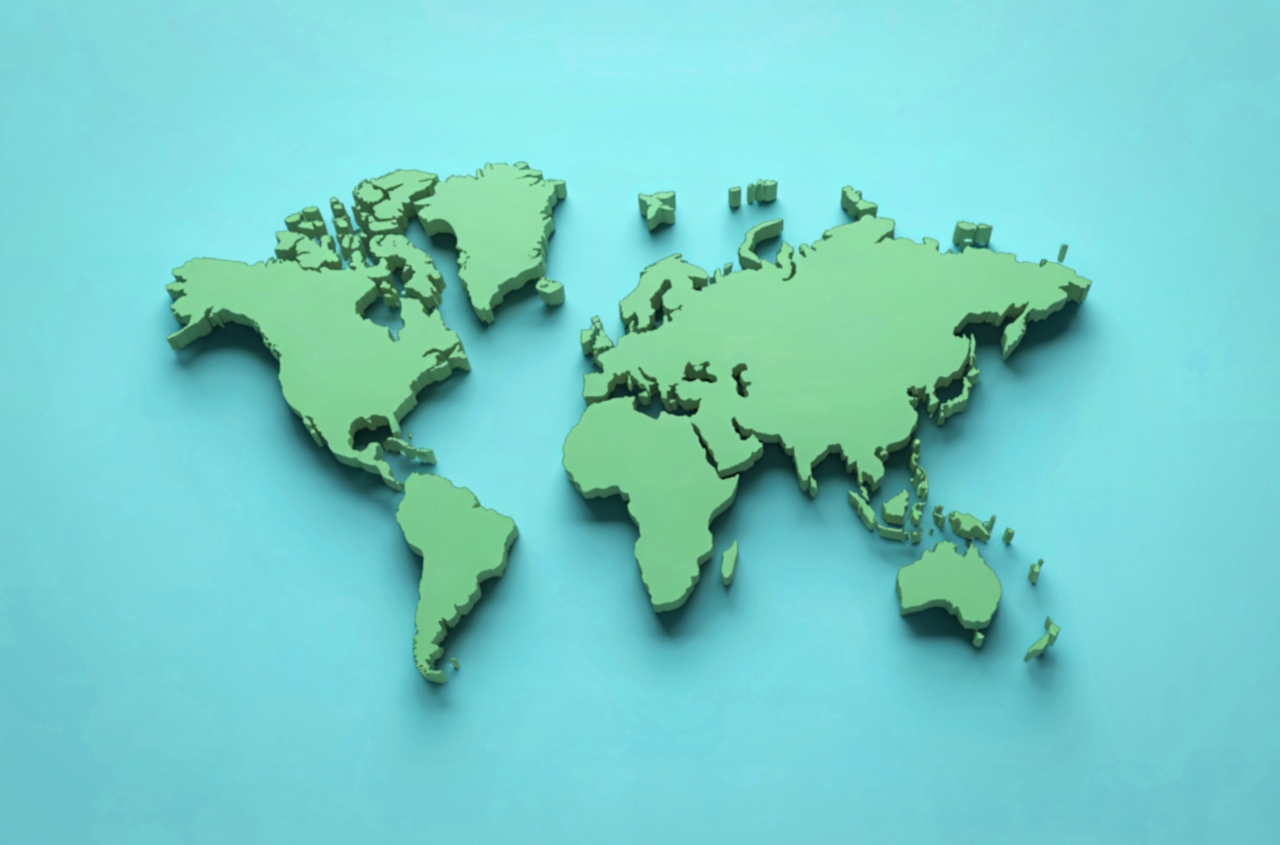
On the global stage, the world game is not chess but Go—played on the “flat map” of the world.
The United States is building its global megacluster in the Western Hemisphere—“America from Greenland to Antarctica.”
To achieve this, it must place a “line of stones” of presence stretching from Greenland to Argentina.
According to the rules of Go, the U.S. opponents must try to “break” America’s line of dominance in the Western Hemisphere from north to south.
And here’s the most interesting part.
China is forming its own puzzle of interests in South America: Panama, Peru, Brazil, Bolivia.
In a symmetric confrontation, China would have strengthened its military presence precisely in South America.
That’s how it would have unfolded in the 20th century.
But in the 21st century, the focus shifts to asymmetry, and China begins its game… in Canada.
Moving on.
The U.S. starts a trade war with the EU and threatens Denmark’s sovereignty over Greenland.
In a symmetric logic, Europe should strengthen its military presence in Greenland and launch its own trade countermeasures against America.
But what does Europe do?
It “enters” South America, announcing a free trade agreement with MERCOSUR countries, including Argentina and Brazil.
Thus, Europe creates competition for American goods in the local market while indirectly supporting the political course of Brazil (BRICS and closer ties with China).
So, to maintain its positions in South America, China “moves into” Canada, while the EU, to preserve its positions in Canada and Greenland, “moves into” South America.
Because Beijing and Brussels understand well: the creation of a U.S. global megacluster from Greenland to Antarctica in the Western Hemisphere would have irreversible consequences for the European and Chinese clusters:
Strengthening confrontation with China in the Indo-Pacific region, where the full power of the Western Hemisphere megacluster will be directed;
Weakening geopolitical ties between the U.S. and Europe due to the growing importance for Washington of the “home cluster” under the Monroe Doctrine 2.0.
In other words, by blocking Trump from “placing stones” in the Western Hemisphere, Europe fights to regain U.S. attention, while China works to limit the power of the new American cluster.
The U.S. and EU are also becoming competitors in creating new formats for their respective megaclusters.
The EU is trying to find compensatory markets lost to the U.S.
In this context, Europe is moving along the communication lines of its former empires—following Spain’s path into South America, Portugal’s and France’s into Africa, and Britain’s into India.
In other words, it is seeking to sign free trade agreements with India, MERCOSUR countries, and several African nations, especially in the north of the continent.
But the U.S. is not sitting idle. Washington is trying to intercept the same India, applying quasi-coercive pressure. Pakistan’s role is also a factor here.
In Mexico, a strong wave of anti-European resentment is emerging: Spain (read: Europe) is expected to apologize for the genocide of Indigenous peoples—without such apologies, reconciliation is impossible, and so on.
In other words, historical skeletons are being pulled from the closet to model the present.
As Orwell said: “Who controls the present controls the past; who controls the past controls the future.”
Europe is attempting to follow the old imperial global communication lines, reviving its cluster on a new matrix, while resistance to this movement is being conducted through history textbooks.