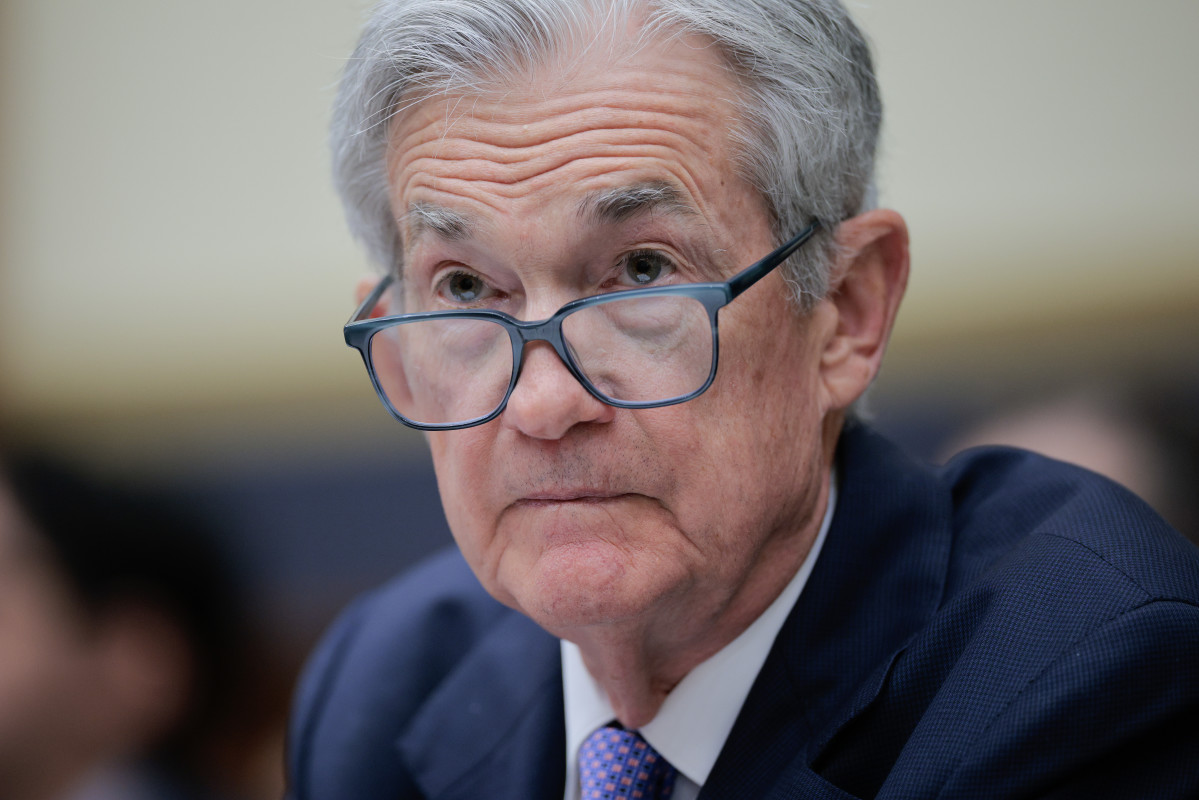
From Main Street to Wall Street, there are questions as to when interest rates will drop again.

This week’s meeting of the Federal Reserve’s policymaking panel is expected to pause interest-rate cuts, and Fed watchers will be clued into Fed Chair Jerome Powell’s post-meeting comments as to the future of rates.

The benchmark Federal Funds Rate influences short-term borrowing rates, such as those on credit cards, auto financing, and student loans.

The Federal Open Market Committee is expected to hold rates steady in its first meeting of the year.

But for how long?

“It’s time to sit back and take a look at things,” said Peter Hooper, vice chair of research at Deutsche Bank, told The New York Times. “We will get some further easing, but it’s not urgent at this point.”

Federal Funds Effective Rate ChartBoard of Governors of the Federal Reserve System

Federal Funds Effective Rate ChartBoard of Governors of the Federal Reserve System · Board of Governors of the Federal Reserve System

The Fed’s dual congressional mandate requires it to balance inflation and job growth via interest rates.

The two goals often conflict, operate on different timelines and are influenced by unpredictable global events.

More Federal Reserve:

The FOMC cut the benchmark Federal Funds Rate three times for a total of 75 basis points in 2025 to land at 3.50% to 3.75% in part because of concerns about the weakening labor market.

After the December rate cut, Powell said that the lowering of rates brought monetary policy “within a broad range of neutral.”

A neutral rate neither stimulates nor restrains economic growth.

The Fed last paused interest rates in September 2023, holding the funds rate at 5.25% to 5.50% after a rapid tightening cycle aimed at curbing post-pandemic inflation.

The pause lasted nearly a year as policymakers wanted to see if the higher borrowing costs would tame inflation without dipping the economy into a recession.

During that pause, inflation gradually cooled and the labor market remained resilient.

The central bank resumed cutting rates in September 2025 once Fed officials became confident that inflation was moving sustainably toward the Fed’s 2% target.

Related: Jerome Powell’s net worth, salary & job as Fed Chair

Eric Diton, President & Managing Director at The Wealth Alliance, said a key question facing Powell is whether he will continue to “be more ‘data dependent’ or can we expect a more concrete timeline on future rate cuts?”

Diton said if Powell leans toward a restrictive or neutral bias, that would be more bearish versus an easing bias.

“His comments with regard to the labor market, always a concern of the Fed, will be closely watched. Our feeling is that, while the labor market has weakened, it may not be enough to warrant another rate cut in the near term. Also, inflation is still in the high 2’s, above the Fed target of 2%,’’ Diton said.

President Donald Trump has spent the past year blasting Powell and the FOMC for not lowering rates to around 1% or lower.

The White House maintains this will stimulate the stagnant housing market and reduce the amount of interest on the nation’s debt, which currently hovers between approximately $38.4 trillion and $38.5 trillion.

This week’s meeting comes after dramatic episodes Fed watchers say were instigated by the White House to influence lower rates and compromise the central bank’s independence.

The Supreme Court heard arguments Jan. 21 in Fed Governor Lisa Cook’s bid to stop Trump’s attempt to fire her for cause on allegations of mortgage fraud.

Powell announced Jan. 11 that the Department of Justice issued subpoenas related to a criminal investigation into cost overruns of renovations at the Fed’s headquarters.

Trump has said he will soon announce his nominee to replace Powell as chair in May, a candidate that the president has insisted will follow his lead on monetary policy.

John Luke Tyner, Portfolio Manager & Head of Fixed Income atAptus Capital Advisors, said Powell’s press conference could shed light on his last two remaining FOMC meetings as president and what the committee would need to see to consider cutting before his term ends.

Currently, the market doesn’t have the first cut in 2026 happening until July, after the new chair takes over.

Related: Why small firms are glued to a Fed meeting missing a rate cut

The widely watched CME Group FedWatch Tool estimates the Fed’s next quarter-percentage point cut:

March 18: 15.5%

April 29: 25.5%

June 17: 45.9%

”The market is pricing in just shy of two cuts for ’26. This seems low given the change in Fed chair, the Fed’s own outlook for lower inflation, rising productivity, wobbly labor market, and market based indicators such as “Truflation” showing current inflation well below the Fed’s 2% target.’’ Tyner said.

Mike Sanders, Head of Fixed Income at Madison Investments, said despite some lingering noise in the data from last year’s government shutdown, the broader picture does not justify a rate cut:

“The labor market appears to be stabilizing, while inflation continues to moderate. With the Fed having already delivered substantial easing in 2025, we do not expect to see another cut until mid-year.”

“While there will not likely be meaningful volatility in the Treasury market around this meeting, risk remains skewed toward higher yields on the 10-year and longer part of the curve.”

Tyner said the Treasury market “could certainly see volatility remain elevated based on the direction of the press conference and language from Powell.’’

Related: Fed rate cut chances shift ahead of FOMC this week

This story was originally published by TheStreet on Jan 27, 2026, where it first appeared in the Fed section. Add TheStreet as a Preferred Source by clicking here.