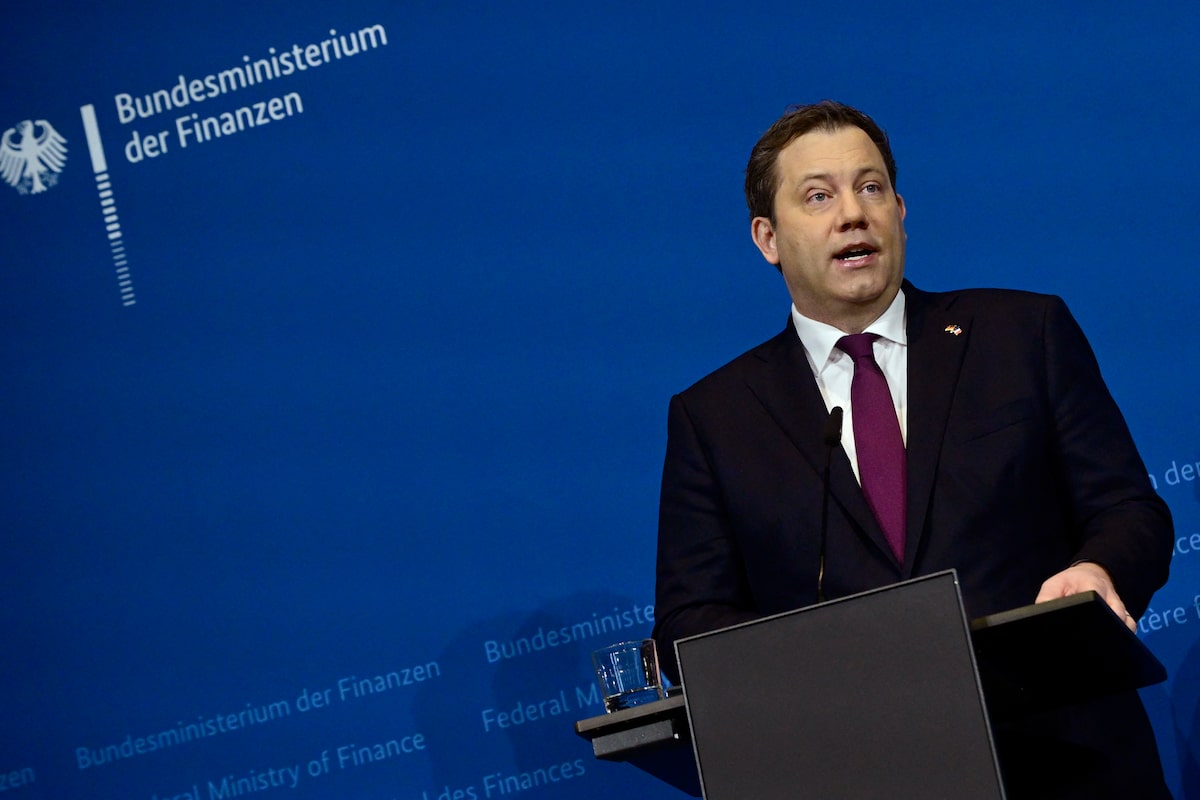
German Finance Minister Lars Klingbeil in Berlin on Jan. 19. EU economies are trying to reduce their dependence on imported critical raw materials.JOHN MACDOUGALL/AFP/Getty Images
Germany will push for a “two-speed” European Union to break decision-making inertia in the 27-member bloc and galvanize its economies, calling for a core group of member states to move ahead on key policies to make Europe stronger and more independent.
“Now is the time for a Europe of two speeds,” German Finance Minister Lars Klingbeil said at an event hosted by Welt on Tuesday in Berlin.
Finance ministers from Germany and France want to strengthen competitiveness within the EU by introducing a new format of the bloc’s six leading economies, a letter from the German minister seen by Reuters on Tuesday showed.
In the letter, Mr. Klingbeil invited partners in France, Poland, Spain, Italy and the Netherlands to a video conference on Wednesday to set an ambitious and concrete agenda to strengthen the sovereignty, resilience and competitiveness of Europe.
EU economies are trying to reduce their dependence on imported critical raw materials from countries including China and to tackle fears that trade tariffs and the fragmentation of global markets could undermine growth and investment.
“To survive in an increasingly unpredictable geopolitical situation, Europe must become stronger and more resilient,” Mr. Klingbeil wrote in the letter to his counterparts dated Monday, adding that continuing as before could not be an option.
The invitation said the meeting on Wednesday is meant as a “kick-off,” and a follow-up meeting in person on the margins of the next Eurogroup should follow.
EU, Mercosur sign trade deal after 25 years of negotiations
The letter seen by Reuters includes a four-point plan on how to push forward the capital markets union, strengthen the euro, better co-ordinate investment in defence and secure raw materials.
Mr. Klingbeil said the coalition of countries needs to move faster on the Savings and Investment Union to create better financing conditions for European businesses and in particular Europe’s startups and scale-ups.
The second point focuses on the international role of the euro as a safe haven based on predictability and the rule of law, Mr. Klingbeil said, calling for cuts to red tape and enhancing sovereignty in the payment sphere.
Regarding defence spending, Mr. Klingbeil called for better co-operation among member states and for firmly embedding defence as a priority in the next EU multiannual budget, “turning defence into an engine for growth.”
To secure strategic rare earth supplies, the German minister said efforts to strengthen supply chain resilience for critical minerals must be intensified, with greater strategic engagement with international partners.