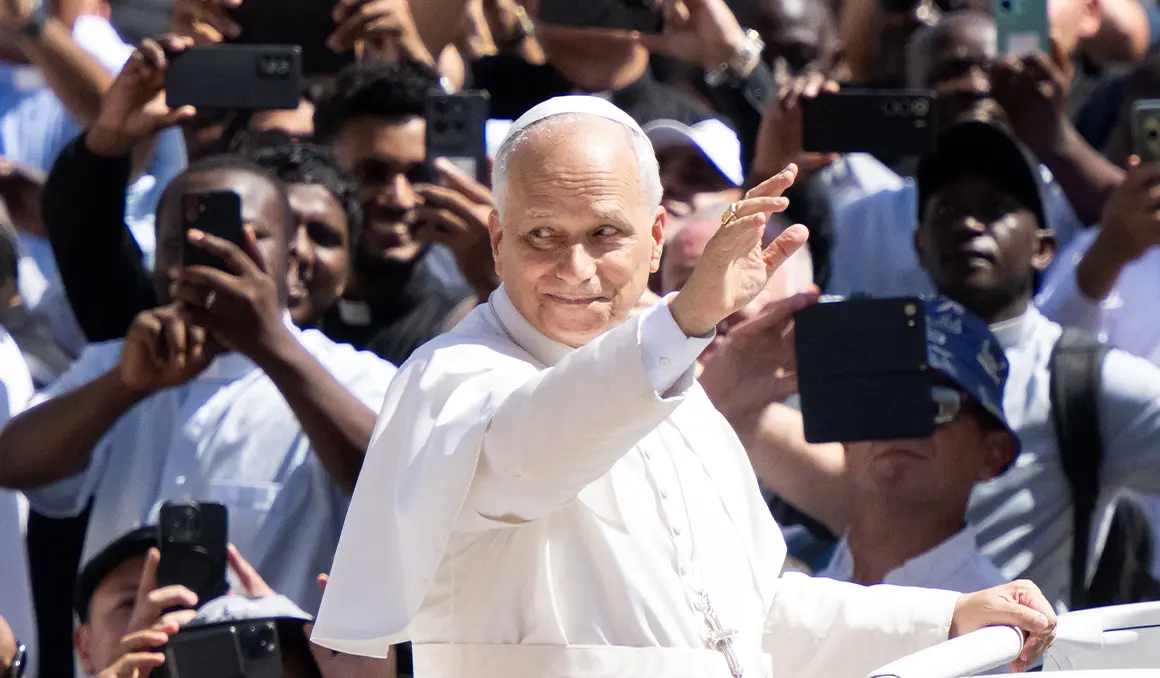
In his Jan. 28 General Audience, continuing his weekly catechesis series on the documents of the Second Vatican Council, Pope Leo XIV considered the relationship between Scripture and Sacred Tradition, explaining that the Church needs both to live out the Catholic faith.
The Holy Father began his address about the Dogmatic Constitution Dei Verbum by recalling two scenes from Scripture in which Christ spoke of “the intimate connection between the words uttered by Christ and their dissemination.”
He then quoted Dei Verbum: “There exists a close connection and communication between sacred tradition and Sacred Scripture. For both of them, flowing from the same divine wellspring, in a certain way merge into a unity and tend toward the same end.”
Pope Leo explained that, over the course of history, the Church preserves, interprets, and embodies God’s Revelation. For this reason, he noted, the Catechism of the Catholic Church says that the Church Fathers believed that “Sacred Scripture is written principally in the Church’s heart rather than in documents and records.”
Sacred Tradition, the Pontiff said, is guided by the Holy Spirit. He said that Saint Gregory the Great explained this reality when he wrote, “The Sacred Scriptures grow with the one who reads them.”
Pope Leo also referenced Saint Augustine’s explanation of the way that Scripture, though singular, is spoken by many different saints.
The Holy Father then discussed Saint John Henry Newman’s theological reflections on the development of Christian doctrine.
“[St. Newman] affirmed that Christianity, both as a communal experience and as a doctrine, is a dynamic reality, in the manner indicated by Jesus himself in the parables of the seed: a living reality that develops thanks to an inner vital force,” Pope Leo said.
The Pontiff then made clear that, while the Church’s understanding of Scripture develops over the course of Her history, this development occurs only through the Church defending the deposit of the faith that comes from the Apostles.
“‘Deposit’ is a term that, in its original meaning, is juridical in nature and imposes on the depositary the duty to preserve the content, which in this case is the faith, and to transmit it intact,” he explained.
He said that all Catholics have a duty to the deposit of faith, both Scripture and Tradition, “to preserve it in its integrity, as a lodestar for our journey through the complexity of history and existence.”
After concluding his catechesis, in honor of International Remembrance Day for victims of the Holocaust, Jan. 27, the Holy Father prayed for an end to antisemitism and prejudice. He also greeted the assembled pilgrims.
>> Pope Leo: Jesus Christ reveals God the Father <<
