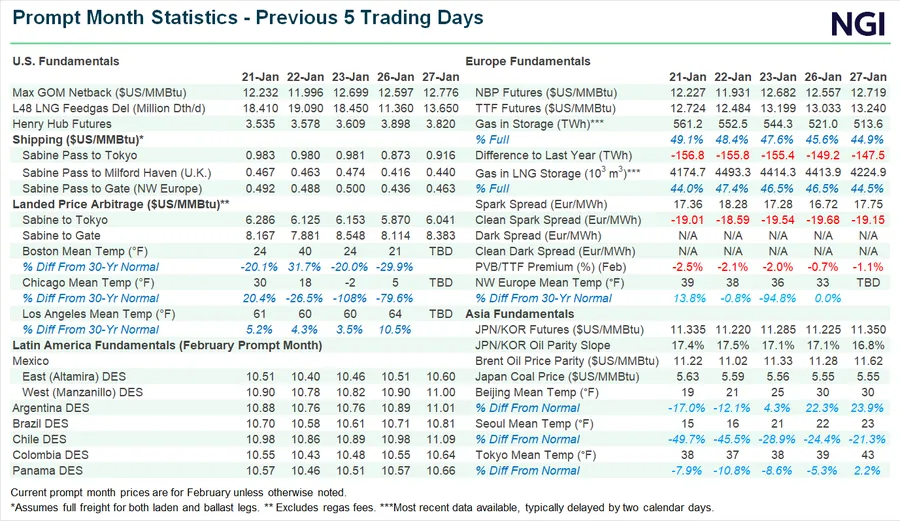
A look at the global natural gas and LNG markets by the numbers
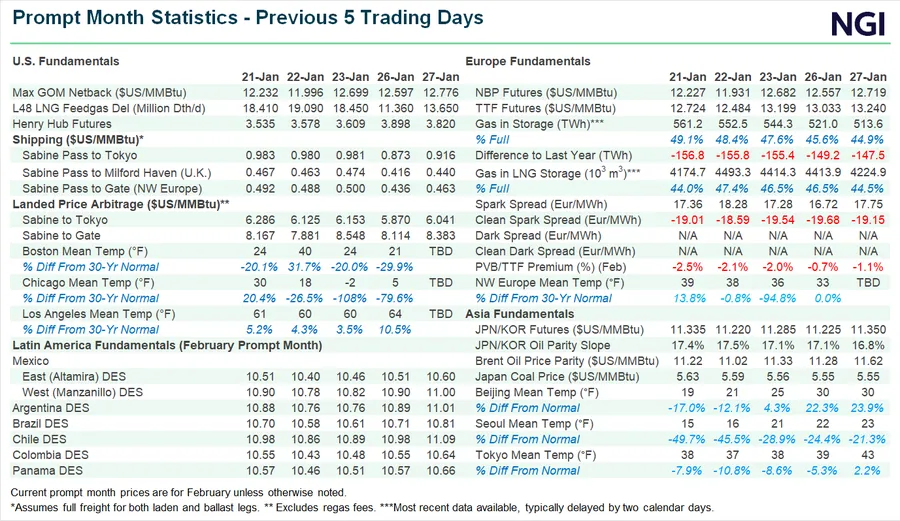
Expand
3 cargoes: The United States could receive its third cargo of LNG from Trinidad and Tobago this week, marking a high point for U.S. imports. A Shell-controlled vessel, the Paris Knutsen, entered the Savannah River and headed to the Elba Island LNG terminal Wednesday, according to Kpler data. It would be the first cargo imported at Elba Island since 2020. Two other vessels with volumes from Atlantic LNG loaded at the Everett terminal near Boston and Cove Point in Maryland earlier in the week.2.61 Mt: U.S. LNG exports are set to recover this week, driven by a slight uptick in Asian demand. Shipments from U.S. terminals are seen rising 1.2% the week of Jan. 26 to 2.61 million tons (Mt), according to Kpler predictive data. The uptick comes in the face of widespread outages and pipeline constraints across the Gulf Coast that have pushed down feed gas nominations. Demand from South Korea helped offset a 0.17 Mt week/week reduction in volumes to Europe.16.2 Bcf/d: Nominations to U.S. LNG terminals have recovered after a more than 45% reduction during Winter Storm Fern, according to Wood Mackenzie. That drop outpaced the 2025 freeze across the Gulf Coast and 2021’s Winter Storm Uri. Feed gas nominations dropped Monday to one of the lowest points in more than a year. By the Wednesday morning gas cycle, nominations had recovered to near 17 Bcf/d. Wood Mackenzie estimated nominations to average 16.2 Bcf/d over the next seven days.
25–30%: Santos Ltd. has shipped the first cargo from Darwin LNG produced from the Barossa field, marking a milestone for its expansion and extension project for the legacy export terminal. The Australian firm disclosed a vessel left Darwin over the weekend and was headed to Japan. Exports from the 3.7 Mt capacity facility declined exponentially after 2021 and ceased completely in 2024. With new supplies from the field northwest of the Australian coast in the Timor Sea, Santos is targeting a 25-30% increase in its production portfolio by 2027.