CUTTING THAT SHORT WITH HIS RESIGNATION EFFECTIVE ON SATURDAY. NEW AT FOUR. THE NTSB JUST RELEASED ITS PRELIMINARY REPORT INTO LAST MONTH’S EXPLOSION AT BRISTOL HEALTH AND REHAB CENTER IN BUCKS COUNTY. INITIAL FINDINGS SHOW STAFF REPORTED A STRONG GAS ODOR AT 11 A.M., AND AN EXELON TECH FOUND A LEAK ON A METER VALVE BEFORE THE AFTERNOON BLAST THAT KILLED TWO PEOPLE AND INJURED ABOUT 20. THE NTSB SAYS INVESTIGATORS RECOVERED THAT INDOOR METER SET, AND PARTS OF THE SERVICE LINE FOR LAB EXAMINATION. THE PROBE NOW FOCUSES ON PIPELI
DEADLY NURSING HOME EXPLOSION | NTSB releases preliminary report

The National Transportation Safety Board released a preliminary report for its investigation into a Bucks County nursing home explosion that happened in December. The explosion killed two people, a resident and an employee, and injured about 20 other people at the Bristol Health and Rehab Center in Bristol, Pa., around 2:15 p.m. Dec. 23. A third person later died from their injuries.The blast partially collapsed the building. Before the explosion, people had reported smelling a natural gas odor in the basement boiler room and a first floor hallway around 11 a.m. Here is the full preliminary report from the NTSB:”On December 23, 2025, about 2:15 p.m. local time, a natural gas–fueled explosion and fire occurred at the Bristol Health and Rehab Center in Bristol, Pennsylvania. Two people died and about 20 were injured in the explosion and the subsequent fire and partial building collapse; on January 5, a third person died from injuries sustained in the accident. The weather at the time of the accident was 38ºF and cloudy, with light and variable winds.”Soon after 11:00 a.m., the Bristol Health maintenance director reported a natural gas odor in the basement boiler room and a first-floor hallway to utility company PECO, a subsidiary of Exelon Corporation. Exelon provided natural gas to the facility through a distribution system that included an underground 1.25-inch-diameter coated steel service line and an indoor rotary meter set located in the basement. An Exelon energy technician arrived onsite about 11:50 a.m. to respond to the odor report. The technician identified a leak on a meter set valve in the basement boiler room and called dispatch to request repair assistance. Exelon’s foreman directed a meter services technician to perform the repair, and he arrived about 1:20 p.m. ”In interviews with the National Transportation Safety Board (NTSB), the Bristol Health maintenance director and other personnel recalled smelling natural gas odorant in the basement, first floor, and second floor of the building shortly before the explosion. The building exploded about 2:15 p.m., with about 180 people at the facility.”About 2:17 p.m., regional fire and rescue units were dispatched to a reported explosion and structural collapse. The first units arrived within 1 minute and initiated a search and rescue operation. Additional units were requested, and the response included the Third District Fire Company, Bristol Township Fire Rescue, the Bucks County Rescue Squad, and the Bristol Township Police. The search and rescue operation concluded about 6 hours after the accident.”Exelon emergency responders arrived about 2:42 p.m. and isolated natural gas flow to the facility about 3:50 p.m. The Pennsylvania Public Utility Commission directed Exelon to conduct bar hole tests, which identified subsurface gas outside of the building about 5:00 p.m.”While on scene, the NTSB directed and oversaw integrity and pressure testing of the service line and gas equipment, examined the accident site, and conducted interviews. The NTSB recovered the indoor meter set, excavated portions of the service line that did not hold pressure during pressure testing, and delivered these items to the NTSB Materials Laboratory for further examination.”The investigation is ongoing. Future investigative activity will focus on evaluating physical evidence collected at the site and on reviewing Exelon’s pipeline safety management system as well as its practices related to personnel training and operator qualifications, task-specific procedures, odor complaint response, documentation, and emergency response.”Parties to the investigation include:the Pipeline and Hazardous Materials Safety Administration, the Occupational Safety and Health Administration, the Bristol Township Office of the Fire Marshal, the International Brotherhood of Electrical Workers Local Union 614, Exelon, and Saber Healthcare Group.” All times in this report are local. Because natural gas is odorless, strong-smelling chemical additives called odorants are mixed with natural gas before distribution to help reduce the risk that leaks will go unidentified. The most common odorant added to natural gas is methanethiol, or methyl mercaptan, which has a characteristic “rotten egg” or sulfurous odor. A meter set includes the meter, regulator, piping, valves, and related fittings that control pressure to downstream customer piping. Both the foreman and the meter services technician had less than 1 year of experience in their current roles with Exelon. Bar hole testing describes a gas measurement technique in which a small-diameter hole is made in the ground, a bar hole probe is inserted into the hole, and a gas measurement is made. Saber Healthcare Group is the owner of Bristol Health and Rehab Center.”Nursing home explosion, NTSB timelineDec 23, 2025 (weather: 38°F, cloudy, light/variable winds)Shortly after 11:00 a.m.: Bristol Health maintenance director reports a natural gas odor (basement boiler room and first-floor hallway) to PECO/Exelon.~11:50 a.m.: Exelon energy technician arrives, finds a leak on a meter set valve in the basement boiler room, and requests repair assistance.~1:20 p.m.: Exelon meter services technician arrives to perform the repair.Shortly before 2:15 p.m.: Staff report smelling gas odorant in the basement, first floor, and second floor.~2:15 p.m.: Natural gas–fueled explosion and fire occur; partial building collapse. About 180 people are at the facility. Two people die and ~20 are injured.~2:17 p.m.: Fire/rescue units dispatched for explosion and structural collapse; first units arrive within about 1 minute and begin search and rescue. Multiple agencies respond.~2:42 p.m.: Exelon emergency responders arrive.~3:50 p.m.: Exelon isolates natural gas flow to the facility.~5:00 p.m.: At the direction of the Pennsylvania Public Utility Commission, Exelon conducts bar hole tests; subsurface gas is identified outside the building.~6 hours after the accident: Search and rescue operation concludes.Jan 5, 2026A third person dies from injuries sustained in the accident.After the incident / ongoingNTSB oversees integrity and pressure testing, examines the site, conducts interviews, recovers the indoor meter set, excavates portions of service line that failed pressure testing, and sends items to the NTSB Materials Laboratory.Investigation continues, focusing on physical evidence and Exelon’s pipeline safety management system, training/operator qualifications, procedures, odor-complaint response, documentation, and emergency response.
The National Transportation Safety Board released a preliminary report for its investigation into a Bucks County nursing home explosion that happened in December.
The explosion killed two people, a resident and an employee, and injured about 20 other people at the Bristol Health and Rehab Center in Bristol, Pa., around 2:15 p.m. Dec. 23. A third person later died from their injuries.
The blast partially collapsed the building.
Before the explosion, people had reported smelling a natural gas odor in the basement boiler room and a first floor hallway around 11 a.m.
Here is the full preliminary report from the NTSB:
“On December 23, 2025, about 2:15 p.m. local time, a natural gas–fueled explosion and fire occurred at the Bristol Health and Rehab Center in Bristol, Pennsylvania.[1] Two people died and about 20 were injured in the explosion and the subsequent fire and partial building collapse; on January 5, a third person died from injuries sustained in the accident. The weather at the time of the accident was 38ºF and cloudy, with light and variable winds.
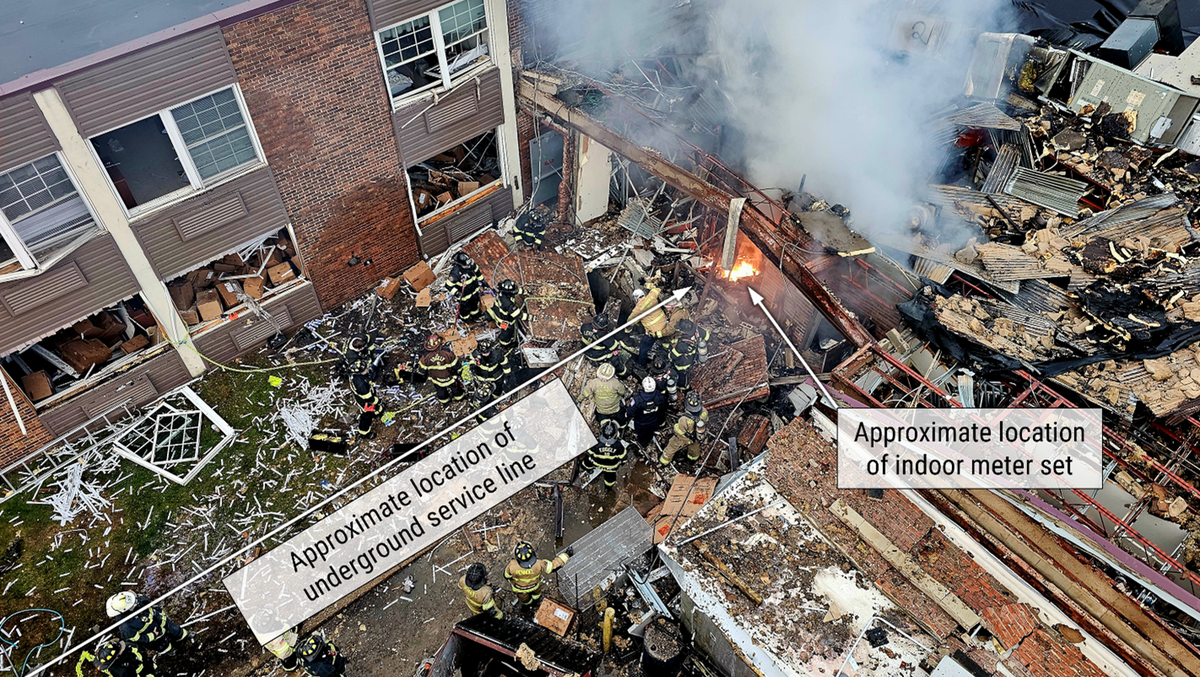
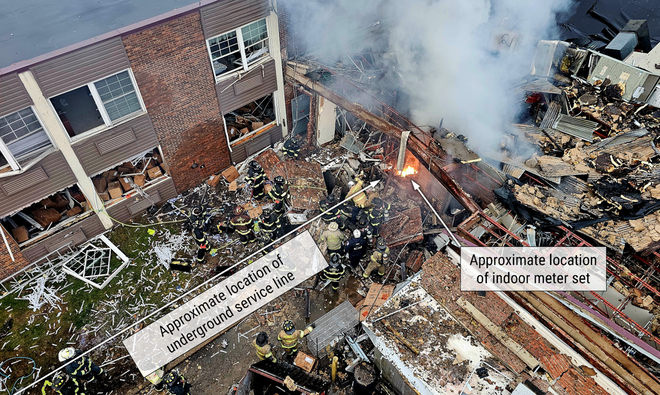
“Soon after 11:00 a.m., the Bristol Health maintenance director reported a natural gas odor in the basement boiler room and a first-floor hallway to utility company PECO, a subsidiary of Exelon Corporation.[2] Exelon provided natural gas to the facility through a distribution system that included an underground 1.25-inch-diameter coated steel service line and an indoor rotary meter set located in the basement.[3] An Exelon energy technician arrived onsite about 11:50 a.m. to respond to the odor report. The technician identified a leak on a meter set valve in the basement boiler room and called dispatch to request repair assistance. Exelon’s foreman directed a meter services technician to perform the repair, and he arrived about 1:20 p.m. [4]
”In interviews with the National Transportation Safety Board (NTSB), the Bristol Health maintenance director and other personnel recalled smelling natural gas odorant in the basement, first floor, and second floor of the building shortly before the explosion. The building exploded about 2:15 p.m., with about 180 people at the facility.
“About 2:17 p.m., regional fire and rescue units were dispatched to a reported explosion and structural collapse. The first units arrived within 1 minute and initiated a search and rescue operation. Additional units were requested, and the response included the Third District Fire Company, Bristol Township Fire Rescue, the Bucks County Rescue Squad, and the Bristol Township Police. The search and rescue operation concluded about 6 hours after the accident.
“Exelon emergency responders arrived about 2:42 p.m. and isolated natural gas flow to the facility about 3:50 p.m. The Pennsylvania Public Utility Commission directed Exelon to conduct bar hole tests, which identified subsurface gas outside of the building about 5:00 p.m.
“While on scene, the NTSB directed and oversaw integrity and pressure testing of the service line and gas equipment, examined the accident site, and conducted interviews. The NTSB recovered the indoor meter set, excavated portions of the service line that did not hold pressure during pressure testing, and delivered these items to the NTSB Materials Laboratory for further examination.
“The investigation is ongoing. Future investigative activity will focus on evaluating physical evidence collected at the site and on reviewing Exelon’s pipeline safety management system as well as its practices related to personnel training and operator qualifications, task-specific procedures, odor complaint response, documentation, and emergency response.
“Parties to the investigation include:
the Pipeline and Hazardous Materials Safety Administration, the Occupational Safety and Health Administration, the Bristol Township Office of the Fire Marshal, the International Brotherhood of Electrical Workers Local Union 614, Exelon, and Saber Healthcare Group.
“[1] All times in this report are local. [2] Because natural gas is odorless, strong-smelling chemical additives called odorants are mixed with natural gas before distribution to help reduce the risk that leaks will go unidentified. The most common odorant added to natural gas is methanethiol, or methyl mercaptan, which has a characteristic “rotten egg” or sulfurous odor. [3] A meter set includes the meter, regulator, piping, valves, and related fittings that control pressure to downstream customer piping. [4] Both the foreman and the meter services technician had less than 1 year of experience in their current roles with Exelon. [5] Bar hole testing describes a gas measurement technique in which a small-diameter hole is made in the ground, a bar hole probe is inserted into the hole, and a gas measurement is made. [6] Saber Healthcare Group is the owner of Bristol Health and Rehab Center.”
Nursing home explosion, NTSB timelineDec 23, 2025 (weather: 38°F, cloudy, light/variable winds)Shortly after 11:00 a.m.: Bristol Health maintenance director reports a natural gas odor (basement boiler room and first-floor hallway) to PECO/Exelon.~11:50 a.m.: Exelon energy technician arrives, finds a leak on a meter set valve in the basement boiler room, and requests repair assistance.~1:20 p.m.: Exelon meter services technician arrives to perform the repair.Shortly before 2:15 p.m.: Staff report smelling gas odorant in the basement, first floor, and second floor.~2:15 p.m.: Natural gas–fueled explosion and fire occur; partial building collapse. About 180 people are at the facility. Two people die and ~20 are injured.~2:17 p.m.: Fire/rescue units dispatched for explosion and structural collapse; first units arrive within about 1 minute and begin search and rescue. Multiple agencies respond.~2:42 p.m.: Exelon emergency responders arrive.~3:50 p.m.: Exelon isolates natural gas flow to the facility.~5:00 p.m.: At the direction of the Pennsylvania Public Utility Commission, Exelon conducts bar hole tests; subsurface gas is identified outside the building.~6 hours after the accident: Search and rescue operation concludes.Jan 5, 2026A third person dies from injuries sustained in the accident.After the incident / ongoingNTSB oversees integrity and pressure testing, examines the site, conducts interviews, recovers the indoor meter set, excavates portions of service line that failed pressure testing, and sends items to the NTSB Materials Laboratory.Investigation continues, focusing on physical evidence and Exelon’s pipeline safety management system, training/operator qualifications, procedures, odor-complaint response, documentation, and emergency response.