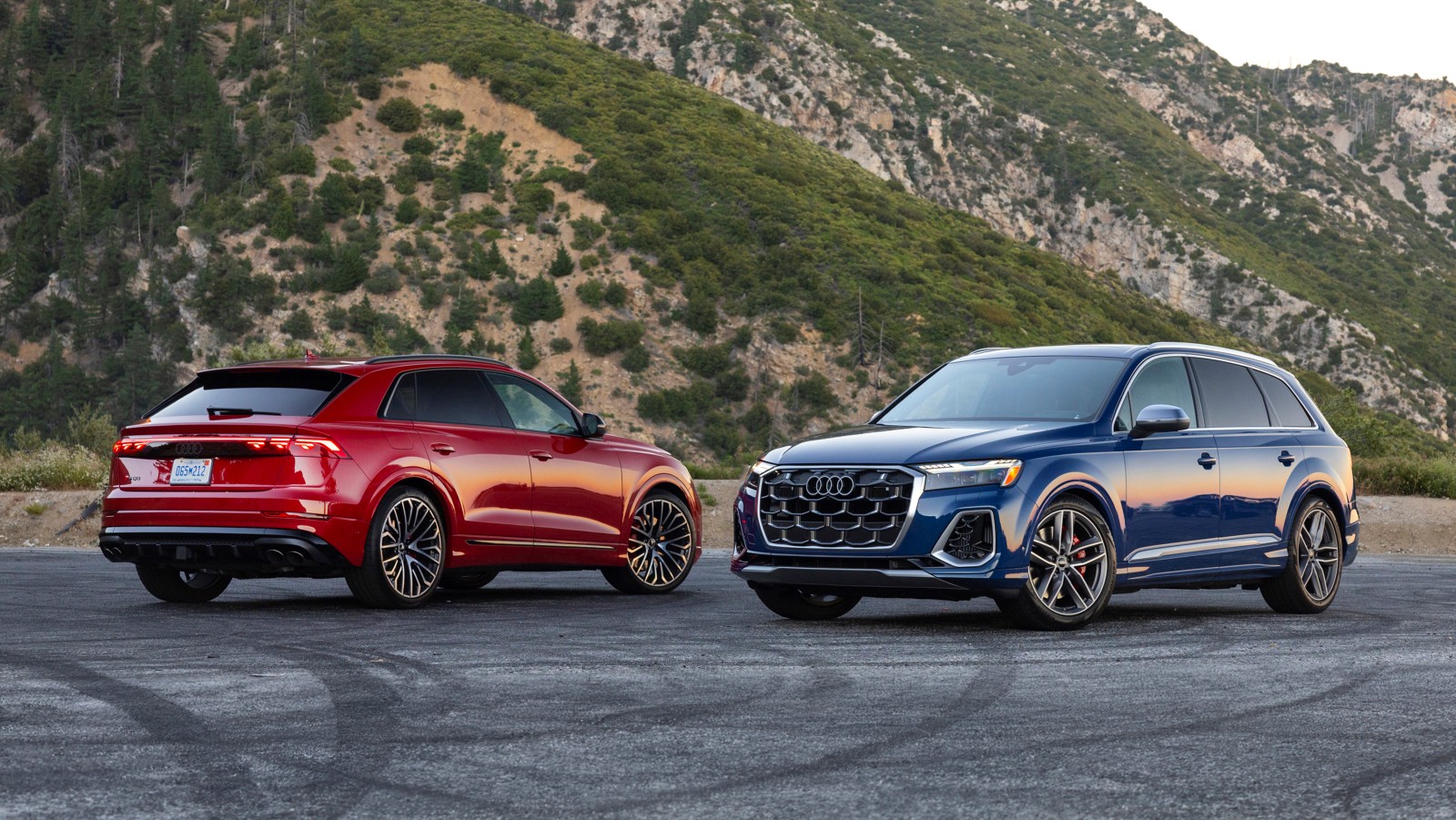
Volkswagen Group could abandon plans to build an Audi factory in the United States unless President Donald Trump lowers tariffs on the automotive industry, the company’s chief executive has indicated.
Speaking to German newspaper Handelsblatt on the sidelines of the World Economic Forum in Davos last week, Volkswagen CEO Oliver Blume said high U.S. tariffs would make a major new investment financially unviable and called for renewed international dialogue on trade.
In the interview, published on Sunday, Blume said: “With unchanged tariff burdens, a large additional investment is not financially feasible.” He added that the European Union had responded “correctly” to Trump’s tariff threats.
“Europe has many strengths and can act with confidence. That’s why clear positions are important,” Blume said.
Audi, which is owned by Volkswagen Group, has been considering building a manufacturing facility in the U.S. since 2023, according to Bloomberg. The news agency previously reported that the prospect of U.S. subsidies had helped draw the German carmaker towards the idea.
However, Blume said tariffs imposed by Washington on Europe’s automotive sector cost Volkswagen €2.1bn in the first nine months of 2025 alone
Outlining what he described as a “forward strategy” for the group’s U.S. operations, Blume said opportunities remained in the market but acknowledged that Volkswagen’s long-term ambition to secure a 10% market share in the U.S. was no longer realistic under current conditions.
He added that stability in trade policy was critical for the industry, noting that Trump had ultimately dropped plans for additional tariffs.
“The positive aspect in the end was that the U.S. president dropped the idea of additional tariffs. Stable, reliable framework conditions are crucial for industry,” Blume said. “That’s why we continue to focus on dialogue and international cooperation – on both sides of the Atlantic.”
Trump had threatened to impose further tariffs on several European countries amid a dispute linked to opposition to his attempts to take control of Greenland. He later backed down following a meeting with NATO Secretary General Mark Rutte in Davos last week.