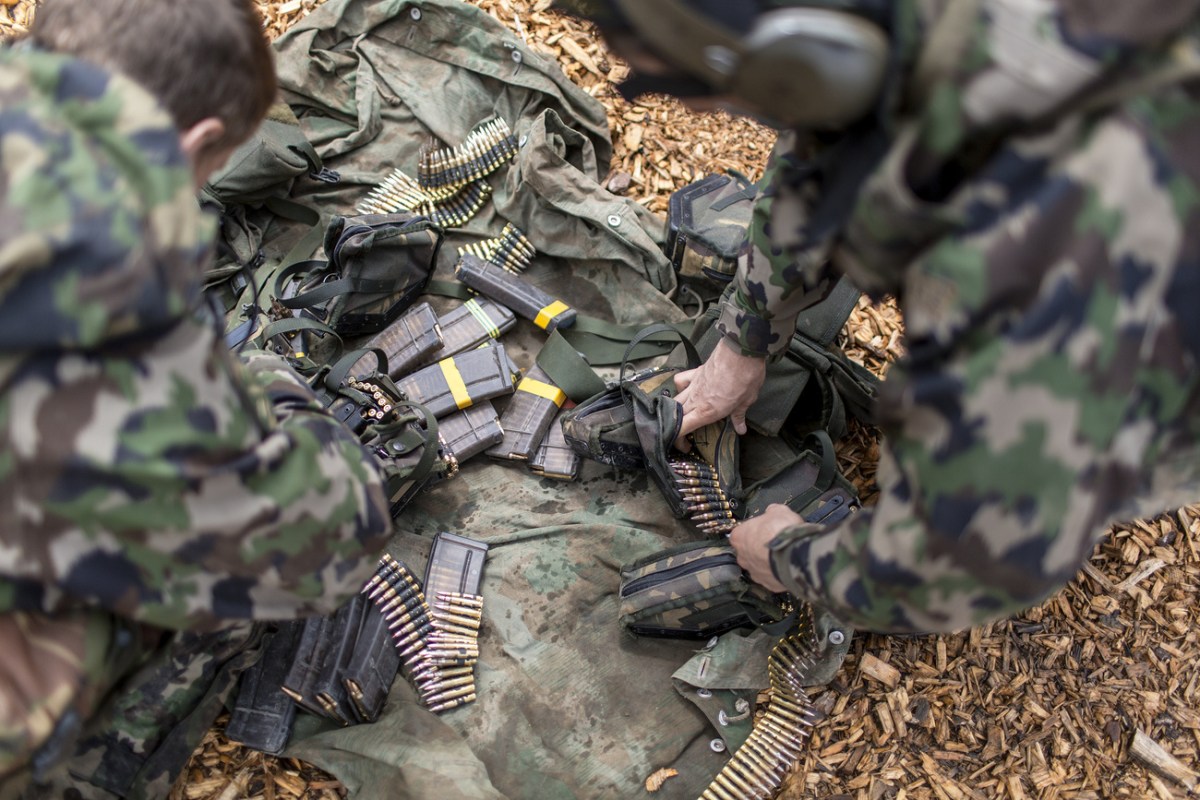
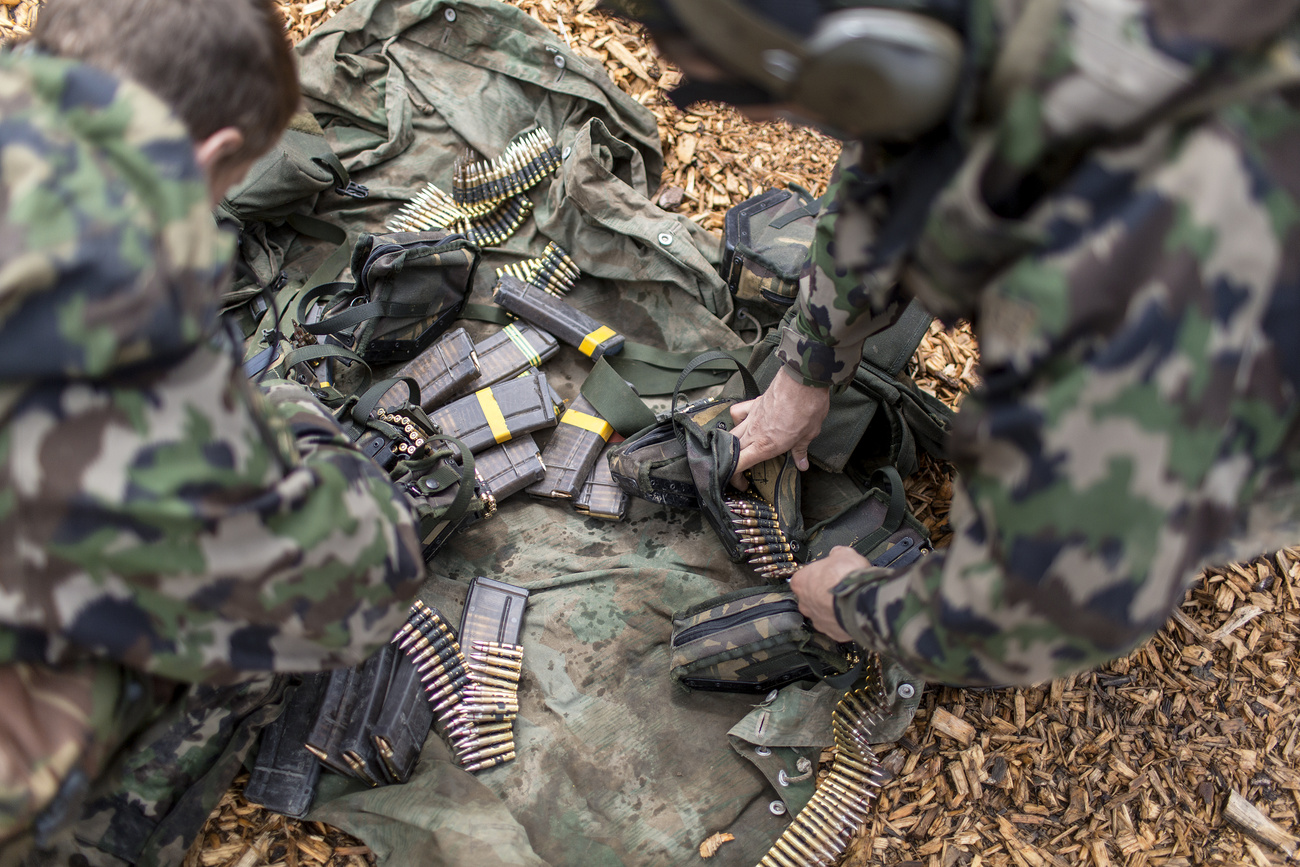
In late 2021, the Swiss parliament opted to ban the sale of weapons to countries at war. Armaments made up 0.7% of all Swiss exports in 2024.
Keystone / Gaetan Bally
The pendulum on Switzerland’s sale of weapons to countries embroiled in conflict has swung in favour of its defence industry, as Europe rearms at a rate not seen since the Cold War. Swiss officials insist such exports are compatible with neutrality.
Over the course of 2022, Germany twice asked Switzerland to allow it to re-export 12,400 rounds of Gepard tank ammunition to Ukraine. Twice it was rebuffed.
Germany had bought the ammunition decades earlier and wanted to give it to Ukraine to shoot down cruise missiles and drones in the fight against Russia’s invasion.
Switzerland, however, has a ban on exporting and re-exporting Swiss-made weaponry to countries involved in a conflict. It turned down similar requests from Spain, Denmark and the Netherlands.
Berlin had tough words for Bern. “I have to say it clearly: I cannot understand why Switzerland does not provide Gepard ammunition,” said then-Vice Chancellor Robert Habeck.
Now Switzerland is reversing course. Parliament has decided to automatically grant arms exports and re-exports for 25 countries, the majority in Europe, even if they are involved in a conflict.
The decision follows concerns that Swiss defence orders were taking a hit from European nations wary of restrictions on any arms that they buy. It also comes as Switzerland reassesses what it means to be a neutral state amid emerging security threats on the continent.
What’s set to change
Under the current War Materiel Act, Switzerland cannot export Swiss-made arms to countries involved in a war or that are committing serious rights violations, a ban that has been in place since the end of 2021. Buyers must sign a non-re-export declaration and ask for permission to re-export these.
In 2024, the Swiss government asked parliament to grant it the right to derogate from these rules in exceptional cases. Parliament agreed to this – and went further. For 25 countries, arms exports will be automatically granted, even if they are involved in conflict, and the non-re-export declaration scrapped. The government, however, will have a right of veto when it is in Switzerland’s national interest.
Of the 25 countries, 19 are in Europe; the others are Argentina, Australia, Canada, Japan, New Zealand and the United States.
Concerns for Swiss arms industry …
The debate over arms exports, which began with the desire of some parliamentarians to allow re-exports for Ukraine as a way to support the embattled country, was decided as much by worries for the domestic defence industry.
After Switzerland declined their re-export requests, the Netherlands responded by halting purchases of Swiss weapons. Germany, meanwhile, excluded Swiss manufacturers from bidding on a large order of military equipment.
The industry claimed it was being shunned. This is at a time when Europeans are making “unprecedented” increasesExternal link in military spending, driven by threats from Russia, concerns the United States is disengaging from defence alliance NATO and, more recently, rhetoric from US President Donald Trump on using force to annex Greenland.
Swiss arms exporters have reason to be nervous. Europe is the biggest market for Swiss weapons, accountingExternal link for more than 80% of sales abroad. Overall, arms exports in 2023 shrankExternal link by 27%, or CHF258 million ($330 million), compared with 2022 (although this was partly due to the end of a contract to supply air defence systems, worth CHF194 million, to Qatar for the football World Cup). Exports declined a further 5% in 2024.
… and over European security
Without the ability to sell arms abroad, the industry risked disappearing, with “serious consequences” for national security, the Swiss association for mechanical industries Swissmem claimedExternal link as parliament debated the issue. It also warned some companies were moving production abroad to bypass restrictions.
A group of independent experts commissioned to make recommendations on the government’s future security strategy also arguedExternal link in mid-2024 the arms industry needed strengthening so it could adapt to new threats. Most of these experts favoured easing arms re-exports.
This conclusion was a sign the Russian invasion “and the changing geopolitical context have deeply rattled Switzerland’s view of the world and its place in it”, wroteExternal link Ulrike Franke, a fellow at the European Council on Foreign Relations.
Swiss Defence Minister Martin Pfister said as much, tellingExternal link industry leaders in Brussels last December that the war in Ukraine was “a turning point [that] has destroyed the illusion of lasting peace in Europe”.
There was now “a real risk of more war” on the continent, he said, so Switzerland would “prioritise defence procurement in Europe and engage more strongly in European armaments cooperation”.
Changing perceptions of Swiss neutrality
In his speech, made the week parliament voted to ease arms exports, Pfister said Switzerland’s move was compatible with the country’s neutrality, even if weapons end up in a conflict zone.
More
More
Foreign Affairs
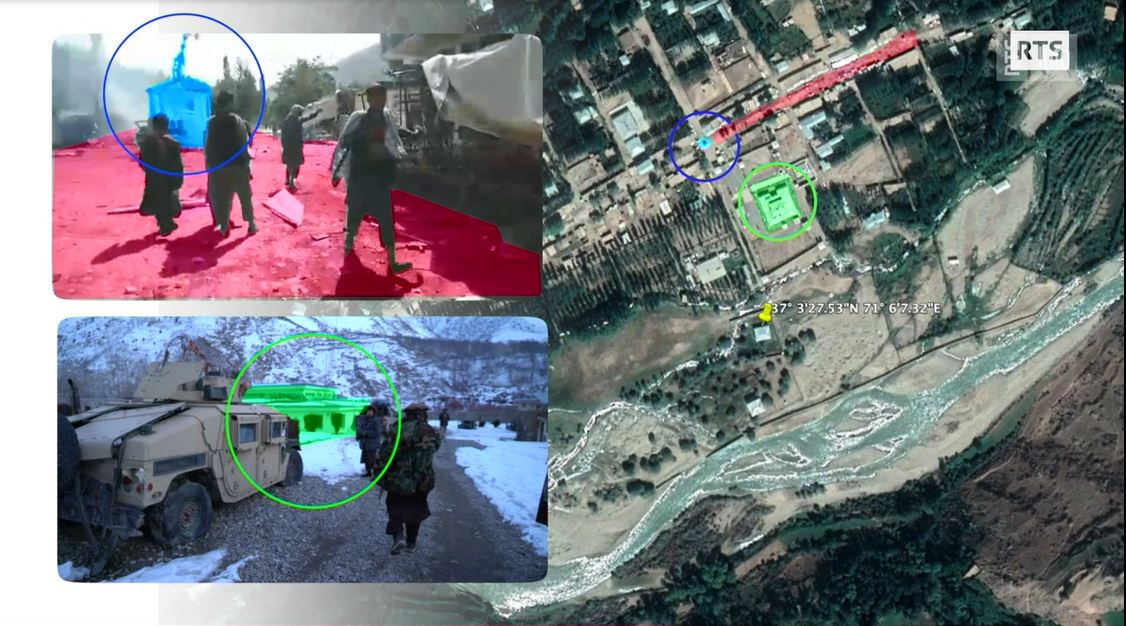
Investigation exposes the use of Swiss arms in war zones
This content was published on
Mar 4, 2022
An extensive media investigation has revealed the illegal presence of Swiss military equipment in Afghanistan and Yemen.
Read more: Investigation exposes the use of Swiss arms in war zones
This marks a departure from the government’s position when it declined requests for re-exports to Ukraine. It had insisted that, as a neutral state, Switzerland was bound to the principle of equal treatment when selling weapons. If it allowed Swiss arms into Ukraine, it would be forced to send an equal quantity to Russia – a result it wanted to avoid, said Pascal Lottaz, an associate professor of neutrality studies at Japan’s Kyoto University.
In Switzerland, the issue of arms exports runs parallel to neutrality, Lottaz said, although the two questions are legally separate. As parliamentarians debated easing restrictions, none could agree on what this would mean for the country’s neutrality. Some believed it would have a strengthening effect, with a thriving weapons industry helping to maintain Switzerland’s armed neutrality and its ability for self-defence.
Others argued the changes would weaken or even be a breach of neutrality, a fear Economics Minister Guy Parmelin tried to appease by pointing out the new rules were limited to a handful of countries. The government, he added, would continue as now to evaluate each purchase request individually.
More
More
Foreign Affairs
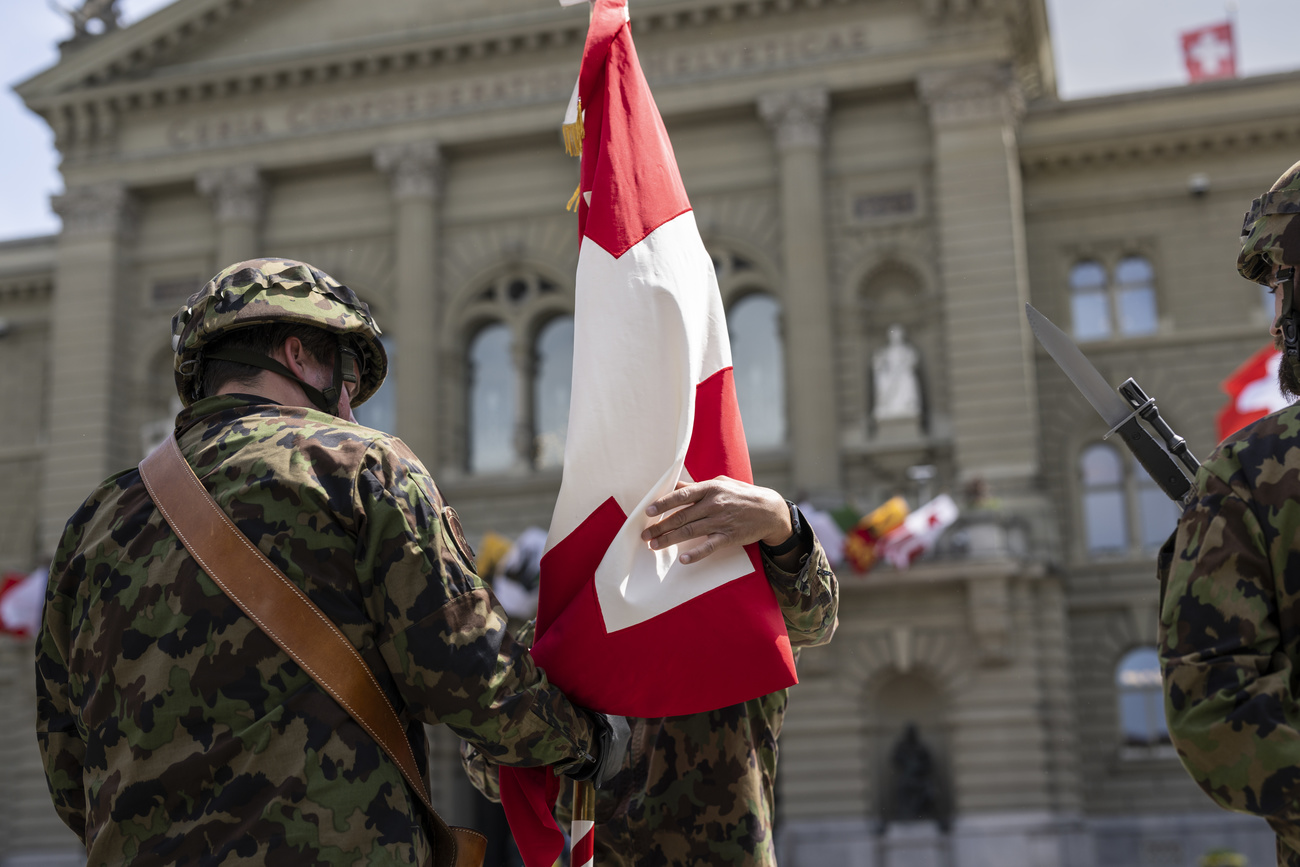
Wanted: politically convenient definition of ‘neutrality’
This content was published on
Jul 17, 2022
Switzerland is in search of a new interpretation of its neutrality. An international comparison shows there are plenty of variations.
Read more: Wanted: politically convenient definition of ‘neutrality’
Outside Switzerland, the change is likely to create a more negative perception of its neutrality, said Lottaz, especially among those who believe that a neutral state shouldn’t be producing or selling arms. It could reinforce the perception that Switzerland is no longer neutral, a claim Russia made after the Alpine country adopted European Union sanctions over the full-scale invasion of Ukraine.
‘Filling neutrality with meaning’
Switzerland is not the only neutral state in Europe re-evaluating its positionExternal link on defence since the war began. Neutrality, Lottaz argued, is an “empty word [that] needs to be filled with meaning time and again. It’s in times of great upheaval, like now, that we have a debate about what we should and should not be a part of”.
Finland and Sweden, which traditionally stuck to military non-alignment, have opted to join NATO. Cyprus has stopped buying weapons from Russia, is aligning more with the West and aspires to NATO membership, a likely Turkish veto notwithstanding.
Others are under pressure to increase their defence spending. Austria is pledging to hit a target of 2% of GDP, up from 0.8%. Ireland is more reticentExternal link: unlike Switzerland, it has tied low military spending to its neutrality.
More
View the discussion
Back in Switzerland, where army expenditures are set to rise to 1% of GDP by 2032, public support for neutrality – though relatively high at 87% – has dipped since the Ukraine war began. In coming months, the people will vote on a proposal for a more rigid interpretation of neutrality, one that would prevent Switzerland from adopting economic sanctions or force it to scale back cooperation with NATO.
Since 2022, Switzerland has ramped up ties with the transatlantic alliance. It’s also set out in its security strategyExternal link a path for cooperative defence in case of an attack on its soil. But unlike Cyprus, no political majority in Switzerland is ready for NATO membership – at least not in the next decade, Lottaz believes.
As for the new export rules, the battle continues. Opponents have launched a campaignExternal link to force a referendum on the changes. According to a survey, though, over half of the Swiss population support arms deliveries to a country defending itself against an attack – a move they do not see as contradicting Swiss neutrality.
Switzerland’s trade partners remain cautious. Germany’s ambassador, Markus Potzel, declared the changes were such that there’s still “no guarantee” that in future his country will be able to “freely dispose” of Swiss-made weapons.
The outcome for Ukraine, by contrast, is clear: arms sold in the past to European countries still won’t be reaching it nearly four years after Russia invaded, as the new export rules are not retroactive.
Edited by Tony Barrett/vm/ts
More

More
Inside SWI
Our weekly newsletter on geopolitics
Switzerland in a fast-moving world. Join us to follow the latest Swiss foreign policy developments. We offer the perfect immersive package.
Read more: Our weekly newsletter on geopolitics
Articles in this story